


Introduction
Many older homes and commercial buildings contain insulation materials that can look very different from modern products. When people discover unusual insulation around pipes, boilers, walls, ceilings, or heating systems, one common question is: what does asbestos insulation look like? The answer is not always straightforward because asbestos was used in many forms and was often mixed with other materials. Depending on the product, it may appear white, gray, brown, yellowish, or even appear similar to ordinary cement, plaster, paper, or fibrous insulation.
Understanding the possible appearance of asbestos-containing materials can help people recognize situations that deserve professional attention. However, appearance alone cannot establish whether a material contains asbestos. Many asbestos-free products look almost identical to older asbestos-containing materials. Because disturbing suspected asbestos can release hazardous fibers, the safest approach is to avoid cutting, drilling, scraping, breaking, or removing questionable insulation until it has been assessed appropriately.
What Does Asbestos Insulation Look Like?
When considering what does asbestos insulation look like, it is important to remember that asbestos insulation does not have one universal appearance. Historically, asbestos was incorporated into numerous insulation products because its fibers provided heat resistance, durability, and fire resistance. As a result, the material could be manufactured as loose insulation, molded sections, blankets, boards, paper-like coverings, or cement-based products.
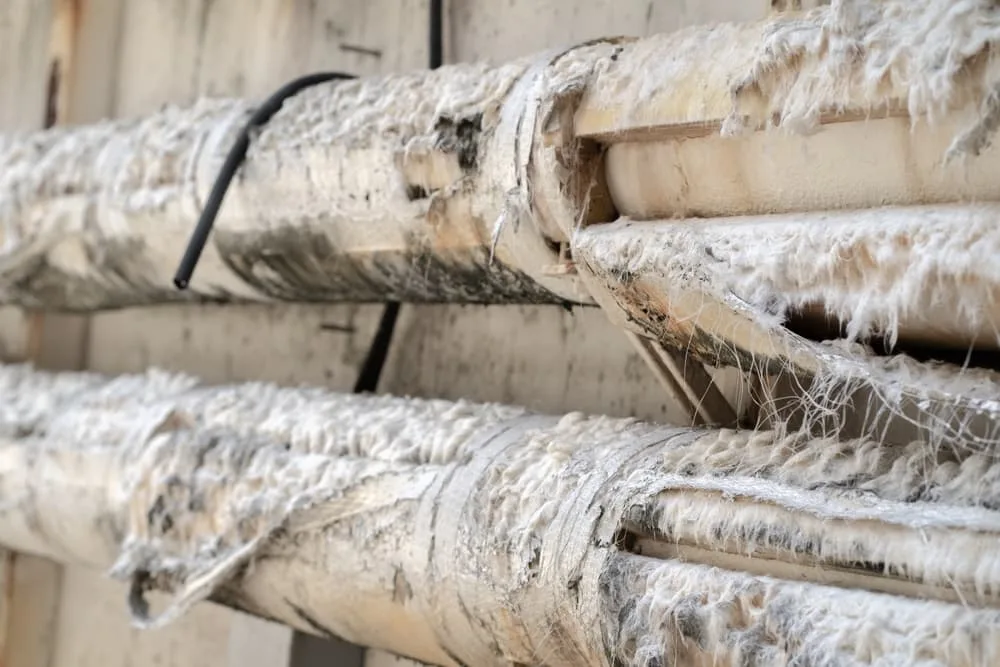
Some insulation may look fluffy or fibrous, while other asbestos-containing materials can appear dense and rigid. Pipe insulation, for example, may resemble a chalky or plaster-like covering around a pipe. Boiler insulation can look like a thick, hardened coating. Insulating boards may look smooth and solid, while certain older insulation products may have a layered or fabric-like appearance.
This variety is one reason visual inspection should only be treated as an initial observation. Even experienced observers may not be able to determine the composition of a material simply by looking at it.
Common Colors and Textures
The appearance of suspected asbestos insulation can depend on its age, location, condition, and the other materials mixed with the asbestos. White and gray are common colors associated with some older insulation products, but other shades are possible. Aged insulation can become discolored because of dust, moisture, heat, paint, or deterioration.
Texture can also vary considerably. Some materials may have a soft, fibrous surface, whereas others can be hard, compact, or slightly rough. Certain pipe coverings have a plaster-like exterior and may have seams between molded sections. Other products may resemble thick paper or fabric wrapped around pipes or heating equipment.
If you’re wondering what does asbestos insulation look like, avoid relying on color or texture as proof. Modern mineral wool, fiberglass, cellulose, ceramic materials, and other insulation products can share similar characteristics. The only reliable way to determine whether a suspect material contains asbestos is through appropriate professional assessment and, where necessary, laboratory analysis.
Asbestos Insulation Around Pipes
Pipe insulation is one of the locations where asbestos-containing materials may historically have been used. Older heating systems sometimes had pipes covered with insulation designed to reduce heat loss and protect surrounding areas from high temperatures. The covering may appear as a rigid, molded material fitted around the pipe.
Some pipe insulation has visible joints or seams running along its length. It may have a relatively smooth exterior when intact, while damaged sections can expose a softer or more fibrous interior. In other cases, pipes may have been wrapped with layers of paper-like or cloth-like material.
However, the presence of old pipe insulation does not automatically mean asbestos is present. Similar-looking materials have been produced without asbestos. Because disturbing pipe insulation can potentially release fibers if it contains asbestos, it is better to leave questionable coverings undisturbed rather than attempting to identify them by pulling, scraping, or cutting them open.
Asbestos Insulation on Boilers and Heating Equipment
Boilers, furnaces, heating ducts, and other high-temperature equipment sometimes used asbestos-containing insulation because asbestos can withstand high temperatures. Depending on the application, insulation could be found around the equipment itself, on nearby pipes, or underneath protective coverings.
Aged boiler insulation may look like a thick coating, board, rope, blanket, or cement-like material. Some surfaces may have become cracked or discolored over time. Heat exposure can also change the appearance of insulation, making it difficult to recognize its original form.
When considering what does asbestos insulation look like around heating equipment, it is particularly important not to disturb suspicious material. Old boilers can contain several different components, and more than one material may require assessment. Professional inspectors can evaluate the material and determine whether further testing is appropriate.
Loose-Fill and Fibrous Insulation
Some historical insulation products were installed as loose material or in fibrous forms. Depending on the product, they may look similar to other loose-fill insulation. Their color and texture can vary, and aging may cause the material to become dusty, compacted, or uneven.
Loose insulation can be especially difficult to identify visually because materials from different manufacturers and periods can look alike. Fiberglass and mineral wool, for example, can have a fibrous appearance without containing asbestos.
It is therefore unsafe to assume that a fluffy or fibrous material is asbestos—or that it is asbestos-free. If the material is in an older building and its composition is unknown, minimizing disturbance is a sensible precaution until it can be properly evaluated.
Insulation Boards and Panels
Asbestos was also incorporated into certain insulating boards and panels. These products could be used around heating systems, electrical equipment, walls, ceilings, doors, and other areas where fire resistance was important. They may look relatively ordinary because asbestos fibers were incorporated into a manufactured board rather than left visibly exposed.
The boards can sometimes resemble cement board, plasterboard, or other rigid construction materials. They may be gray, off-white, or another muted color. Paint or other surface treatments can further conceal their original appearance.
This is another reason the question what does asbestos insulation look like does not have a single visual answer. A material that looks like an ordinary construction panel could potentially contain asbestos, particularly in an older building. Avoid drilling, sanding, cutting, or breaking unidentified boards simply to inspect their interior.
Signs of Aging and Damage
Age can significantly change the appearance of insulation. Materials that were once intact may become cracked, broken, stained, or dusty. Water damage can cause some insulation products to deteriorate, while physical impact can expose underlying layers.
Damaged material deserves particular care because deterioration can increase the possibility that fibers become airborne if asbestos is present. Nevertheless, visible damage does not prove that a material contains asbestos. Similarly, material that appears completely intact should not automatically be assumed to be safe.
If suspected insulation is damaged, avoid touching or sweeping it. Do not use ordinary household methods to remove dust from the area. A qualified professional can advise on appropriate inspection, testing, repair, or removal procedures based on the material and its condition.
Why Appearance Cannot Confirm Asbestos
The biggest limitation when asking what does asbestos insulation look like is that asbestos cannot be reliably identified by sight alone. Asbestos fibers are extremely small, and the fibers may be mixed into a binding material or incorporated into a manufactured product.
Two materials can look practically identical while having completely different compositions. Conversely, asbestos-containing materials can look dramatically different depending on how they were manufactured and installed.
For this reason, photographs and visual descriptions can only help identify materials that warrant further investigation. They should not be used as a definitive asbestos test. If there is a genuine concern, professional inspection and appropriate sampling are safer than attempting to identify the material yourself.
Where Older Asbestos Insulation May Be Found
Asbestos-containing insulation was historically used in many buildings and industrial settings. Potential locations include pipes, boilers, furnaces, heating systems, ducts, tanks, walls, ceilings, electrical equipment, and areas surrounding heat-producing appliances.
The likelihood of encountering asbestos depends on factors such as the building’s age, construction history, renovations, and the products originally installed. Materials may also have been covered by paint, plaster, fabric, metal jackets, or other finishes, making their original appearance difficult to determine.
Anyone renovating an older property should be especially cautious about unidentified insulation. Activities such as drilling, demolition, sanding, cutting, or removing old building materials can disturb materials that otherwise might have remained relatively stable.
What Should You Do If You Suspect Asbestos?
If you encounter insulation that might contain asbestos, the safest first step is to leave it alone. Do not scrape, break, cut, drill, sand, or pull at the material to see what is underneath. Keeping people away from the area can also reduce the chance of accidental disturbance.
If renovation or repair work is planned, consider having the material assessed by a qualified asbestos professional before work begins. Where testing is appropriate, samples should be collected using proper procedures rather than by an untrained person.
It is also important not to panic. The presence of asbestos-containing material does not automatically mean that a building is immediately dangerous. Risk depends on factors including the type and condition of the material and whether fibers can become airborne. Professional assessment can help determine the appropriate response.
Understanding the Difference Between Identification and Confirmation
Knowing what does asbestos insulation look like can help someone recognize a potential concern, but identification and confirmation are two different things. Identification involves noticing characteristics such as age, location, texture, construction type, or damage. Confirmation requires appropriate professional evaluation and, when necessary, laboratory analysis.
This distinction is important because unnecessary disturbance can create more risk than simply leaving an intact material undisturbed. A person who assumes that suspicious insulation is harmless may accidentally damage it, while someone who assumes every unusual material contains asbestos may make unnecessary decisions based solely on appearance.
A cautious approach is therefore preferable: treat unknown older insulation as potentially hazardous until its composition is established by a suitable professional.
Frequently Asked Questions
Can asbestos insulation be identified by its color?
No. Color alone cannot confirm asbestos. Suspected materials can be white, gray, brown, or other colors, and many asbestos-free insulation products have similar appearances.
Does old insulation automatically contain asbestos?
No. Age can increase the possibility of asbestos-containing materials in certain buildings, but not every old insulation product contains asbestos. The material’s history and composition need to be considered.
Is damaged asbestos insulation more concerning?
Damaged or deteriorating asbestos-containing material can present a greater potential for fiber release than material that remains intact. However, the actual risk depends on the specific material and circumstances.
Should I remove insulation if I think it contains asbestos?
You should not attempt DIY removal of suspected asbestos insulation. Disturbing the material can potentially release fibers. Professional assessment is the safer approach.
Can a photograph prove that insulation contains asbestos?
No. A photograph may show characteristics worth investigating, but it cannot reliably establish whether asbestos is present. Confirmation generally requires appropriate professional assessment and, where necessary, testing.
Conclusion
Understanding what does asbestos insulation look like can help property owners recognize materials that may deserve professional attention, particularly in older buildings. Asbestos-containing insulation has appeared in many forms, including pipe coverings, boiler insulation, boards, blankets, and other products. Its color and texture can vary widely, and aging or surface treatments can make identification even more difficult.
The most important point is that appearance alone cannot confirm asbestos. Many modern and asbestos-free materials can look similar to historical asbestos products. If unidentified insulation is discovered, especially during renovation, avoid disturbing it and seek appropriate professional advice. Taking a cautious approach can help prevent unnecessary exposure while ensuring that any suspected asbestos is handled properly.