

Introduction
Asbestos is a naturally occurring mineral that has been used for centuries because of its strength, durability, and resistance to heat. Although it was once considered a valuable material for construction, manufacturing, and insulation, asbestos is now widely recognized as a serious health hazard. Understanding where asbestos originates, how it is extracted, and why it was used in so many products helps explain its continued presence in older buildings and industrial environments.
The question of where does asbestos come from involves both geology and human activity. Asbestos develops naturally within certain types of rocks through geological processes that take place over long periods. It is then obtained through mining and may be processed into fibers for industrial applications. Even though its use has been restricted or prohibited in many countries, asbestos can still be found in existing structures, older equipment, and contaminated materials. Learning about its origins is an important step toward understanding how exposure occurs and why proper safety precautions are necessary.
1. The Natural Origin of Asbestos
Asbestos comes from naturally occurring silicate minerals found in the Earth’s crust. These minerals develop under particular geological conditions involving heat, pressure, and chemical reactions between rocks and mineral-rich fluids. Over thousands or millions of years, these conditions can produce thin, flexible mineral fibers that have unusual physical properties.
Unlike manufactured materials, asbestos does not need to be created in a factory to exist. It forms naturally within certain rock formations, including serpentine rocks and several types of metamorphic rocks. The mineral fibers may remain embedded within the surrounding rock until mining, construction, erosion, or other activities disturb the material.
The distinctive structure of asbestos fibers explains why the material became popular in industrial applications. Its fibers can resist high temperatures, provide insulation, and withstand many chemical reactions. However, these same fibers can become dangerous when released into the air and inhaled. Their small size and durability allow them to remain in the lungs for many years, potentially causing severe diseases.
2. How Does Asbestos Form in the Earth?
Asbestos formation is associated with geological changes that alter the composition and structure of existing rocks. One important process is metamorphism, during which rocks experience changes caused by heat, pressure, and chemically active fluids. These conditions can encourage minerals to reorganize and form fibrous structures.
Chrysotile, commonly known as white asbestos, is associated primarily with serpentine rock formations. It develops through reactions involving magnesium-rich minerals and water under suitable geological conditions. Amphibole asbestos minerals, including crocidolite and amosite, form in different geological environments and have different chemical compositions and crystal structures.
The process does not occur uniformly across the planet. Specific combinations of rock composition, temperature, pressure, and fluid movement are necessary for asbestos deposits to develop. As a result, some regions contain naturally occurring asbestos deposits, while others have little or none.
Asbestos-bearing rocks may remain undisturbed beneath the surface for extremely long periods. Natural weathering can gradually expose them, while mining and excavation can bring them closer to the surface. These geological processes explain why asbestos may occur in both remote natural environments and locations affected by human development.
3. Where Is Asbestos Found Around the World?

Asbestos deposits have been identified in numerous countries, and several regions historically became major producers. Countries associated with asbestos mining include Russia, Canada, South Africa, China, Brazil, and Kazakhstan. The scale of production has changed considerably over time as health concerns, regulations, and market demand have influenced mining activity.
Russia has been a major producer of chrysotile asbestos, while Canada historically operated significant chrysotile mines. South Africa was known for mining certain amphibole asbestos varieties, including crocidolite and amosite. Other deposits have been identified in different parts of Asia, Africa, Europe, and the Americas.
The presence of natural deposits does not necessarily mean that asbestos is a significant everyday hazard in every location. Risk depends on factors such as the type and condition of the rock, whether fibers become airborne, the amount of exposure, and the activities taking place nearby.
Asbestos may also occur naturally in soil and surface rock. Construction, quarrying, road development, and mining can disturb asbestos-bearing formations and release fibers. In affected areas, environmental assessments and appropriate controls can help reduce exposure.
4. The Main Types of Asbestos
There are six recognized types of asbestos, generally divided into two mineral groups: serpentine and amphibole. Each has a distinctive structure and geological origin.
Chrysotile: Chrysotile is also called white asbestos and belongs to the serpentine mineral group. Its fibers have a curved, layered structure. It was historically the most widely used asbestos variety and appeared in products such as cement sheets, insulation, roofing materials, and friction products.
Amosite: Often called brown asbestos, amosite belongs to the amphibole group. It was historically used in insulation boards, thermal insulation, and certain cement products. Its fibers are generally straighter and more rigid than chrysotile fibers.
Crocidolite: Known as blue asbestos, crocidolite is an amphibole mineral that was used in some specialized insulation and industrial products. It is particularly hazardous because its thin fibers can penetrate deeply into the lungs.
Tremolite: Tremolite asbestos can occur naturally in certain metamorphic rocks and mineral deposits. It may also appear as a contaminant in other minerals or materials.
Actinolite: This amphibole mineral occurs in some metamorphic rocks and can exist in an asbestos form. It is less commonly associated with commercial asbestos products than chrysotile.
Anthophyllite: Anthophyllite is another amphibole mineral that can develop in fibrous forms. It has been identified in some natural deposits and historically in limited industrial applications.
All six forms are associated with serious health risks when respirable fibers are inhaled. No type should be assumed safe merely because it is less common or has a different appearance.
5. How Is Asbestos Extracted From the Ground?
Historically, asbestos was obtained through mining operations that targeted mineral-rich rock formations. Depending on the deposit, extraction involved open-pit mining or underground mining. The mined rock was then transported to processing facilities, where mechanical methods were used to separate asbestos fibers from the surrounding material.
Processing could involve crushing, screening, and separating the rock to recover fibers of different lengths and qualities. These fibers were then prepared for use in industrial products, including insulation, cement materials, textiles, and components designed to withstand friction or heat.
Mining and processing created significant occupational hazards because disturbing asbestos-bearing rock could release microscopic fibers into the air. Workers involved in extraction, transportation, and manufacturing could experience repeated exposure, particularly before effective protective measures and regulations were introduced.
Today, asbestos mining and use are restricted or banned in many jurisdictions, although legal requirements differ between countries. Existing mines, contaminated sites, and older industrial facilities may still require careful management. Because asbestos fibers are hazardous when inhaled, mining or processing asbestos-bearing materials should never be treated as an ordinary do-it-yourself activity.
6. Why Was Asbestos Used in So Many Products?
Asbestos became popular because it combined several useful physical characteristics in a relatively inexpensive material. It can resist heat, provide electrical insulation, strengthen certain products, and tolerate many industrial conditions. Manufacturers found that adding asbestos fibers to other materials could improve their durability and performance.
During the nineteenth and twentieth centuries, asbestos became common in construction, shipbuilding, automotive manufacturing, and heavy industry. It was incorporated into pipe insulation, boiler insulation, ceiling tiles, roofing products, cement boards, floor tiles, gaskets, and brake components. Some buildings also contained asbestos in textured coatings and other specialized materials.
Its fire-resistant properties made asbestos particularly attractive when builders and engineers were looking for ways to protect structures and equipment from high temperatures. However, the long-term health consequences were not adequately addressed in many early applications.
As medical evidence accumulated, researchers established strong links between asbestos exposure and diseases such as asbestosis, lung cancer, and mesothelioma. These findings changed public policy and led to extensive restrictions on asbestos use. Nevertheless, products manufactured decades ago may still remain in homes, workplaces, schools, and industrial buildings.
7. Where Can Asbestos Be Found Today?
Although asbestos use has declined in many countries, the material has not disappeared. It can remain in older buildings constructed or renovated when asbestos-containing products were common. Its presence depends on the building’s age, construction history, materials, and local regulations.
Potential locations include insulation around pipes and boilers, older roofing sheets, cement boards, certain floor tiles, ceiling materials, and some industrial equipment. Asbestos may also be present in older gaskets, fireproofing materials, and vehicle components.
However, not every old building contains asbestos, and not every material that resembles asbestos actually contains it. Visual inspection alone cannot reliably identify asbestos fibers. Suspected materials should be assessed by appropriately trained professionals, with laboratory testing used when necessary.
In many situations, asbestos-containing materials that remain intact and undisturbed present a lower risk than damaged or deteriorating materials. Cutting, drilling, sanding, breaking, or removing them can release fibers into the air. People who suspect asbestos in their property should avoid disturbing it and seek advice from qualified asbestos professionals or the relevant local authority.
8. Health Risks Associated With Asbestos Exposure
The main danger from asbestos comes from breathing in airborne fibers. When asbestos-containing materials are damaged or disturbed, tiny fibers may become suspended in the air. Once inhaled, some fibers can reach deep into the respiratory system and remain there for long periods.
Asbestos exposure is associated with several serious illnesses. Asbestosis is a chronic lung disease involving scarring of lung tissue, which can make breathing difficult. Lung cancer is another established consequence, and the risk is especially high among people who have both asbestos exposure and a history of smoking. Mesothelioma, a cancer affecting the lining of the lungs or other internal organs, is strongly associated with asbestos exposure.
These diseases often develop many years after the initial exposure. A person may not experience immediate symptoms even when harmful exposure has occurred. The level of risk depends on factors such as the amount of asbestos inhaled, the duration and frequency of exposure, and the type of fibers involved.
Preventing exposure is therefore essential. People should not handle suspected asbestos-containing materials without proper training and protective procedures. Professional assessment, controlled removal where necessary, and compliance with local safety regulations are important ways to limit the risk.
9. How Can Asbestos Exposure Be Prevented?
The first step in preventing exposure is understanding where asbestos may be present. Owners of older buildings can review available construction records and arrange an assessment before renovation or demolition work begins. This is particularly important when planned activities could damage insulation, roofing, flooring, or wall materials.
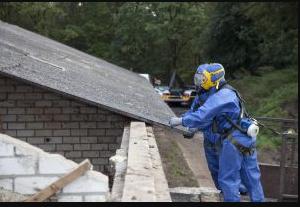
Suspected asbestos-containing materials should not be drilled, cut, sanded, broken, or removed without appropriate professional guidance. Ordinary household cleaning and vacuuming may spread fibers if contaminated dust is present. Specialized procedures and suitable equipment are needed to control asbestos safely.
If damaged material is suspected, keep people away from the affected area and avoid disturbing debris. Contact qualified professionals who can assess the situation and recommend suitable containment, repair, or removal methods. The correct approach depends on the material’s condition, its location, and the applicable regulations.
In workplaces, effective prevention also includes employee training, exposure assessments, appropriate protective equipment, and compliance with occupational safety requirements. Responsible handling protects workers, building occupants, and surrounding communities from unnecessary exposure.
Conclusion
Understanding where asbestos comes from begins with its natural formation in the Earth’s crust. Specific geological conditions produce fibrous minerals that were historically mined and incorporated into a wide range of industrial and construction products. Although these materials offered valuable heat-resistant and insulating properties, their serious health consequences led to restrictions and bans in many parts of the world.
Asbestos can still be present in older buildings, equipment, and natural rock formations. Its presence does not automatically mean that dangerous exposure is occurring, but disturbing asbestos-containing materials can release harmful fibers. Identifying suspected materials correctly, avoiding unnecessary disturbance, and relying on qualified professionals are essential precautions. By understanding the origins, historical uses, and health risks of asbestos, individuals and organizations can make better-informed decisions about building safety and environmental protection.