

Introduction
Asbestos has been used in various building materials for decades because of its strength, durability, heat resistance, and insulating properties. One common application was flooring, where asbestos fibers were added to certain vinyl tiles and other floor products to improve their performance. Although these materials were once widely installed in residential, commercial, and industrial buildings, their potential health risks are now well recognized. Homeowners, property managers, renovators, and contractors may encounter older flooring during repairs or renovation projects and wonder whether it contains asbestos.
Understanding asbestos tiles is important because their appearance alone cannot confirm their composition. Some tiles may contain asbestos, while others that look almost identical do not. The safest approach is to understand where these materials may be found, avoid disturbing suspicious flooring, and arrange professional testing when necessary. With the right information, property owners can make informed decisions about maintenance, renovation, and removal while reducing the risk of exposure to harmful airborne fibers.
What Are Asbestos Tiles?
Asbestos tiles are flooring products manufactured with asbestos fibers mixed into other materials. Asbestos is a naturally occurring mineral that was historically valued for its durability, resistance to heat, and ability to strengthen building products. Manufacturers incorporated it into certain vinyl floor tiles, asphalt tiles, and other flooring materials, particularly during the twentieth century.
These tiles were popular because they could withstand regular foot traffic and were available in different colors, patterns, and sizes. They were installed in homes, schools, offices, factories, and other buildings. Some products contained asbestos within the tile itself, while asbestos-containing materials could also be present in the adhesive or backing beneath the flooring. Not every old tile contains asbestos, and not every flooring adhesive contains it either. The exact composition depends on the product, manufacturer, and installation period. Consequently, age and appearance can provide clues but cannot establish whether a flooring material contains asbestos.
Where Are Asbestos Tiles Commonly Found?
Older buildings are more likely to contain flooring materials manufactured during periods when asbestos was widely used in construction. These materials may remain beneath carpets, newer vinyl flooring, laminate, or other coverings installed during later renovations. In some properties, several flooring layers have accumulated over many decades, making the original material difficult to identify without a careful inspection.
Asbestos-containing flooring may be found in kitchens, bathrooms, basements, hallways, utility rooms, schools, and commercial buildings. It can also appear in properties that have undergone partial renovations, where older tiles were left in place instead of being removed. However, the presence of older flooring does not automatically mean asbestos is present. Construction records, original product documentation, and professional laboratory testing can help establish what the material contains. Before starting a renovation in an older property, it is sensible to consider the possibility of asbestos and assess suspicious flooring before disturbing it.
How to Identify Asbestos Tiles
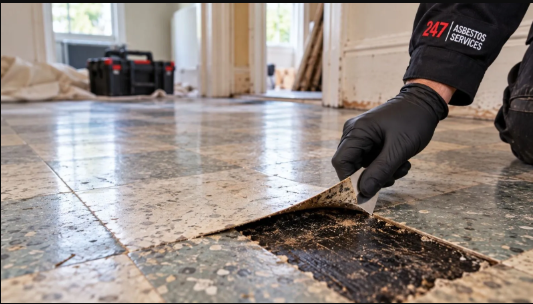
Identifying asbestos-containing flooring requires caution because there is no reliable visual test that confirms the presence of asbestos. Some older tiles are approximately nine inches square, while others have different dimensions. Certain products feature geometric patterns, marbled designs, muted colors, or a hard, resilient surface. These characteristics may be associated with older flooring products, but they are not exclusive to asbestos-containing materials.
The installation date can offer a useful clue. Flooring installed several decades ago may deserve closer examination, particularly when reliable product information is unavailable. Dark-colored adhesive beneath tiles can also raise questions about whether asbestos-containing materials were used, although adhesive color alone is not proof. Homeowners should not scrape, break, sand, drill, or pull up tiles to inspect their composition. Instead, suspicious materials should be left undisturbed until a qualified asbestos professional can assess them and arrange appropriate testing.
Health Risks Associated With Asbestos Tiles
The main health concern associated with asbestos is the release and inhalation of microscopic fibers. When asbestos-containing materials are damaged or disturbed, fibers may become airborne and enter the lungs. Inhalation of asbestos fibers is associated with serious diseases, including asbestosis, lung cancer, and mesothelioma. These conditions may develop many years after exposure, and the risk generally increases with greater cumulative exposure.
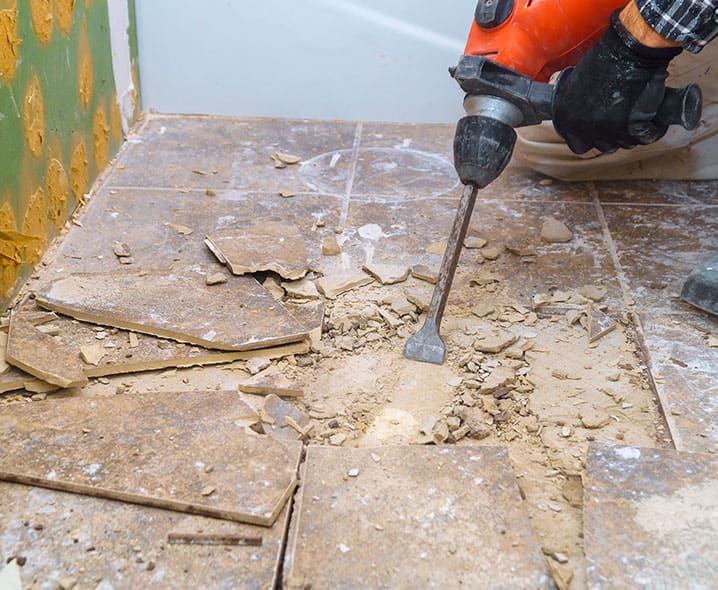
Intact, well-maintained asbestos-containing flooring that is not disturbed is generally less likely to release fibers than damaged or deteriorating material. However, the condition of the flooring, the type of product, and the activities performed around it all matter. Cutting, grinding, sanding, drilling, or breaking tiles can increase the possibility of fiber release. Walking across intact flooring is not equivalent to carrying out destructive renovation work. The practical goal is to prevent unnecessary disturbance, maintain the material in good condition, and obtain professional advice whenever damage or planned renovation could create exposure.
Are Asbestos Tiles Dangerous if They Are Intact?
Intact asbestos-containing tiles do not automatically represent an immediate danger. When the material remains stable and is not releasing fibers, leaving it in place may be a reasonable management option. In some situations, careful maintenance or covering the existing floor with a suitable new flooring system can reduce the likelihood of disturbance. The correct approach depends on the condition of the material and the requirements applicable to the property.
Nevertheless, intact flooring should not be treated as permission to undertake ordinary demolition or aggressive cleaning. Even a floor that looks solid may contain vulnerable edges, damaged sections, or asbestos-containing adhesive beneath the visible surface. Before installing new flooring, contractors should determine whether the underlying material needs specialist assessment. If tiles are cracked, crumbling, lifting, or breaking apart, avoid handling them and seek professional advice. Keeping the area undisturbed is often the most useful immediate precaution while the material is assessed.
How Are Asbestos Tiles Tested?
Testing is the most dependable way to determine whether suspicious flooring contains asbestos. A qualified asbestos professional can inspect the material, evaluate its condition, and decide whether sampling is appropriate. The sample must be collected using procedures designed to minimize fiber release and contamination. It should then be analyzed by a competent laboratory using an appropriate analytical method.
Homeowners should not collect samples by breaking off pieces or scraping material from the floor. Improper sampling can create unnecessary exposure and spread dust to nearby surfaces. If testing is needed before a renovation, arrange it before any work begins. In addition to the tiles themselves, the inspector may consider whether the adhesive, underlayment, or other nearby building materials also require assessment. Once the results are available, the professional can explain what was found and recommend suitable management options. A negative result for one sample should not automatically be assumed to represent every different flooring material in the building.
Safe Handling and Maintenance
When asbestos-containing flooring is suspected, prevention is more useful than attempting to investigate it personally. Avoid breaking, cutting, sanding, drilling, or scraping the tiles. Do not use abrasive machines or other methods that could generate dust. Ordinary household vacuum cleaners may not be suitable for asbestos contamination because they can spread fine particles rather than safely capture them.
Keep people away from damaged areas when possible, and avoid sweeping debris or attempting to clean suspected asbestos dust yourself. If the floor is intact, minimize unnecessary work on it and arrange a professional assessment before making changes. Any cleaning or maintenance method should be appropriate for the material and should not damage the surface. Property owners should also inform contractors about suspected asbestos before renovation begins. Clear communication can prevent accidental disturbance and allow workers to plan the project using suitable precautions, equipment, and waste-handling procedures.
Should Asbestos Tiles Be Removed or Covered?
Removal is not always necessary. If asbestos-containing tiles remain intact and are unlikely to be disturbed, leaving them in place may reduce the immediate risk associated with removing them. Depending on the circumstances, a professional may recommend monitoring the material, repairing it using an appropriate method, or covering it with a compatible flooring system.
Removal may be considered when the flooring is significantly damaged, must be disturbed for essential building work, or cannot be safely managed in its existing condition. However, removing asbestos-containing flooring can release fibers if it is performed incorrectly. The decision should consider the material’s condition, the planned renovation, the possibility of future damage, and applicable regulations. Covering the floor is not a universal solution because new work can still disturb the underlying tiles. A qualified professional can explain which approach is appropriate and whether specialized removal procedures are necessary.
Professional Asbestos Tile Removal
When removal is required, the work should be planned and performed by appropriately qualified or licensed professionals, as required by local rules. The process may involve assessing the work area, limiting access, selecting suitable protective equipment, controlling dust, and following approved procedures for handling the flooring and associated adhesive. The exact requirements depend on the material, the scale of the project, and the jurisdiction.
Professionals also need to manage contaminated debris carefully and dispose of it according to applicable waste regulations. Regular construction waste procedures may not be appropriate for asbestos-containing materials. After the work, the area may require a suitable inspection or clearance assessment before normal activities resume. Hiring experienced specialists can help reduce the risk of exposure to occupants, workers, and neighboring areas. Before appointing a contractor, property owners should verify relevant qualifications, insurance, experience, and compliance with local asbestos-management requirements.
What to Do Before Renovating an Older Floor
Preparation is particularly important when replacing old flooring, remodeling a kitchen, renovating a bathroom, or repairing a damaged surface. Start by considering the building’s age and reviewing any available renovation records or flooring documentation. If the material might contain asbestos, do not begin demolition until its status has been assessed.
A professional inspection can help identify materials that require testing and establish an appropriate work plan. Inform everyone involved in the project about the suspected flooring, including builders, flooring installers, plumbers, and electricians whose work could affect the area. Avoid allowing different contractors to disturb the material without a clear plan. If asbestos is confirmed, obtain advice on whether the flooring can remain in place or requires specialist management. Planning ahead can prevent unexpected delays, unnecessary exposure, and additional project costs.
Common Myths About Asbestos Tiles
One common misconception is that all old floor tiles contain asbestos. In reality, flooring composition varies according to the product and manufacturing period. Another misconception is that a particular color, pattern, or size can prove the presence of asbestos. Visual features may provide clues, but laboratory analysis is needed for reliable identification.
Some people also believe that every asbestos-containing tile must be removed immediately. This is not necessarily true. Undisturbed material in good condition may be safer to manage in place than to remove unnecessarily. Conversely, assuming that flooring is harmless because it looks intact can lead to accidental disturbance during renovation. A further misconception is that wearing an ordinary face mask makes it safe to break or sand suspicious tiles. Such precautions do not replace professional assessment, suitable controls, and proper procedures. Reliable information and careful decision-making are essential for managing potential asbestos hazards.
Conclusion
Asbestos tiles are an important consideration when maintaining or renovating older buildings. Although these flooring products were valued for their durability, certain types contain fibers that can cause serious health problems when inhaled. Their presence cannot be confirmed by appearance alone, so professional assessment and laboratory testing are the most dependable ways to identify suspicious materials.
The safest approach is to avoid disturbing unknown flooring, pay attention to signs of damage, and seek qualified advice before renovation. Where material is intact, leaving it undisturbed or managing it in place may be appropriate. When removal is necessary, trained professionals can determine the safest procedures and handle waste according to applicable requirements. By understanding the risks and making informed choices, property owners can protect occupants, reduce the possibility of exposure, and plan flooring projects more responsibly.