

Introduction
Asbestos is a naturally occurring group of minerals that was widely used in construction, insulation, roofing, flooring, and various industrial products because of its heat resistance, durability, and insulating properties. Although these materials were once considered useful and economical, asbestos exposure is now recognized as a serious health hazard. When asbestos-containing materials become damaged, disturbed, or deteriorated, tiny fibers can become airborne and enter the lungs. Long-term exposure can cause severe diseases, including asbestosis, lung cancer, and mesothelioma. Understanding where asbestos may be present and how to identify it safely is therefore important for homeowners, property managers, workers, and renovation professionals.
An asbestos test helps determine whether a material contains asbestos fibers. Testing can be particularly important in older buildings, industrial facilities, and properties undergoing renovation or demolition. Since asbestos cannot reliably be identified by its appearance alone, laboratory analysis is often necessary to confirm its presence. Knowing when testing is appropriate, how samples are analyzed, and what precautions should be followed can help people make informed decisions about building maintenance and environmental safety.
What Is an Asbestos Test?
An asbestos test is a process used to identify and confirm the presence of asbestos in building materials, insulation, dust, or other suspected substances. The testing process generally involves collecting a representative sample under controlled conditions and sending it to a qualified laboratory for analysis. Depending on the material and the testing objective, laboratories may use specialized microscopic techniques to identify asbestos fibers and determine their characteristics.
Testing is different from a simple visual inspection. Materials such as cement sheets, ceiling panels, pipe insulation, floor tiles, and roofing products may resemble ordinary construction materials even when asbestos is present. Likewise, some newer-looking products may contain asbestos if they were manufactured or installed during periods when its use was permitted. A professional assessment helps establish whether testing is necessary and identifies the safest approach. The results can guide decisions about leaving materials undisturbed, repairing them, enclosing them, or arranging professional removal.
Why Is Asbestos Testing Important?
The primary purpose of asbestos testing is to reduce the risk of exposure to hazardous fibers. Asbestos-containing materials that remain intact and undisturbed may present a lower immediate risk than materials that are crumbling, damaged, or likely to be disturbed during construction work. However, the level of risk depends on the material’s condition, location, accessibility, and the activities taking place nearby.
Testing is particularly valuable before drilling, cutting, sanding, replacing floors, removing insulation, or demolishing older structures. Without reliable identification, workers may accidentally release asbestos fibers into the surrounding environment. These fibers are extremely small and may remain airborne for extended periods under certain conditions. A confirmed result allows property owners and contractors to plan work appropriately, use suitable protective controls, and comply with applicable regulations. It also supports better documentation and informed decisions about long-term property management.
Common Materials That May Contain Asbestos
Asbestos was used in numerous products because it offered strength, insulation, and resistance to heat. In older buildings, it may be present in pipe insulation, boiler coverings, cement roofing sheets, wall panels, textured coatings, ceiling tiles, floor tiles, and certain adhesives. Some electrical components, industrial gaskets, fireproofing materials, and machinery insulation may also contain asbestos.
Nevertheless, the presence of a particular material does not automatically mean that it contains asbestos. Products differ according to their manufacturing date, composition, country of origin, and intended use. Visual appearance alone cannot reliably confirm or exclude asbestos. If a material is suspected of containing asbestos, avoid disturbing it until a qualified professional has assessed the situation. This precaution is especially important when the material is damaged or located in an area where renovation, maintenance, or demolition is planned.
Different Types of Asbestos Testing
Several testing approaches are available, depending on the question being investigated and the material involved. Bulk material testing examines a physical sample of a suspected product, such as insulation or cement board, to determine whether asbestos is present. This is commonly used when assessing building materials before renovation or removal.
Air testing measures airborne fiber concentrations using appropriate sampling equipment and laboratory analysis. It may be used in specific circumstances, such as evaluating a work area, investigating possible contamination, or verifying environmental conditions after asbestos-related work. Dust testing may also be considered when contamination is suspected, although the appropriate method depends on the location and purpose of the investigation.
Each approach has limitations. A negative result from one sample does not necessarily prove that every similar material throughout a building is asbestos-free. Sampling locations, material variation, laboratory methods, and the quality of the investigation can affect the findings. A qualified professional can determine which testing method is appropriate for the situation.
How Does an Asbestos Test Work?
The testing process usually begins with an assessment of the building, suspected materials, their condition, and the planned activities. A trained asbestos professional identifies the areas that may require sampling and determines whether collecting a sample is appropriate. In some situations, avoiding disturbance and treating the material as presumed asbestos-containing may be the safer option.
If sampling is necessary, the professional follows suitable procedures to minimize fiber release and prevent contamination. The sample is placed in an appropriate sealed container, labeled, documented, and transported to a laboratory qualified to analyze asbestos. The laboratory then uses a suitable analytical technique to examine the material and report its findings.
The final report generally identifies whether asbestos was detected in the submitted sample and may provide additional information about the type of asbestos identified, depending on the analytical method. The findings should be interpreted in the context of the building assessment. If asbestos is confirmed, a professional can recommend appropriate management measures based on the material’s condition and the likelihood of disturbance.
Laboratory Methods Used for Asbestos Identification
Laboratories use specialized analytical methods to identify asbestos fibers accurately. One commonly used approach is polarized light microscopy, which examines the optical properties of fibers in suitable bulk materials. It can help distinguish asbestos from other mineral fibers when the sample and analytical conditions are appropriate.
Transmission electron microscopy is another method that can identify very small fibers and provide detailed information about their structure and composition. It may be useful for certain air samples, dust investigations, or situations requiring more detailed analysis. Other specialized techniques may be selected according to the material type and applicable testing standards.
The choice of method matters because different materials can present different analytical challenges. A method suitable for one type of building product may not be appropriate for every sample. A qualified laboratory should select an analytical procedure that matches the purpose of the investigation and relevant local requirements. Clear documentation of the method and results helps property owners understand what the test establishes and what additional investigation may be needed.
When Should You Consider an Asbestos Test?
An asbestos test should be considered when a building contains older or unidentified materials that may be disturbed by planned work. Renovating a kitchen, replacing flooring, modifying ceilings, repairing roofs, or removing old insulation can create opportunities for accidental fiber release. Testing or a professional asbestos survey before beginning such work can help prevent avoidable exposure.
Testing may also be appropriate when building materials are deteriorating, when maintenance workers need to access concealed services, or when a property is being prepared for demolition. Commercial buildings, factories, schools, warehouses, and residential properties may require different assessment procedures depending on their construction history and intended use.
Age alone does not confirm that asbestos is present, and newer materials should not automatically be assumed safe without considering their origin and composition. When the history of a material is unknown, professional assessment is a sensible starting point. Work should not proceed in a way that disturbs suspected asbestos-containing material until the risks have been evaluated.
Safety Precautions Before and During Testing
Safety is central to any asbestos investigation. People should not break, scrape, drill, sand, or cut suspected materials to check whether they contain asbestos. These actions can release fibers into the air and contaminate nearby surfaces. Collecting samples without suitable training and precautions may expose the person performing the task as well as other occupants.
If a suspicious material is damaged, avoid the affected area and prevent unnecessary access. Do not sweep debris, use an ordinary household vacuum, or attempt to clean suspected asbestos dust using routine cleaning methods. These actions may spread contamination rather than control it. Contact a qualified asbestos professional for advice about assessment, containment, and cleanup.
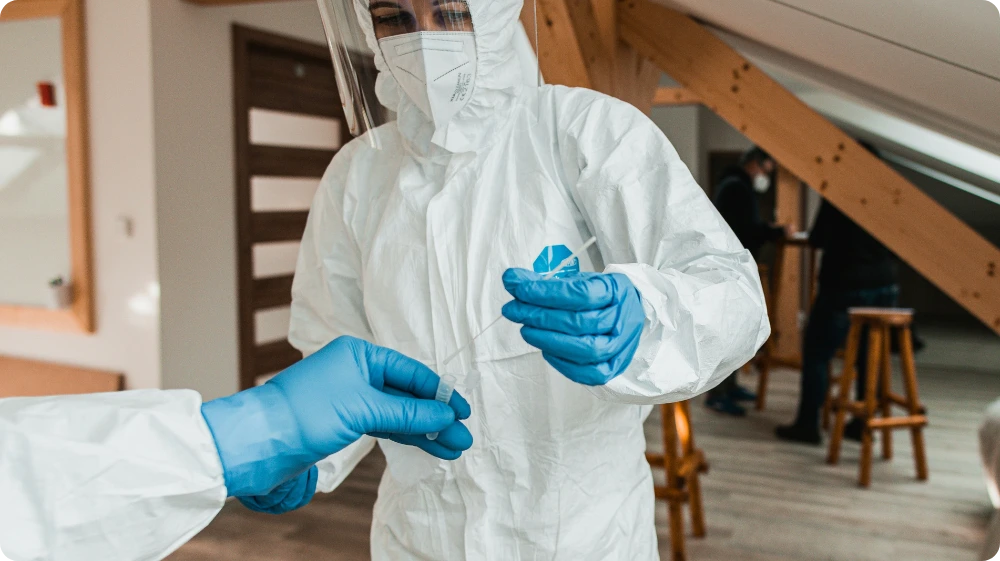
Professional sampling may involve controlled work practices, suitable personal protective equipment, and measures to prevent fibers from spreading. The precise precautions depend on the material, its condition, and the circumstances. Respirators or disposable clothing alone do not make untrained sampling safe. The most reliable approach is to avoid disturbing suspected material and allow trained personnel to determine the appropriate procedure.
Understanding Asbestos Test Results
Test results should be reviewed carefully because their meaning depends on the sample collected and the method used. A positive result indicates that asbestos was identified in the tested sample. It does not automatically mean that the entire building is contaminated or that immediate removal is always necessary. The next step is to evaluate the material’s condition, its accessibility, and the likelihood of future disturbance.
A negative result means that asbestos was not detected in the submitted sample using the method applied. It does not necessarily establish that every material in the building is free of asbestos. If samples were collected from only a limited number of locations, other areas may require assessment.
The laboratory report should be discussed with a qualified professional if the findings are unclear. Recommendations may include monitoring, restricting access, repairing or enclosing the material, or arranging controlled removal. Decisions should be based on the overall assessment rather than a single test result considered in isolation.
What Happens if Asbestos Is Found?
Finding asbestos does not always mean that a building must be evacuated or that every affected material must be removed immediately. In some cases, asbestos-containing material that is in good condition and unlikely to be disturbed can be managed safely in place. Appropriate management may include labeling, monitoring its condition, restricting access, and recording its location for future maintenance work.
If the material is damaged, deteriorating, or likely to be disturbed, additional protective measures may be necessary. Depending on the circumstances, a qualified contractor may recommend repair, enclosure, encapsulation, or removal. Work involving asbestos must follow applicable safety requirements and use suitable containment, handling, transportation, and disposal procedures.
Attempting removal without proper training and controls can increase exposure and spread contamination to other parts of a building. Professional advice is especially important before renovation or demolition. Once the work is complete, an appropriate inspection or air-testing procedure may be needed to assess the area, depending on the project and relevant regulations.
Choosing a Qualified Asbestos Testing Professional
Selecting an experienced professional is an important part of the testing process. Look for a provider with appropriate training, relevant certifications or authorizations where required, and experience with the type of property or material being investigated. The laboratory should use a recognized analytical method suitable for the sample and comply with applicable quality standards.
Before agreeing to the work, ask what the inspection includes, how samples will be collected, which laboratory will analyze them, and what information the final report will contain. It is also useful to understand whether the service includes recommendations for managing any asbestos identified. A clear report should explain the findings, relevant limitations, and any recommended next steps.
Costs can vary according to the number of samples, the complexity of the property, the analytical method, and whether air monitoring or a broader asbestos survey is required. Comparing providers on qualifications, testing quality, reporting, and safety practices is more useful than choosing solely on price.
Conclusion
An asbestos test is an important tool for identifying potentially hazardous materials and making informed decisions about building safety. Because asbestos cannot be reliably confirmed by appearance alone, suitable laboratory analysis and professional assessment are essential when suspected materials may be disturbed. Testing can help property owners, contractors, and facility managers plan renovations, manage existing materials, and reduce the risk of harmful exposure.
The safest approach is to avoid disturbing suspicious materials, seek qualified professional advice, and follow the recommendations provided in the assessment report. If asbestos is identified, the appropriate response depends on its condition, location, and likelihood of disturbance. Through careful testing, responsible management, and suitable safety precautions, people can make better decisions about maintaining buildings while protecting occupants, workers, and the surrounding environment.