

Introduction
Asbestos is a naturally occurring mineral that was widely used in construction, insulation, roofing, flooring, and other building materials because of its strength, heat resistance, and durability. Although these properties made it valuable for decades, asbestos is now recognized as a serious health hazard when its microscopic fibers become airborne and are inhaled. These fibers can remain in the lungs for many years and may contribute to serious diseases, including asbestosis, lung cancer, and mesothelioma. Understanding where asbestos may be present and how to identify it safely is important for homeowners, property managers, contractors, and building professionals.
Asbestos testing is a process used to determine whether a material contains asbestos fibers. Since asbestos-containing materials can look similar to ordinary building products, visual inspection alone cannot reliably confirm their presence or absence. Proper testing involves collecting representative samples under controlled conditions and analyzing them using appropriate laboratory methods. Knowing when testing is necessary, how the process works, and what to do after receiving the results can help people make informed decisions about property maintenance, renovation, and potential exposure risks.
What Is Asbestos Testing?
Asbestos testing is the examination of building materials, dust, or other appropriate samples to establish whether asbestos is present. The process generally involves identifying materials that may contain asbestos, collecting samples when necessary, and sending them to a qualified laboratory for analysis. Depending on the material and the purpose of the investigation, specialists may use different analytical techniques to identify asbestos fibers and estimate their concentration.
Testing is particularly important in older buildings where asbestos may have been used in insulation, cement sheets, textured coatings, pipe coverings, ceiling tiles, floor tiles, and adhesives. However, the age or appearance of a material cannot establish its asbestos content with certainty. Some materials that appear harmless may contain asbestos, while others that look similar may not. Laboratory analysis provides more reliable information than assumptions based on appearance, helping property owners decide whether materials can remain undisturbed or require further professional assessment.
Where Can Asbestos Be Found in Buildings?

Asbestos was used in numerous construction products because it offered insulation, fire resistance, and mechanical strength. In older residential, commercial, and industrial properties, it may be present in pipe insulation, boiler coverings, roofing materials, cement boards, wall panels, ceiling products, and certain flooring systems. It was also incorporated into some joint compounds, sealants, textured finishes, and insulation products. The specific materials used depend on the building’s age, construction methods, location, and renovation history.
In India, older buildings and industrial facilities may contain asbestos-cement roofing sheets, pipes, and other construction products. Finding such a product does not automatically mean that it is releasing dangerous fibers. The condition of the material and the likelihood of disturbance are important factors when assessing potential exposure. Intact asbestos-containing materials may pose a lower immediate risk than damaged, crumbling, or frequently disturbed materials. Nevertheless, suspected products should not be drilled, cut, sanded, broken, or removed without an appropriate assessment and suitable precautions.
Why Is Asbestos Testing Important?
The primary purpose of testing is to identify potential asbestos hazards before construction, repair, demolition, or maintenance work begins. Activities such as cutting walls, replacing roofs, removing flooring, and modifying insulation can disturb asbestos-containing materials and release microscopic fibers into the air. Because these fibers are too small to identify reliably without specialized equipment, people may be exposed without noticing any visible warning signs.
Testing also supports informed property management. When asbestos is confirmed, a qualified professional can evaluate the material’s condition, location, and likelihood of disturbance before recommending suitable control measures. Depending on the circumstances, the safest option may be to leave the material undisturbed and monitor its condition, isolate the area, repair it using an appropriate method, or arrange professional removal. Testing does not eliminate asbestos by itself, but it provides information needed to select an appropriate response and reduce the possibility of accidental exposure.
Common Methods Used for Asbestos Testing
Several analytical methods are used to identify asbestos, and the appropriate technique depends on the sample type, laboratory capabilities, and investigation requirements. One commonly used approach for bulk building materials is polarized light microscopy, or PLM. This method examines the optical properties of mineral fibers to help identify different asbestos types. It is widely used for many solid construction materials, although some samples may require additional preparation or a different analytical technique.
Transmission electron microscopy, known as TEM, can identify extremely small fibers and examine their structural and chemical characteristics. It is particularly useful for certain air samples, dust investigations, and materials that require more detailed analysis. Phase-contrast microscopy may be used to count airborne fibers during occupational or environmental monitoring, but it cannot reliably distinguish asbestos fibers from all other particles. Therefore, the appropriate testing method should be selected according to the purpose of the investigation rather than assuming that one method is suitable for every situation.
When Should You Consider Asbestos Testing?
Testing should be considered when a building contains materials suspected of having asbestos and those materials may be disturbed by planned work. Renovation projects involving old flooring, ceilings, roofing, insulation, pipe coverings, or wall finishes are common situations where assessment may be appropriate. Building owners should also seek professional advice if materials are deteriorating, showing signs of damage, or producing debris in an area where asbestos may be present.
It is not always necessary to test every suspected material immediately. If a material is in good condition and will remain undisturbed, a qualified asbestos professional may recommend leaving it in place and managing it appropriately. However, assumptions should not replace an assessment when construction or maintenance activities could affect the material. Before starting a project, property owners should explain the planned work to a competent professional so that potentially hazardous materials can be identified and suitable precautions can be established before workers enter the affected area.
How Does the Asbestos Testing Process Work?
The process usually begins with a review of the building, its age, construction history, and the work planned. A trained professional identifies materials that may contain asbestos and assesses their condition and accessibility. Where sampling is appropriate, the professional selects representative samples while following procedures designed to minimize fiber release. Sampling may involve more than one location because materials that appear similar are not necessarily identical in composition.
The collected samples are properly contained, labeled, documented, and submitted to a laboratory capable of performing the required analysis. The laboratory examines the samples using a suitable method and reports whether asbestos was identified under the method’s detection and reporting criteria. The final report should identify the samples tested and explain the findings clearly. If asbestos is detected, the results should be considered alongside the material’s condition, location, and potential for disturbance. A qualified professional can then help determine the next steps and whether additional assessment or air monitoring is appropriate.
Can You Test for Asbestos Yourself?
Although home testing kits may be available in some markets, collecting asbestos samples without appropriate training can create an unnecessary exposure risk. Scraping, breaking, drilling, or cutting suspected materials may release fibers into the surrounding air. Ordinary household masks, vacuum cleaners, and basic cleaning supplies should not be assumed to provide adequate protection against asbestos hazards. Even a small sample can create a problem if it is collected or handled improperly.
For this reason, professional sampling is generally the safer choice, especially for insulation, damaged roofing, loose debris, textured coatings, and materials in occupied buildings. If you suspect asbestos, avoid disturbing the material and keep other people away from the affected area when appropriate. Contact a qualified asbestos inspection or testing professional to discuss the situation. If a material has already been damaged, do not sweep, brush, or use a standard household vacuum on the debris, because these activities may spread contaminated dust.
Understanding Asbestos Testing Results
A laboratory report generally indicates whether asbestos was detected in the samples submitted for analysis. Some reports may also identify the type of asbestos and provide an estimated percentage or other quantitative information, depending on the material and analytical method. The findings help establish whether asbestos is present in the tested material, but they do not automatically determine the level of airborne exposure or the overall health risk associated with a building.
A negative result should also be interpreted carefully. It applies to the samples tested and does not necessarily establish that every similar-looking material throughout the building is asbestos-free. Sampling locations, sample quality, material variations, and laboratory methods can influence the findings. If the results are unclear or inconsistent with the building’s history, a qualified professional may recommend further sampling or a different analytical approach. The report should always be reviewed in the context of the building’s condition and planned activities before decisions are made about renovation or removal.
What Should You Do If Asbestos Is Found?
If laboratory analysis confirms asbestos, the next step is to evaluate the material’s condition and the possibility that it may be disturbed. Not every asbestos-containing material must be removed immediately. If it is intact, stable, and unlikely to be disturbed, leaving it in place under an appropriate management plan may be safer than unnecessary removal. Such materials should be monitored and protected from activities that could damage them.
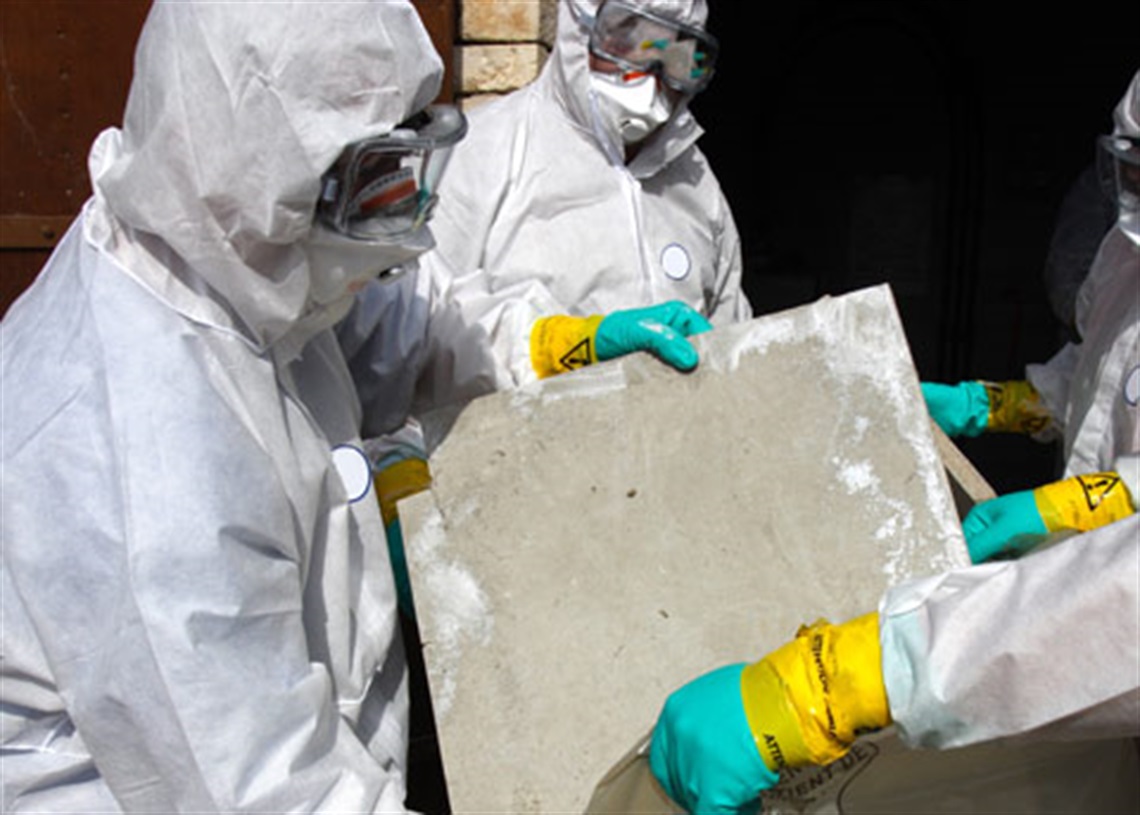
When materials are damaged or must be disturbed for renovation or demolition, specialist intervention may be required. Depending on local requirements and the nature of the work, this may involve controlled removal, containment, specialized equipment, suitable protective measures, and appropriate waste disposal. Occupants should follow professional instructions and avoid entering restricted areas. After work is completed, a qualified professional may recommend a visual inspection or air monitoring to evaluate whether the area is suitable for reoccupation. The necessary procedures depend on the project, the material involved, and applicable regulations.
Health Risks Associated With Asbestos Exposure
Asbestos becomes particularly hazardous when microscopic fibers are released into the air and inhaled. These fibers can lodge in lung tissue and remain there for long periods. Exposure is associated with asbestosis, a chronic lung disease that can cause breathing difficulties, as well as lung cancer and mesothelioma, a cancer affecting the lining of the lungs or other organs. The risk depends on factors such as the amount and duration of exposure, the type of fibers involved, and individual circumstances.
Health effects may not appear until many years after exposure, which makes prevention especially important. A person cannot determine whether a building is safe simply by looking at its materials or checking whether anyone has developed symptoms. Testing suspected materials before disturbing them, following appropriate work practices, and using qualified professionals for hazardous activities can help reduce avoidable exposure. Anyone concerned about a past exposure should discuss their circumstances with a healthcare professional, particularly if they have a history of occupational exposure or other relevant risk factors.
Choosing a Reliable Asbestos Testing Service
Selecting a competent testing service is an important part of managing asbestos risks. Property owners should look for professionals with relevant training, appropriate experience, and a clear understanding of local requirements. It is also useful to confirm that the laboratory uses suitable analytical methods and holds relevant accreditation or recognition for the specific testing being requested. Qualifications and requirements vary by jurisdiction, so they should be checked rather than assumed.
A reliable service should explain the inspection and sampling process, identify the materials being assessed, document sample locations, and provide a clear written report. The provider should also explain any limitations and help the client understand whether further investigation is necessary. Be cautious of services that promise definitive results based only on photographs or visual inspection. A professional assessment should distinguish between identifying suspected materials, confirming asbestos content through appropriate analysis, and evaluating the potential for exposure. These are related but separate tasks.
Conclusion
Asbestos presents a serious health concern when its fibers become airborne and are inhaled, particularly during renovation, demolition, repair, and maintenance work. Identifying potentially hazardous materials before disturbing them is an important step toward protecting building occupants, workers, and property owners. Professional sampling, suitable laboratory analysis, and careful interpretation of results can provide the information needed to manage suspected asbestos safely.
Effective asbestos management does not always mean removing every asbestos-containing product. The right response depends on the material’s condition, its likelihood of disturbance, the building’s intended use, and applicable safety requirements. By arranging appropriate inspections, avoiding unsafe sampling practices, and following qualified professional advice, people can make better decisions about their properties and reduce preventable exposure risks. Testing is most valuable when it forms part of a broader approach that prioritizes prevention, responsible maintenance, and informed decision-making.