


Introduction
Asbestos was widely used in construction and manufacturing because it offered strength, heat resistance, durability, and insulation properties. It can be found in various older building materials, including insulation, floor tiles, ceiling materials, roofing products, pipe coverings, and some cement-based products. The main concern is not simply the presence of asbestos, but the possibility that fibers can become airborne when asbestos-containing materials are damaged, cut, drilled, sanded, or otherwise disturbed. Because asbestos cannot reliably be identified just by appearance, professional assessment is an important part of managing suspected materials. The U.S. Environmental Protection Agency explains that laboratory analysis by a qualified facility is the dependable way to determine whether a suspect material contains asbestos.
Understanding the purpose and process of asbestos testing can help property owners, contractors, building managers, and occupants make informed decisions before renovation, repair, demolition, or maintenance work. Testing generally involves identifying suspect materials, collecting representative samples under controlled conditions, sending those samples to an appropriately qualified laboratory, and interpreting the results. The exact requirements can differ according to the building type, location, applicable regulations, and intended work. Professional sampling is especially important because improperly collecting a sample can disturb the material and potentially release fibers.
What Is Asbestos Testing?
Asbestos testing is the process of examining a building material, dust, soil, or air sample to determine whether asbestos is present and, depending on the analytical method, what type or concentration may be present. A visual inspection alone generally cannot confirm asbestos content. Materials that look similar can have very different compositions, which is why laboratory analysis is used when identification is necessary.
For building materials, testing commonly begins with a professional inspection. The inspector identifies materials that may contain asbestos and considers whether they are sufficiently similar to be treated as a homogeneous area. Samples are then collected according to an appropriate procedure and submitted for laboratory analysis. EPA guidance describes polarized light microscopy as a method used for bulk building-material analysis, while other microscopic techniques can be used for airborne fiber analysis and specialized investigations.
Why Is Asbestos Testing Important?
The importance of asbestos testing becomes particularly clear when an older building is scheduled for renovation or demolition. Construction activities can disturb materials that have remained intact for decades. Drilling into walls, removing flooring, replacing ceilings, opening pipe insulation, or performing other invasive work can change the condition of a material and potentially release fibers.
Testing can provide information that helps determine appropriate next steps before work begins. EPA guidance recommends professional sampling when suspect materials are damaged or when planned renovation could disturb them. At the same time, intact materials that will remain undisturbed may not always require testing under every situation. Decisions should therefore consider the condition of the material, the proposed work, and applicable local requirements rather than relying on appearance alone.
Where Can Asbestos Be Found?
Asbestos was incorporated into numerous products, particularly in older buildings. Potential locations include thermal insulation around pipes and boilers, certain floor tiles, ceiling materials, roofing products, siding, textured finishes, cement products, and other construction components. The exact materials and dates of use vary by country, manufacturer, and building history.
A building does not necessarily present an immediate hazard simply because an asbestos-containing material is present. Materials that remain intact and are not disturbed may pose substantially less exposure potential than deteriorated or actively disturbed materials. EPA information notes that asbestos-containing materials in good condition and left undisturbed are less likely to release fibers. This is why identifying the condition and location of suspect materials is an important part of an overall asbestos management approach.
When Should a Building Be Tested?
One of the most common reasons for asbestos testing is planned renovation. Property owners may want to investigate walls, flooring, ceilings, insulation, or other materials before contractors begin work. Testing may also be considered when a material is deteriorating, damaged, crumbling, fraying, or otherwise likely to release dust.
Testing can also be relevant during property inspections, building maintenance, commercial redevelopment, demolition planning, or environmental investigations. The appropriate scope depends on the building and the activities being planned. In regulated settings, additional requirements may apply, particularly to schools, workplaces, public buildings, and demolition or renovation projects.
Rather than assuming that a material is safe because it looks modern or harmless, property owners should consider its age, history, composition, and potential disturbance. When there is uncertainty, a trained professional can determine whether sampling is appropriate.
How Does the Testing Process Work?
A professional asbestos investigation normally starts with a visual assessment and review of the building. The inspector considers construction history, material type, condition, location, and planned activities. Suspect materials may then be categorized into appropriate sampling areas.
During sampling, the professional takes a small representative portion of the material while using procedures intended to reduce the release of fibers. EPA guidance emphasizes careful sampling because taking a sample can itself damage a material and create fiber-release concerns. Sampling procedures may include controlling the area, minimizing disturbance, labeling containers, documenting sample locations, and maintaining appropriate handling procedures.
The collected samples are then transferred to a qualified laboratory for analysis. Depending on the purpose of the investigation and applicable requirements, laboratories may use techniques such as polarized light microscopy or other specialized microscopy methods. Laboratory accreditation and analyst qualifications are important considerations when selecting a testing service.
Laboratory Analysis of Asbestos Samples
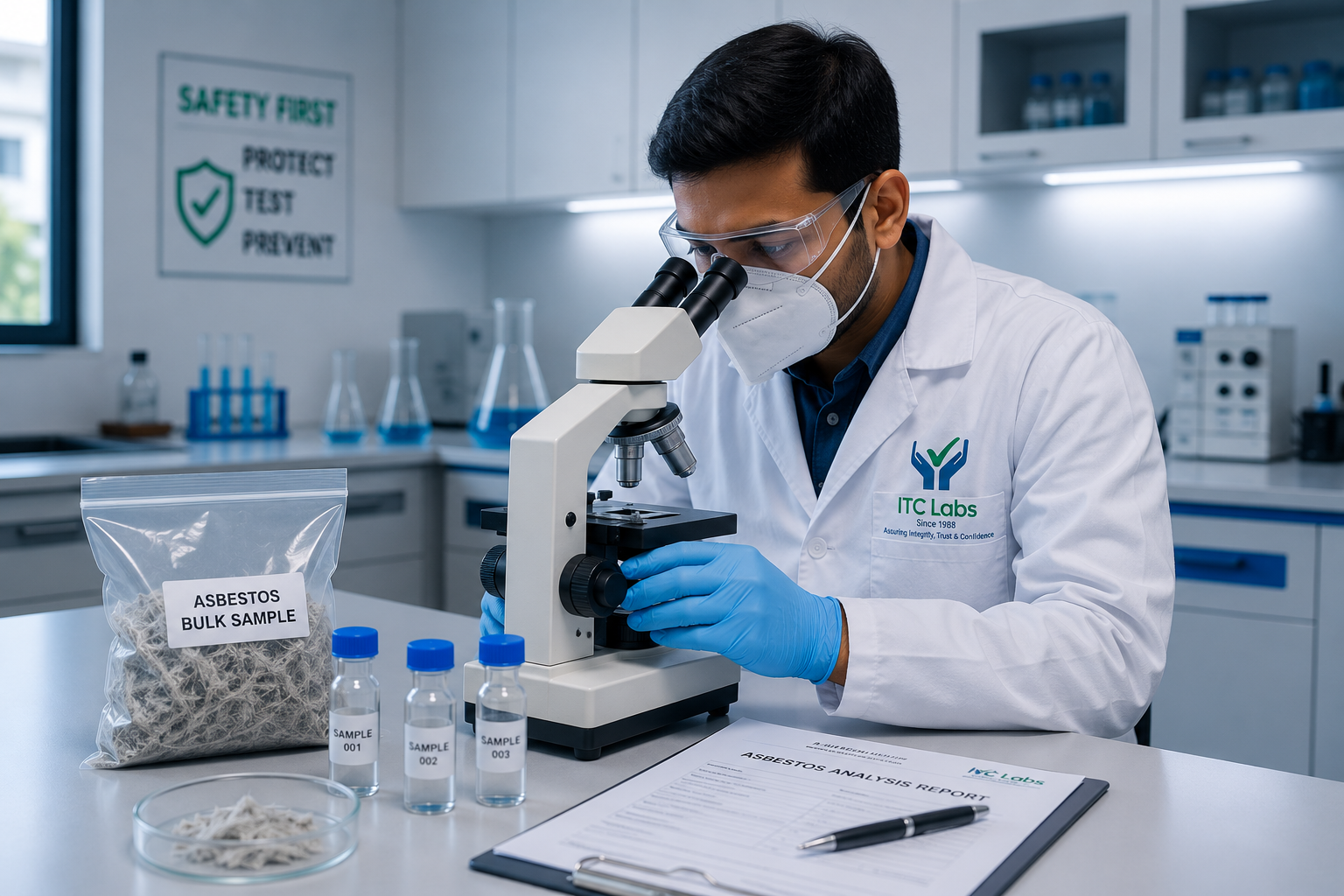
Laboratory analysis is a critical part of the testing process because the final determination should not be based simply on visual appearance. Bulk material analysis can determine whether asbestos is present and may provide information about the type and percentage of asbestos in the sample, depending on the method used.
Polarized light microscopy, commonly called PLM, is an established approach for analyzing many bulk building-material samples. Other techniques, including transmission electron microscopy, may be appropriate for certain air or specialized samples. EPA identifies accredited laboratories as an important quality consideration and notes that NIST’s National Voluntary Laboratory Accreditation Program maintains information on laboratories accredited for asbestos analysis.
The laboratory report should be reviewed together with the sampling information. A result applies to the sample that was analyzed and does not automatically prove that every visually similar material throughout a building has the same composition. Proper sampling design is therefore just as important as laboratory analysis.
Air Testing and Asbestos Exposure Assessment
Bulk testing and air testing answer different questions. Bulk testing examines a physical material to determine whether asbestos is present. Air testing evaluates airborne particles and may be used in circumstances where potential fiber release needs to be assessed.
Air sampling can be particularly relevant during or after asbestos-related work, depending on the applicable project requirements. EPA guidance describes methods involving air collection through filters followed by microscopic analysis. Different analytical methods have different capabilities, and the appropriate method depends on the purpose of the investigation.
Air results should also be interpreted carefully. A single air sample represents conditions during a particular sampling period and location. Building activities, ventilation, air movement, cleaning, and disturbance can influence results. Consequently, a properly designed sampling strategy is necessary when airborne asbestos is being investigated.
Can You Test Asbestos Yourself?
Home testing kits and do-it-yourself sampling may appear convenient, but asbestos sampling can disturb the material being investigated. EPA specifically recommends that suspect materials be sampled by properly trained and accredited asbestos professionals. Incorrect sampling can create unnecessary exposure and may produce results that do not accurately represent the material.
A professional can also identify materials that may have been overlooked, determine suitable sampling locations, document the inspection, and arrange appropriate laboratory analysis. In situations involving renovation or demolition, professional involvement can be particularly important because the consequences of disturbing suspect materials may be greater than simply obtaining an incorrect test result.
Choosing a Qualified Testing Professional
When arranging asbestos testing, property owners should look beyond price and ask about qualifications, experience, sampling procedures, laboratory accreditation, and reporting. Requirements differ between jurisdictions, so it is useful to confirm which training or accreditation standards apply to the specific project.
The laboratory should have appropriate experience analyzing the type of sample being submitted. EPA recommends accredited laboratories for asbestos analysis and provides information about accreditation programs and professional requirements.
A useful report should clearly identify the sampled material, sample location, laboratory method, result, and relevant limitations. Maintaining these records can be valuable for future renovation, maintenance, property management, or compliance activities.
What Happens After a Positive Result?
A positive asbestos result does not automatically mean that the entire building must be demolished or that every asbestos-containing material must be removed. The appropriate response depends on the material’s condition, location, accessibility, planned activities, and applicable regulations.
In some situations, leaving an intact material in place and managing it may be appropriate. In other situations, repair, encapsulation, enclosure, or professional removal may be considered. If renovation or demolition will disturb the material, additional planning and controls may be required.
EPA guidance emphasizes that undamaged asbestos-containing materials can sometimes be managed in place, while damaged materials or materials that will be disturbed may require professional attention.
Importance of Accurate Sampling
Accurate sampling is essential because a laboratory can only analyze the material that it receives. If a sample does not adequately represent a material or an area, the resulting report may not answer the actual question being investigated. Sampling plans should account for differences in appearance, composition, location, layers, and construction history.
Regulatory programs can also specify minimum sampling requirements. For example, EPA information concerning AHERA states that at least two bulk samples are required from each homogeneous area of certain non-friable suspected materials, while additional samples may be appropriate based on professional judgment.
This demonstrates why asbestos investigations should not rely on a single random sample when multiple materials or areas are involved. A qualified professional can determine the appropriate sampling strategy for the project.
Safety Considerations During Testing
Safety should remain the central consideration throughout an asbestos investigation. Suspect materials should not be unnecessarily cut, drilled, sanded, scraped, broken, or otherwise disturbed by untrained individuals. If damaged material is present, access to the area may need to be restricted until the situation is professionally evaluated.
Sampling professionals use procedures designed to reduce fiber release and contamination. EPA guidance describes wetting suspect materials during sampling and taking precautions to minimize disturbance.
Property owners should also avoid sweeping or performing activities that can generate dust around suspected asbestos-containing materials. If renovation work is planned, the asbestos assessment should be completed before work that could disturb suspect materials begins.
Conclusion
Asbestos testing is an important tool for identifying potentially hazardous materials before renovation, maintenance, demolition, or other activities that could disturb older building components. Because asbestos cannot reliably be identified simply by looking at a material, appropriate laboratory analysis is necessary when confirmation is required. Professional sampling helps reduce unnecessary disturbance and ensures that samples are collected from relevant materials and locations.
The testing process generally involves inspection, careful sample collection, qualified laboratory analysis, interpretation of results, and appropriate management planning. Choosing trained professionals and a suitably accredited laboratory can improve the reliability of the investigation. Most importantly, suspect materials should not be disturbed unnecessarily while their condition and composition remain uncertain. A thoughtful testing and management approach can help property owners make informed decisions while reducing the possibility of avoidable asbestos-fiber exposure.