

Introduction
Asbestos tiles were once widely used in homes, offices, schools, and commercial buildings because they were durable, affordable, and resistant to heat and wear. These flooring materials became particularly popular during periods when asbestos was considered a useful component for strengthening construction products. However, as scientific understanding developed, exposure to asbestos fibers became a significant health concern. Today, older buildings may still contain these materials, especially where original flooring has not been replaced.
Understanding asbestos-containing flooring is important for homeowners, property managers, renovation professionals, and anyone working around older buildings. The presence of an old tile does not automatically mean that dangerous fibers are being released. The level of risk depends heavily on the material’s condition and whether it is disturbed. Cutting, sanding, drilling, scraping, or breaking suspect materials can create dust and increase exposure. For this reason, identifying potentially hazardous flooring and deciding what to do with it should be approached carefully and responsibly.
What Are Asbestos Tiles?
Asbestos tiles are flooring products that historically incorporated asbestos fibers into a mixture of materials such as asphalt, vinyl, or other binders. The asbestos helped provide strength, durability, resistance to heat, and dimensional stability. Depending on the period and manufacturer, these tiles could have different colors, patterns, sizes, and surface finishes.
Many older tiles were manufactured in square formats and installed using adhesives that could potentially contain asbestos as well. Their appearance alone, however, cannot reliably determine whether asbestos is present. Similar-looking flooring products were manufactured without asbestos, making visual identification unreliable. Age, building history, product records, and laboratory analysis may provide more useful information when determining whether a material should be treated as potentially asbestos-containing.
Why Were Asbestos Tiles Popular?
The popularity of asbestos-containing flooring came from the practical properties of asbestos. The mineral is naturally resistant to heat and can add strength and durability to construction materials. Manufacturers could incorporate small amounts of asbestos into flooring products while maintaining relatively low production costs.
For building owners, these characteristics made the flooring attractive because it could withstand regular foot traffic and remain functional for many years. The tiles were also available in numerous colors and patterns, making them suitable for residential and institutional interiors. At the time, the health risks associated with airborne asbestos fibers were not as widely understood by the general public as they are today.
The historical popularity of asbestos products explains why older properties can still contain them. A building constructed or renovated several decades ago may have original flooring beneath newer carpet, laminate, or other surfaces.
Are Asbestos Tiles Dangerous?
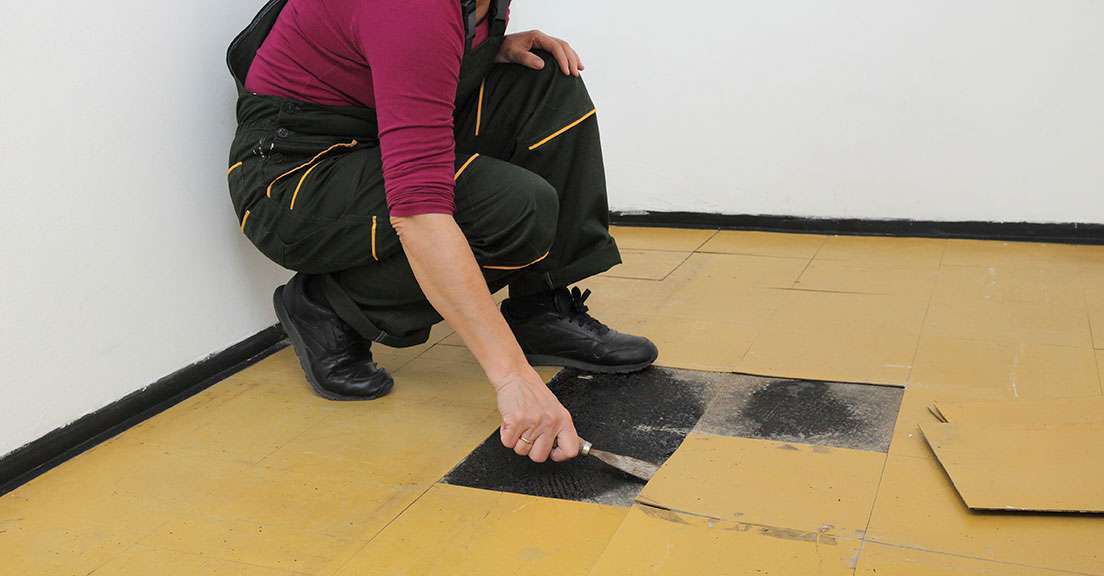
The presence of asbestos in flooring does not necessarily mean that a person will immediately experience harmful exposure. Intact, undisturbed asbestos-containing materials can sometimes present a lower risk because the fibers are bound within the product. The concern increases when the material becomes damaged or is disturbed in a way that releases microscopic fibers into the air.
Breathing airborne asbestos fibers is associated with serious diseases, including asbestosis, lung cancer, and mesothelioma. These illnesses can develop after prolonged periods and may have long latency periods. Because asbestos fibers are extremely small, they cannot be reliably identified by simply looking at dust.
For this reason, suspected asbestos materials should not be treated like ordinary flooring during renovation. Avoiding unnecessary disturbance is generally an important part of reducing potential exposure.
How Can You Identify Asbestos Tiles?
Identifying asbestos tiles visually can be difficult. Certain older flooring styles may be associated with asbestos, but appearance alone cannot confirm their composition. Colors, patterns, dimensions, manufacturing dates, and installation methods can provide clues, but none should be considered definitive evidence.
If flooring is suspected to contain asbestos, homeowners should avoid scraping, sanding, breaking, drilling, or removing it simply to inspect what is underneath. Building records, renovation documents, product information, and professional assessment may help determine whether testing is appropriate.
Laboratory analysis of a properly collected sample can provide a more reliable answer. Sampling itself can disturb the material, however, so it is generally better handled by appropriately trained professionals rather than through casual do-it-yourself inspection.
What Should You Do If You Find Asbestos Tiles?
If you discover old flooring that may contain asbestos, the first step should usually be to avoid disturbing it. Do not immediately pull up the tiles or use power tools to remove them. Keep the area in good condition and prevent unnecessary activity that could damage the flooring.
If the flooring is intact and there is no immediate need for renovation, leaving it undisturbed may be considered as one possible management approach. Covering an existing floor with a suitable new flooring system may also be considered in some circumstances, depending on the condition and local requirements.
When renovation or removal is necessary, professional advice can help determine the safest approach. Regulations concerning asbestos assessment, removal, disposal, and worker protection vary by location, so local requirements should always be considered before work begins.
Risks During Renovation
Renovation can change a relatively stable flooring material into a potential exposure source. Activities such as sanding, grinding, cutting, drilling, scraping, or aggressively removing tiles can create dust. Even seemingly simple flooring work can therefore require careful planning when asbestos is suspected.
A common mistake is assuming that an old tile is safe because it looks solid. Another is assuming that a material must contain asbestos because of its age. Neither assumption is reliable. Proper assessment is more useful than guessing.
Before major renovation in an older building, property owners should consider whether flooring and adhesives require evaluation. Professional contractors familiar with asbestos procedures can help establish appropriate controls and determine whether specialized removal is necessary.
Safe Handling and Removal Considerations
When asbestos-containing flooring requires removal, the work should be approached according to applicable occupational and environmental safety requirements. Professional asbestos contractors may use procedures designed to minimize fiber release, control contaminated areas, protect workers, and manage waste appropriately.
The exact approach depends on factors such as the condition of the material, the size of the work area, the type of flooring, and local regulations. Attempting to provide a universal removal method would be inappropriate because asbestos work can involve significant exposure risks when performed incorrectly.
People who are not trained for asbestos work should avoid experimenting with removal techniques. Ordinary household tools and uncontrolled demolition methods can create dust and potentially spread contamination beyond the original work area.
What About Asbestos Tile Adhesive?
The tile itself is not necessarily the only material of concern. Some older flooring installations used adhesives or mastics that may also have contained asbestos. This means that removing the visible tile without considering the material underneath may not completely address the potential hazard.
Old adhesive can remain attached to a subfloor after tiles are removed. Aggressive scraping or mechanical grinding can disturb it and create dust. Therefore, the complete flooring system should be considered when evaluating an older installation.
Professional assessment can help determine whether the adhesive should be tested or managed as potentially asbestos-containing. This is particularly important during large renovations where the flooring substrate will be disturbed.
Can Old Asbestos Tiles Be Covered?
In some situations, leaving an intact asbestos-containing floor in place and installing an appropriate covering over it may reduce the need for disturbance. This approach is sometimes called encapsulation or covering, although the suitability of a particular method depends on the condition of the existing flooring and the planned renovation.
The existing surface needs to be stable and suitable for the new flooring system. Damaged, loose, or deteriorating material may require a different management strategy. Covering should therefore not be viewed as a universal solution.
Property owners should also consider future maintenance. If a new floor is installed over suspect material, records should clearly indicate what remains underneath so future occupants or contractors do not unknowingly disturb it.
Health Effects of Asbestos Exposure
Asbestos exposure is associated with several serious health conditions. The most widely recognized include mesothelioma, lung cancer, and asbestosis. The likelihood of developing disease can depend on factors such as the amount and duration of exposure, the type of asbestos fiber, and individual circumstances.
One important feature of asbestos-related disease is that symptoms may not appear immediately. Some conditions can take many years to develop after exposure. This long latency period is one reason asbestos safety remains relevant even though many asbestos products were discontinued or restricted decades ago.
Anyone who believes they may have experienced significant occupational or environmental exposure should discuss their concerns with an appropriate healthcare professional. Medical evaluation should be based on individual circumstances rather than assumptions about a particular flooring product.
Safer Alternatives to Old Flooring
Modern flooring provides many alternatives for property owners who want to update an older interior. Depending on the room and budget, options may include ceramic or porcelain tile, modern vinyl flooring, laminate, engineered wood, natural stone, or other contemporary products.
The best choice depends on factors such as moisture exposure, expected traffic, maintenance requirements, appearance, installation method, and cost. Replacing an old floor can improve the appearance of a property, but renovation planning should first account for any potentially hazardous materials underneath.
A professional assessment before renovation can help prevent an unexpected discovery during demolition. Planning ahead may also make it easier to budget for specialized assessment or removal if required.
Maintaining an Older Floor Safely
If an old floor is suspected of containing asbestos and remains intact, careful maintenance can help reduce unnecessary disturbance. Avoid actions that could damage the surface, particularly aggressive sanding, scraping, drilling, or cutting.
Furniture should be moved carefully rather than dragged across damaged areas. Repairs should not automatically involve removing individual tiles without understanding the material. Keeping accurate records about the flooring can also help future homeowners, maintenance workers, and contractors understand what materials are present.
The goal is not to create unnecessary alarm but to prevent avoidable exposure. A cautious approach is particularly valuable when the age and composition of an existing floor are uncertain.
Why Professional Assessment Matters
Professional assessment can provide a more dependable basis for making decisions about suspect flooring. Specialists can evaluate the condition of the material, consider the building’s history, determine whether testing is appropriate, and advise on management options.
This is particularly important before renovation because the safest strategy may be different from one property to another. A floor that can remain undisturbed may not require the same approach as damaged flooring scheduled for demolition.
Professional advice can also help property owners understand applicable regulations concerning asbestos surveys, worker protection, waste handling, and disposal. Requirements differ between jurisdictions, so local guidance should be followed.
Conclusion
Asbestos tiles are a reminder of how construction practices have changed as scientific knowledge has developed. These older flooring products may still exist in homes, workplaces, schools, and commercial buildings, but their presence does not automatically mean that dangerous exposure is occurring. The greater concern arises when suspect materials are damaged or disturbed and asbestos fibers become airborne.
The safest approach is to avoid unnecessary disturbance, avoid relying solely on visual identification, and seek qualified professional advice when testing, renovation, or removal is being considered. Understanding the condition of the flooring, the possibility of asbestos-containing adhesive, and the applicable local requirements can help property owners make informed decisions. With careful planning and appropriate precautions, older flooring can be managed responsibly while reducing unnecessary exposure risks.