

Introduction
Asbestos is a naturally occurring group of fibrous minerals that has been used for decades in construction, manufacturing, and various industrial applications. Its popularity came from its heat resistance, durability, insulating properties, and ability to withstand many chemical reactions. For many years, asbestos was incorporated into building materials, insulation products, roofing sheets, floor tiles, and other items designed to last for extended periods. However, scientific research has established that exposure to asbestos fibers can cause serious diseases, including lung cancer and mesothelioma. These risks have changed how governments, industries, and property owners approach asbestos-containing materials.
Understanding asbestos is important for homeowners, construction workers, renovation professionals, property managers, and anyone living or working in an older building. Materials containing asbestos may remain in place for decades without creating significant exposure when they are intact and undisturbed. Problems can arise when these materials deteriorate, break, or are disturbed during repairs and demolition. Learning to recognize potential risks, understand appropriate safety procedures, and seek qualified professional assistance can help reduce exposure and protect long-term health.
What Is Asbestos?
Asbestos refers to a group of naturally occurring silicate minerals that form thin, durable fibers. These fibers are microscopic and can become airborne when asbestos-containing materials are damaged or disturbed. Because the fibers resist heat and many forms of physical and chemical degradation, asbestos was historically considered a valuable material for applications requiring strength and fire protection.
The six commonly recognized asbestos minerals are chrysotile, amosite, crocidolite, tremolite, actinolite, and anthophyllite. Chrysotile, often called white asbestos, was widely used in commercial products, while amosite and crocidolite were also important in particular insulation and industrial applications. The health risks associated with asbestos exposure have led to extensive restrictions and bans in many countries, although regulations differ between jurisdictions.
A major concern is that asbestos fibers are too small to be seen reliably with the naked eye. People cannot determine whether a material contains asbestos simply by examining its color, texture, or appearance. Laboratory analysis of an appropriate sample is generally needed for confirmation, and sampling should be handled by trained professionals to avoid releasing fibers into the air.
Common Uses of Asbestos
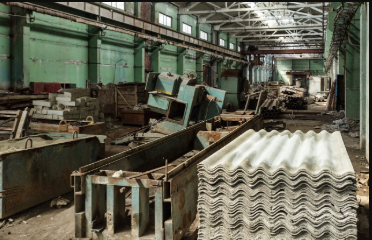
Historically, asbestos was used in a wide range of products because of its ability to resist high temperatures, provide insulation, and improve durability. Construction companies incorporated it into roofing sheets, cement products, wall panels, ceiling materials, insulation boards, and floor tiles. Industrial facilities used asbestos-containing materials around boilers, furnaces, pipelines, and equipment that generated substantial heat. Certain automotive components, including older brake linings and clutch parts, also used asbestos because of its friction-resistant properties.
Its widespread use created a lasting challenge: asbestos may still be present in buildings, machinery, and infrastructure constructed many years ago. Even where new use has been prohibited or restricted, existing materials may remain in service. Identifying these materials is particularly important before renovation, demolition, maintenance, or structural repairs. Modern construction increasingly relies on alternative materials designed to provide insulation and fire resistance without the same established health hazards.
Asbestos may be found in older residential, commercial, and industrial properties. Potential locations include roof sheets, cement boards, pipe insulation, boiler coverings, textured coatings, ceiling panels, vinyl floor tiles, and certain adhesives. The likelihood of encountering asbestos depends on the building’s age, construction methods, location, and the materials used during its development. Not every old building contains asbestos, and not every material that resembles an asbestos product actually contains the mineral.
Property owners should avoid relying on visual inspection alone. A material that looks ordinary may contain asbestos, while a material that appears suspicious may be asbestos-free. Professional inspection and laboratory testing can establish whether asbestos is present and help determine the appropriate management strategy. If a suspected material is intact and undisturbed, leaving it alone may be safer than attempting unnecessary removal.
The primary health concern associated with asbestos is the inhalation of airborne fibers. When these fibers enter the respiratory system, some can become trapped in lung tissue and remain there for extended periods. Continued or substantial exposure can cause inflammation, tissue damage, and serious long-term disease. The risk depends on factors such as exposure concentration, duration, frequency, fiber characteristics, and individual circumstances.
Scientific evidence confirms that all major forms of asbestos are carcinogenic to humans. Important associated diseases include lung cancer, mesothelioma, and asbestosis. Some asbestos-related conditions develop decades after the original exposure, making prevention especially important. A person may feel healthy for many years before symptoms appear. Reducing exposure today can therefore be important even when no immediate health effects are noticeable.
Asbestosis is a chronic lung disease caused by scarring of lung tissue following asbestos exposure. This scarring can make it more difficult for oxygen to pass efficiently into the bloodstream. People with the condition may experience shortness of breath, a persistent cough, and reduced tolerance for physical activity. Severe cases can significantly affect everyday life and may lead to serious respiratory complications.
Asbestosis is generally associated with substantial exposure over time, particularly in occupational settings. However, symptoms alone cannot establish whether someone has the disease. Medical assessment may include a review of exposure history, physical examination, lung-function testing, and appropriate imaging. Anyone with a history of asbestos exposure who develops persistent breathing problems should discuss the concern with a qualified healthcare professional.
Lung Cancer and Mesothelioma

Lung cancer is one of the most serious diseases associated with asbestos exposure. Smoking is an additional major risk factor, and the combination of smoking and asbestos exposure greatly increases lung cancer risk. People who have worked with asbestos or in industries where airborne fibers were present should share that history with their healthcare providers.
Mesothelioma is a relatively rare but aggressive cancer affecting the lining around organs, most commonly the lungs and chest cavity, and sometimes the abdominal cavity. It is strongly associated with asbestos exposure and can take decades to develop. Because early symptoms may be nonspecific, medical evaluation is important when persistent symptoms occur in someone with a relevant exposure history.
Exposure usually occurs when asbestos-containing products are damaged, disturbed, or deteriorate and release fibers into the air. Activities such as drilling, cutting, sanding, breaking, grinding, and demolishing asbestos-containing materials can create airborne contamination. Routine maintenance work may also present a risk when it involves old insulation, cement products, or other materials that contain asbestos.
Construction workers, demolition teams, plumbers, electricians, maintenance personnel, and industrial workers may face occupational exposure when appropriate controls are absent. Household members can also be affected if contaminated dust is carried home on work clothing, footwear, tools, or equipment. Natural deposits containing asbestos minerals may create additional exposure during certain land-disturbing activities.
The safest approach is to prevent the release of fibers in the first place. Avoid disturbing suspected materials, keep other people away from the affected area, and seek qualified assistance to evaluate the situation.
Preventing exposure requires awareness, appropriate planning, and careful handling of materials that may contain asbestos. Homeowners should arrange a professional inspection before undertaking major renovation work in older buildings where asbestos may be present. Employers should identify potential hazards, provide suitable training, follow applicable workplace requirements, and use qualified asbestos professionals when necessary.
If you suspect that a material contains asbestos, follow these precautions:
-
Do not cut, drill, sand, scrape, or break the material.
-
Keep children, visitors, and untrained workers away from the affected area.
-
Avoid sweeping, dry brushing, or using an ordinary household vacuum on potentially contaminated dust.
-
Do not collect samples or remove materials yourself unless you are specifically trained and authorized under applicable regulations.
-
Contact a qualified asbestos inspector or licensed removal professional, as required locally.
These precautions help reduce the possibility of releasing microscopic fibers into the surrounding air. Appropriate procedures depend on the material, its condition, the planned work, and local safety regulations.
Discovering asbestos in a building does not automatically mean that the entire property is unsafe. The risk depends significantly on whether the material is damaged, deteriorating, or likely to be disturbed. In some situations, professionally assessing the material and managing it in place may be safer than removing it unnecessarily. A qualified specialist can evaluate its condition, determine whether testing is needed, and recommend suitable controls.
If removal is necessary, it should be carried out by appropriately trained professionals using procedures designed to prevent fiber release and contamination. Work may involve restricted access, specialized protective equipment, controlled removal methods, air monitoring where appropriate, and regulated waste handling. The waste must be transported and disposed of according to the requirements that apply in the relevant jurisdiction.
After the work is completed, follow professional recommendations for verifying that the area is safe to reoccupy. Do not assume that ordinary cleaning is sufficient to remove asbestos contamination. Proper planning and professional oversight help protect residents, workers, and nearby communities.
Governments worldwide have introduced different rules to control or prohibit asbestos mining, manufacturing, importation, sale, and use. The exact legal position varies by country, so property owners and businesses should consult the relevant national and local authorities before undertaking work involving asbestos-containing materials. International public health organizations recommend ending the use of all forms of asbestos and preventing exposure to existing materials.
Alternative materials may include mineral wool, fiberglass, calcium silicate products, and other engineered insulation or construction materials, depending on the application. These products have different performance characteristics and safety considerations, so selection should be based on building requirements, product specifications, and professional guidance. Substitutes should be evaluated for fire resistance, thermal performance, durability, and suitability for their intended environment.
Replacing hazardous materials with safer alternatives can reduce future exposure risks. However, replacement projects must also account for the safe management of any asbestos already present in older structures.
Is asbestos always dangerous when present in a building?
Asbestos-containing materials can pose a serious health hazard when fibers become airborne and are inhaled. However, intact materials that remain undisturbed are generally less likely to release fibers. A professional assessment can help determine whether monitoring, maintenance, enclosure, or removal is appropriate.
Can asbestos be identified by looking at it?
No. Asbestos fibers are microscopic, and appearance alone cannot reliably confirm their presence. Professional sampling and laboratory analysis may be necessary. Avoid collecting samples yourself because doing so can release fibers.
How long does it take for asbestos-related diseases to develop?
Some asbestos-related diseases develop many years or decades after exposure. The delay varies according to the disease and individual circumstances. Anyone concerned about past exposure should discuss their work and environmental history with a healthcare professional.
What should I do if I accidentally disturb suspected asbestos?
Stop the activity immediately, avoid creating additional dust, and keep people away from the affected area. Do not sweep or vacuum the debris with ordinary household equipment. Contact a qualified asbestos professional for advice about assessment and cleanup.
Can asbestos-related diseases be prevented?
The most effective prevention strategy is to avoid exposure. Identifying potential asbestos-containing materials before construction or renovation, following workplace safety requirements, and using qualified professionals for inspection and removal can substantially reduce the risk.
Asbestos was once valued for its strength, heat resistance, and insulating properties, but its serious health effects have made it an important public health concern. Exposure can lead to diseases such as asbestosis, lung cancer, and mesothelioma, sometimes decades after contact with airborne fibers. Understanding where asbestos may be found, how exposure occurs, and which precautions are appropriate can help individuals make safer decisions about older buildings and industrial materials.
The most important principle is to avoid disturbing suspected asbestos-containing materials and seek qualified professional guidance whenever concerns arise. With proper identification, careful management, safe removal when necessary, and compliance with applicable regulations, exposure risks can be reduced. Awareness and prevention remain essential for protecting workers, families, and communities from the long-term dangers associated with asbestos.