

Introduction
Asbestos is a naturally occurring mineral that was widely used in construction because of its strength, heat resistance, and insulating properties. It may be present in older buildings in materials such as insulation, roofing sheets, ceiling tiles, cement products, floor tiles, and pipe coverings. Although asbestos-containing materials can sometimes remain undisturbed without releasing fibers, they may become hazardous when damaged, drilled, cut, sanded, or demolished. Exposure to airborne asbestos fibers can cause serious diseases, including asbestosis, lung cancer, and mesothelioma.
Understanding how to test for asbestos is important for homeowners, property managers, contractors, and anyone planning renovations in an older building. Unfortunately, asbestos cannot be reliably identified by its appearance alone. Some materials may look harmless but contain asbestos, while others that appear suspicious may be asbestos-free. The most dependable way to determine whether a material contains asbestos is through appropriate sampling and laboratory analysis performed by qualified professionals. Knowing the testing process and the precautions involved can help you make informed decisions while reducing the risk of exposure.
What Is Asbestos and Why Is Testing Important?
Asbestos refers to a group of naturally occurring mineral fibers that were used in numerous building products throughout the twentieth century. Manufacturers valued these minerals for their durability, resistance to heat, and ability to improve the strength of construction materials. Depending on the building’s age and the products used, asbestos may be found in insulation, cement roofing sheets, textured coatings, vinyl floor tiles, adhesives, and certain fire-resistant materials.
Testing is important because asbestos fibers are microscopic and cannot be seen with the naked eye. A material’s color, texture, or age cannot confirm whether asbestos is present. Damaged materials may release fibers into the air, where they can be inhaled. Long-term health consequences can develop years or decades after exposure. Testing helps establish whether asbestos-containing materials are present and whether professional management, repair, enclosure, or removal may be necessary. It can also prevent unnecessary disturbance of materials that have not been confirmed to contain asbestos.
Where Can Asbestos Be Found in a Building?
Asbestos may occur in different parts of older residential, commercial, and industrial buildings. Potential locations include insulation around pipes and boilers, roofing and wall panels, cement boards, ceiling materials, floor tiles, and some older electrical or fireproofing components. Certain industrial facilities may also contain asbestos in specialized insulation and heat-resistant products.
In India, asbestos-cement roofing sheets and other cement-based construction products have been used in many buildings. However, the presence of such a product does not automatically establish its exact composition. The building’s construction date, product documentation, and laboratory findings can help clarify whether asbestos is present.
Homeowners should pay particular attention to materials that are deteriorating, crumbling, or likely to be disturbed during renovation. Nevertheless, even a material that looks intact should not be assumed to be asbestos-free. Avoid drilling, scraping, breaking, or collecting samples from suspicious materials before obtaining appropriate professional advice.
How to Test for Asbestos: Understanding the Main Methods
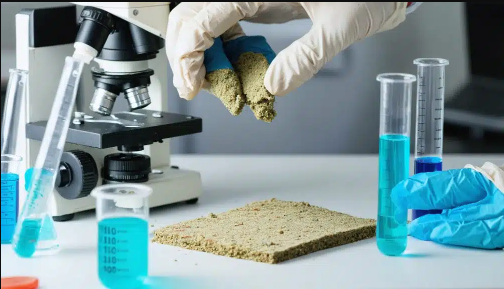
The process of testing for asbestos generally involves identifying potentially affected materials, collecting representative samples when appropriate, and analyzing them in a suitable laboratory. A visual inspection may help locate suspicious products, but it cannot confirm their mineral composition. Laboratory analysis is therefore an important part of reliable identification.
Professionals may use different analytical techniques depending on the material and the laboratory’s capabilities. Polarized light microscopy, commonly known as PLM, can identify asbestos fibers in many bulk building-material samples. More specialized methods, including transmission electron microscopy, may be appropriate when finer identification or greater analytical sensitivity is required.
Air testing is different from bulk-material testing. It measures airborne fiber concentrations under specified sampling conditions, but it does not necessarily identify the source of contamination or prove that a particular building material contains asbestos. The correct testing approach depends on the purpose of the assessment, the material involved, and the applicable local requirements.
Can You Test for Asbestos Yourself?
People searching for how to test for asbestos may encounter home testing kits or instructions for collecting samples. However, collecting a sample can create the very exposure that testing is intended to prevent. Cutting, scraping, breaking, or removing a small piece of material may release microscopic fibers, especially if the material is damaged or friable.
For this reason, the safest approach is to hire a qualified asbestos surveyor or sampling professional who understands the relevant safety procedures. A professional can inspect the building, determine which materials warrant testing, collect samples using suitable controls, and arrange laboratory analysis.
If you are considering a commercial testing kit, check whether it includes analysis by a competent laboratory and whether its sampling instructions comply with applicable safety requirements. A kit does not eliminate the hazards of disturbing asbestos-containing materials. Avoid collecting samples yourself if you cannot do so safely and legally. Never use a household vacuum cleaner, dry brushing, compressed air, or ordinary sweeping to clean suspected asbestos dust.
What Happens During Professional Asbestos Testing?
Professional asbestos testing typically begins with an inspection of the building and a review of its history. The inspector looks for materials that may contain asbestos, considers their condition, and identifies locations that may be affected by planned construction or renovation work. The assessment may also consider whether materials are accessible, damaged, or likely to be disturbed.
If sampling is appropriate, the professional selects representative material samples and follows suitable procedures to limit fiber release and prevent cross-contamination. Samples are placed in appropriate containers, identified clearly, and submitted to a laboratory capable of analyzing asbestos in bulk materials.
The laboratory examines the sample using a suitable analytical method and prepares a report describing whether asbestos was detected. Depending on the material and testing method, the report may identify the type of asbestos or explain the limits of the analysis. The professional then interprets the results and recommends suitable next steps. These may include leaving stable material undisturbed, arranging periodic inspections, repairing or enclosing it, or hiring a licensed or otherwise appropriately qualified removal contractor where required.
How Much Does Asbestos Testing Cost?
The cost of asbestos testing depends on several factors, including the number of samples, the type of material, the location of the building, laboratory fees, and the complexity of the inspection. A straightforward assessment involving a small number of materials will generally require fewer resources than a comprehensive survey of a large commercial property.
Some providers charge separately for inspection, sample collection, laboratory analysis, and written reporting. Others offer a combined service. Additional charges may apply when specialist access equipment, urgent results, air monitoring, or post-removal clearance testing is needed.
When comparing service providers, ask what the quoted price includes, which analytical method will be used, whether the laboratory is appropriately accredited, and whether the report will provide practical recommendations. Choosing a provider solely because it offers the lowest price may not be the best approach if the inspection or laboratory analysis is incomplete. A reliable assessment should clearly explain its scope, limitations, and findings.
How to Interpret Asbestos Test Results
An asbestos laboratory report generally indicates whether asbestos was detected in the submitted sample. Some reports also identify the type of asbestos, provide additional material details, or explain the analytical method and its limitations.
A positive result means the tested sample contains asbestos. It does not automatically mean that dangerous concentrations of airborne fibers are present throughout the building. The level of risk depends on factors such as the material’s condition, its ability to release fibers, its location, and the likelihood that people will disturb it.
A negative result means asbestos was not detected in the tested sample using the method applied. It does not necessarily establish that every similar-looking material in the building is asbestos-free. Different products, layers, or sections may have different compositions. If the sample was not representative or the testing scope was limited, further professional assessment may be appropriate.
Discuss unclear results with the inspector or laboratory. Decisions about repair, removal, or continued management should consider the report alongside the material’s condition and the planned use of the building.
What Should You Do If Asbestos Is Found?
If testing confirms asbestos, avoid disturbing the affected material. Do not drill holes, sand surfaces, break panels, remove insulation, or carry out demolition work that could release fibers. Keep children, pets, and other occupants away from damaged or deteriorating areas until a qualified professional has assessed the situation.
Asbestos does not always need to be removed immediately. If the material is in good condition and unlikely to be disturbed, a professional may recommend leaving it in place and monitoring its condition. Suitable enclosure or encapsulation may be an option in some circumstances, depending on the material and local regulations.
Damaged, exposed, or easily disturbed asbestos-containing materials may require specialist repair or removal. Work should be handled by a contractor with the necessary training, equipment, and authorization under applicable local rules. Do not attempt to dispose of suspected asbestos waste with ordinary household rubbish. Follow the relevant waste-handling and disposal requirements.
After removal or remediation, appropriate inspection and, where necessary, air monitoring can help determine whether the work area is suitable for reoccupation. The required procedures depend on the nature of the work and local standards.
Common Mistakes to Avoid When Testing for Asbestos
One common mistake is assuming that asbestos can be identified by sight. Although certain older construction products may be suspicious, visual appearance alone is not conclusive. Another mistake is disturbing a material to obtain a sample without understanding how fibers could be released.
People also sometimes rely on a single sample to represent every similar surface in a building. However, different materials and installation periods may produce different results. Sampling plans should be designed by a competent professional to address the relevant areas.
A further mistake is confusing an air-quality test with a bulk-material test. Air monitoring can provide information about airborne fibers under particular conditions, but it is not a substitute for analyzing the material itself when the question is whether a product contains asbestos.
Finally, do not assume that a negative result guarantees that the entire property is asbestos-free. Testing only addresses the samples and locations covered by the assessment. Understanding the limits of a report is essential for making safe decisions about future renovation or maintenance work.
Frequently Asked Questions
1. Can asbestos be identified without laboratory testing?
No reliable visual method can confirm the presence or absence of asbestos. Age, appearance, and product type can help identify materials that warrant investigation, but laboratory analysis is generally needed to establish their composition.
2. Is asbestos testing necessary before renovation?
Testing or a suitable asbestos survey may be necessary before renovation, particularly in older buildings where asbestos-containing products could be disturbed. Requirements vary by location and building type. Consult a qualified professional before starting work that could affect suspicious materials.
3. Can asbestos be present in a building without causing immediate harm?
Yes. Asbestos-containing materials that remain intact and undisturbed may present a lower risk than damaged or easily disturbed materials. However, their condition should be assessed professionally, and future maintenance or renovation could change the level of risk.
4. Does a negative asbestos test mean the whole house is safe?
Not necessarily. A negative result applies to the sample tested and the method used. Other materials or areas may contain asbestos, so the findings should be interpreted in the context of the inspection’s scope.
5. Should I leave my home if asbestos is discovered?
Not automatically. The appropriate response depends on the material’s condition, whether fibers may have been released, and the extent of any disturbance. If material is damaged or has been disturbed, avoid the area and seek professional advice. Significant suspected airborne contamination may require restricting access until the area has been assessed.
Conclusion
Understanding how to test for asbestos is an important step in protecting the health of building occupants and planning safe renovation work. Because asbestos fibers are microscopic and cannot be reliably identified by appearance, professional inspection and appropriate laboratory analysis are the most dependable ways to determine whether suspicious materials contain asbestos.
Avoid disturbing materials that may contain asbestos, and do not attempt unsafe sampling or cleanup. If asbestos is confirmed, the best response depends on the material’s condition, the likelihood of fiber release, and the work planned for the building. A qualified professional can help determine whether monitoring, enclosure, repair, or specialist removal is appropriate. Taking these precautions can reduce the risk of exposure and help ensure that building maintenance and renovation decisions are based on reliable information.