

Introduction
Asbestos insulation was once widely used in residential, commercial, and industrial buildings because of its ability to resist heat, fire, chemicals, and electricity. The naturally occurring mineral was incorporated into insulation materials for pipes, boilers, walls, ceilings, heating systems, and other equipment that required thermal protection. For decades, asbestos was considered a practical and durable insulation component, particularly in environments where high temperatures created significant fire risks. However, scientific research established that exposure to asbestos fibers can cause serious diseases, including asbestosis, lung cancer, and mesothelioma. Because of these risks, the use of asbestos has been heavily restricted or banned in many countries, although older buildings may still contain asbestos-containing materials. Understanding where asbestos insulation may be found, why it presents a hazard, and how it should be handled is important for building owners, workers, renovators, and occupants.
What Is Asbestos Insulation?
Asbestos insulation refers to insulation products that contain asbestos fibers. Asbestos is a group of naturally occurring fibrous minerals that can be separated into thin, durable fibers. These fibers have exceptional resistance to heat and fire, making them attractive for insulation applications. Asbestos could be mixed with other materials to create insulation boards, pipe coverings, cement products, sprayed coatings, and various thermal barriers. Depending on the application, the material could appear as a rigid board, wrapped insulation, textured coating, cement-like product, or loose material.
The popularity of asbestos insulation came from its combination of useful physical properties and relatively low cost. It was particularly valuable around boilers, furnaces, steam pipes, industrial machinery, and heating systems. The material could withstand temperatures that would damage many conventional products. However, the same durability that made asbestos useful also means that asbestos-containing materials can remain in older structures for decades. Their presence does not necessarily mean that fibers are immediately released into the air. The greatest concern generally arises when materials are damaged, deteriorated, cut, drilled, sanded, demolished, or otherwise disturbed.
Historical Uses of Asbestos Insulation

During the twentieth century, asbestos became common in construction and industrial applications. It was incorporated into insulation used around hot-water pipes, steam lines, boilers, tanks, furnaces, ducts, and heating equipment. Some buildings also contained asbestos-containing insulation in walls, ceilings, floors, and mechanical rooms. Industrial facilities used asbestos because equipment frequently operated at high temperatures and required materials that could tolerate intense heat.
The historical use of asbestos was not limited to one type of building. Homes, schools, factories, hospitals, offices, ships, power facilities, and other structures constructed or renovated during periods when asbestos products were widely available may contain them. As awareness of health hazards increased, regulations and industry practices changed, reducing the use of asbestos. Nevertheless, older materials can remain in place if they have not been removed during renovation or demolition. Consequently, the age and construction history of a building can be important factors when determining whether professional asbestos assessment is appropriate.
Where Can Asbestos Insulation Be Found?
Asbestos-containing insulation can occur in many locations, especially in older buildings and industrial facilities. Common examples include insulation around pipes, boilers, heating ducts, furnaces, tanks, and mechanical equipment. Some older insulation products may have a fibrous, chalky, paper-like, or cement-like appearance, but appearance alone is not a dependable method of identification.
Pipe insulation is one of the more recognizable historical applications. It may consist of a rigid insulating material covered by a fabric or protective coating. Boiler and furnace insulation may also contain asbestos, particularly in older mechanical rooms. Insulation boards and thermal barriers were sometimes installed around equipment or incorporated into building assemblies. Because asbestos-containing materials can look similar to non-asbestos products, individuals should not assume that a material is safe or hazardous simply by looking at it. Professional assessment and appropriate laboratory analysis may be necessary to determine its composition.
Why Is Asbestos Insulation Dangerous?
The primary health concern associated with asbestos insulation is the release and inhalation of microscopic fibers. When asbestos-containing material becomes damaged or disturbed, tiny fibers can become airborne. If inhaled, some fibers can become lodged in the lungs and surrounding tissues. Repeated or substantial exposure is associated with several serious diseases.
Health effects from asbestos exposure may take many years or decades to develop. Conditions associated with asbestos exposure include asbestosis, lung cancer, and mesothelioma. The risk can vary depending on factors such as the amount and duration of exposure, the type of asbestos, and individual circumstances. Smoking can substantially increase the risk of lung cancer among people exposed to asbestos. Because diseases associated with asbestos can have long latency periods, historical occupational exposure may remain medically relevant long after the original work occurred.
Can You Identify Asbestos Insulation Yourself?
Visual inspection alone generally cannot reliably confirm whether insulation contains asbestos. Products manufactured during different periods and by different companies can have similar appearances, while materials that look different may contain similar asbestos components. Labels, building records, construction dates, and product documentation can provide useful clues, but they may not establish the presence or absence of asbestos.
If an older building contains suspicious insulation, it is generally safer to avoid disturbing it until it has been assessed appropriately. Qualified asbestos professionals can evaluate suspect materials and, where necessary, arrange suitable sampling and laboratory testing. Sampling itself can disturb a material and potentially release fibers, so it should not be treated as an ordinary do-it-yourself inspection activity. The appropriate approach depends on local regulations and the condition and location of the material.
Managing Asbestos Insulation Safely
When asbestos-containing insulation is intact and unlikely to be disturbed, leaving it in place may sometimes be preferable to unnecessary removal. Management strategies can include restricting access, monitoring the material’s condition, preventing physical disturbance, and maintaining appropriate records. The correct strategy depends on the material, its condition, its location, and applicable regulations.
Damaged or deteriorating asbestos insulation requires greater attention because damaged material can release fibers. Maintenance workers and contractors should be informed about known or suspected asbestos before beginning work that could disturb building materials. Drilling, cutting, sanding, scraping, breaking, or removing suspect insulation without appropriate controls can increase exposure. Professional asbestos contractors use regulated procedures, specialized equipment, containment methods, and waste-management practices designed to minimize fiber release.
Asbestos Insulation Removal
Asbestos removal is not equivalent to ordinary insulation replacement. Removal work can disturb the material and create airborne fibers if it is not carefully controlled. For this reason, regulations in many jurisdictions require specific procedures, trained workers, protective equipment, containment, air-control measures, and approved disposal methods.
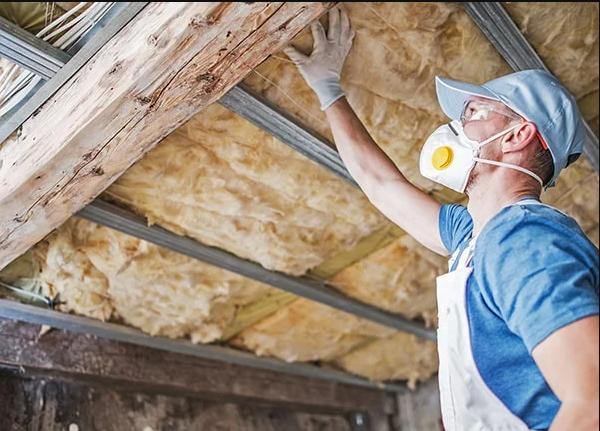
Before removal begins, professionals typically assess the material and determine the appropriate work method. Depending on the circumstances, the work area may need to be isolated to prevent contamination of adjacent spaces. Workers may use suitable respiratory protection and protective clothing according to applicable requirements. Removed asbestos waste must also be packaged, transported, and disposed of in accordance with local laws. Building owners should avoid attempting complex asbestos removal simply as a cost-saving measure, because improper work can expose workers, occupants, and nearby individuals.
Modern Alternatives to Asbestos Insulation
Modern insulation technologies provide many alternatives that can deliver thermal protection without relying on asbestos. Depending on the application, alternatives may include fiberglass, mineral wool, calcium silicate, cellular glass, ceramic fiber, aerogel-based materials, and various foam insulation products. Each material has different temperature limits, moisture characteristics, fire performance, mechanical properties, and installation requirements.
The best alternative depends on the intended application. Residential walls may use products designed for energy efficiency, while industrial piping and high-temperature equipment require materials capable of handling much greater temperatures. Modern products can also be selected according to factors such as energy performance, durability, environmental considerations, installation requirements, and regulatory standards. Choosing an appropriate replacement should therefore involve evaluating the complete operating environment rather than simply selecting the material with the lowest initial cost.
Asbestos Insulation and Building Renovation
Renovation and demolition projects can create significant asbestos concerns in older buildings. Activities such as removing walls, opening ceilings, replacing pipes, modifying heating systems, or repairing mechanical equipment can disturb concealed materials. A building that appears modern on the surface may still contain asbestos in older layers or mechanical components.
Before major renovation work begins, property owners and contractors should determine whether asbestos-containing materials may be present. Depending on local requirements, a professional survey may be necessary before work starts. Identifying suspect materials early can help prevent unexpected project delays, contamination, and worker exposure. It can also allow the project team to plan appropriate controls and budgets before construction activities begin.
Protecting Workers and Building Occupants
Worker awareness is an important part of asbestos safety. Employees who may encounter older insulation should know how to recognize situations that could involve asbestos and understand that suspicious materials should not be disturbed casually. Employers have responsibilities under applicable occupational safety regulations, which can include training, exposure assessment, protective measures, communication, and recordkeeping.
Building occupants should also avoid disturbing damaged or suspicious insulation. If an older material is discovered during maintenance or renovation, work around the material may need to stop until its condition and composition are properly assessed. Keeping people away from a potentially disturbed area can reduce unnecessary exposure while professional advice is obtained. The specific requirements vary by jurisdiction and by the nature of the work.
Legal and Regulatory Considerations
Rules concerning asbestos vary between countries, states, and local authorities. Some jurisdictions prohibit certain asbestos products, while others regulate their manufacture, sale, use, removal, transportation, and disposal. Occupational exposure limits and requirements for licensed contractors can also differ.
Property owners and contractors should therefore consult the regulations that apply to their location before disturbing suspected asbestos-containing materials. Compliance may involve surveys, notifications, permits, licensed professionals, worker training, waste documentation, or clearance procedures. Because regulations can change over time, relying solely on historical building practices is not sufficient when planning current renovation or removal work.
What Should You Do If You Find Suspected Asbestos?
If suspicious insulation is discovered, the safest initial response is to avoid disturbing it. Do not cut, drill, scrape, sand, break, or remove the material simply to determine what it is. Keep unnecessary people away from the area and prevent activities that could damage the insulation. If the material is already damaged, additional precautions may be required depending on the situation.
The next step is to contact an appropriately qualified asbestos professional or follow the applicable local procedure for assessment. A professional can determine whether sampling or further evaluation is necessary and recommend an appropriate management or removal strategy. If exposure may already have occurred, individuals should discuss the circumstances with a qualified healthcare professional, particularly when exposure was repeated or occupational.
Conclusion
Asbestos insulation played an important role in older construction because of its excellent resistance to heat, fire, and chemical degradation. However, the health risks associated with airborne asbestos fibers have fundamentally changed how these materials are managed. Older buildings and industrial facilities can still contain asbestos insulation, making careful identification and controlled management important during maintenance, renovation, and demolition.
The presence of asbestos does not automatically mean that immediate removal is required. In some situations, intact material can be managed safely when it remains undisturbed and its condition is monitored. When removal or repair is necessary, qualified professionals and appropriate regulatory procedures can help reduce the risk of fiber exposure. Modern insulation materials now provide a wide range of alternatives for new construction and replacement projects. Understanding the history, risks, identification methods, and safe-management principles surrounding asbestos insulation helps property owners and workers make informed decisions while protecting building occupants and the wider environment.