

Introduction
Asbestos is a naturally occurring mineral that was widely used in construction, insulation, roofing, flooring, and other building materials because of its strength, heat resistance, and durability. Although it offered several practical benefits, asbestos is now recognized as a serious health hazard when its microscopic fibers become airborne and are inhaled. These fibers can remain in the lungs for many years and may contribute to serious illnesses, including asbestosis, lung cancer, and mesothelioma. Understanding where asbestos may be present and how it can be identified is an important part of maintaining a safe home, workplace, or commercial property.
Asbestos testing is a process used to determine whether a material contains asbestos fibers. It generally involves a professional inspection, the careful collection of material samples when necessary, and laboratory analysis using specialized techniques. Testing can help property owners make informed decisions before renovation, demolition, maintenance, or the removal of potentially hazardous materials. Knowing when testing is appropriate and understanding its limitations can reduce unnecessary disturbance and help protect occupants, workers, and visitors from avoidable exposure.
What Is Asbestos Testing?
Asbestos testing involves examining building materials or other suspected substances to establish whether asbestos is present. Because asbestos fibers are microscopic, it is generally impossible to identify asbestos reliably through visual inspection alone. Materials that look similar may contain completely different ingredients, making laboratory analysis important when confirmation is needed.
A typical assessment begins with identifying materials that could contain asbestos based on their appearance, location, age, and construction history. A qualified professional may collect samples using controlled procedures and send them to a suitable laboratory. Laboratory specialists then examine the samples using recognized analytical methods. The findings help determine whether asbestos is present and may support decisions about repair, monitoring, encapsulation, or professional removal.
Testing does not automatically mean that a building is dangerous or that every suspected material must be removed. The level of concern depends on the material’s condition, its potential to release fibers, and the likelihood of disturbance. Intact asbestos-containing materials may sometimes be managed safely in place under an appropriate management plan.
Where Can Asbestos Be Found?
Asbestos was used in many products because it resists heat, friction, and chemical damage. Older buildings may contain asbestos in several locations, although its presence varies according to the property’s age, construction practices, and materials used.
Common examples include insulation around pipes and boilers, textured ceiling finishes, certain vinyl floor tiles, roofing sheets, cement boards, wall panels, and some older insulation products. Asbestos may also be present in fire-resistant coatings, gaskets, and other industrial components. Its use and availability differ by country, and the age of a material alone cannot confirm whether asbestos is present.
Homeowners should pay particular attention to materials that might be disturbed during renovation, drilling, sanding, cutting, or demolition. However, suspected materials should not be handled merely to determine their composition. Breaking or damaging a material can release fibers if asbestos is present. Professional assessment is a safer way to determine whether further investigation is necessary.
Why Is Asbestos Testing Important?
The primary purpose of testing is to identify potential asbestos hazards before activities disturb the materials containing them. Renovation projects can create unexpected exposure risks when workers remove old flooring, open walls, replace insulation, or alter ceilings without knowing what those materials contain.
Testing can also support workplace safety, property maintenance, and compliance with applicable regulations. Building owners, contractors, facility managers, and property purchasers may need reliable information about suspected asbestos before making decisions about repairs or redevelopment. A documented assessment can help establish which materials require special handling and which areas need monitoring.
Another important benefit is avoiding unnecessary disturbance. When asbestos-containing material is in good condition and unlikely to be damaged, removal may not always be the safest or most practical immediate option. Depending on local requirements and the circumstances, leaving the material undisturbed and managing it appropriately may reduce the risk of fiber release. Testing provides information that can guide these decisions, but the results should always be interpreted alongside the material’s condition and intended use.
Common Methods Used for Asbestos Testing
Different analytical methods may be used depending on the type of sample and the level of detail required. The laboratory chooses a suitable technique according to the material being examined and the purpose of the investigation.
1. Polarized Light Microscopy
Polarized light microscopy, commonly called PLM, is used to identify asbestos minerals in many bulk building-material samples. It examines the optical properties of fibers and mineral particles to help distinguish asbestos from other substances.
This method is commonly used for materials such as insulation, floor tiles, cement products, and some building finishes. However, certain materials and samples with low asbestos concentrations can be difficult to analyze using PLM alone. In such cases, another method may be necessary to obtain more reliable information.
2. Transmission Electron Microscopy
Transmission electron microscopy, or TEM, uses an electron beam to examine extremely small particles and fibers. It can provide detailed information about fiber structure and composition and may be useful when a more sensitive analytical approach is required.
TEM is used in some air-monitoring applications and for certain challenging material samples. It is not automatically required for every investigation because the appropriate method depends on the question being answered, the sample type, and applicable standards.
3. Airborne Fiber Analysis
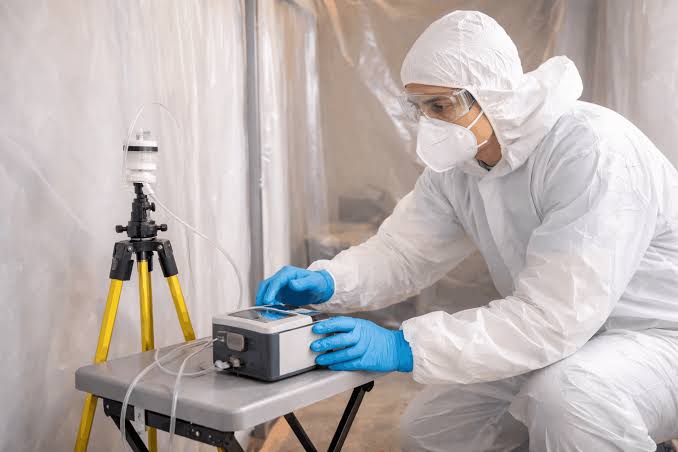
Air monitoring evaluates fibers collected from air samples rather than directly determining the composition of a building material. It may be used during specific asbestos-related activities, after certain removal projects, or when assessing possible airborne contamination.
Air testing can help evaluate conditions at a particular place and time, but it has important limitations. A negative result does not prove that asbestos is absent from the building, and it cannot guarantee that exposure will never occur. Material testing and air monitoring serve different purposes and should be selected according to the situation.
When Should You Consider Asbestos Testing?
Testing may be appropriate when a property contains older or unidentified construction materials that could be disturbed by planned work. Before beginning a renovation or demolition project, property owners should establish whether a formal asbestos survey or assessment is required under local rules.
Other situations include damaged insulation, deteriorating ceiling finishes, crumbling cement products, or unexpected materials discovered during maintenance. Commercial and industrial facilities may also require assessments as part of building management, worker protection, or refurbishment planning.
A professional assessment is particularly useful when the material’s identity is uncertain and the consequences of disturbing it could be serious. If a material is suspected of containing asbestos, avoid drilling, scraping, cutting, sanding, or breaking it while waiting for advice. Testing should be arranged before work proceeds when the suspected material could be affected.
How Does the Asbestos Testing Process Work?

The process usually begins with an inspection of the property or affected area. The professional reviews available building records, identifies suspicious materials, considers their condition, and determines whether sampling is necessary. Some assessments may also involve an inventory of materials and recommendations for future management.
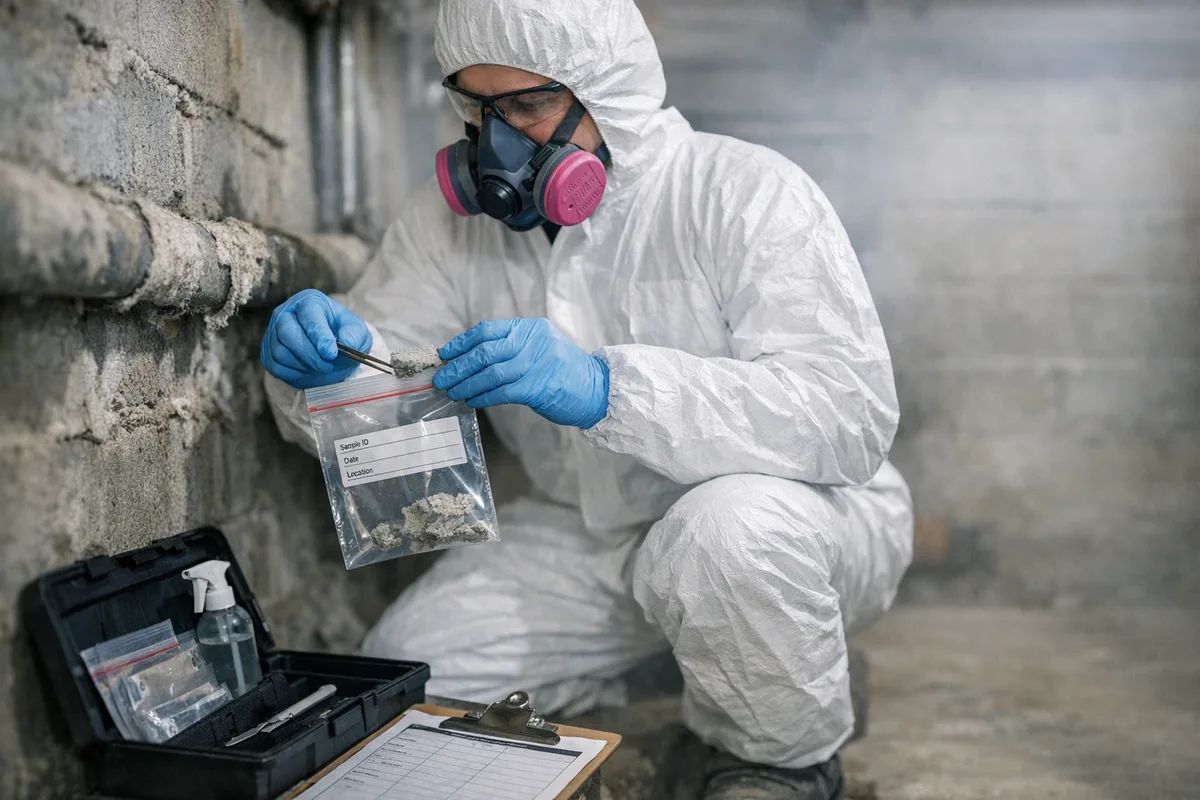
If sampling is required, a trained professional uses suitable procedures to collect representative material while minimizing the release of fibers. The sample is properly contained, labeled, and submitted to a laboratory capable of performing the relevant analysis. Laboratories use established methods to examine the sample and prepare a report describing their findings.
The final report may identify asbestos-containing material, specify the type of asbestos detected when the method permits, and explain the scope of the analysis. The report should be reviewed alongside the property’s condition and planned activities. If asbestos is identified, the next step may involve monitoring, controlled maintenance, encapsulation, enclosure, or removal by qualified personnel, depending on the circumstances and applicable regulations.
Can You Test for Asbestos Yourself?
Some commercial kits are marketed for collecting suspected asbestos samples, but collecting samples without appropriate training can create unnecessary exposure risks. The main danger is disturbing a material that would otherwise have remained intact. Incorrect sampling may also produce an unrepresentative specimen or contaminate nearby surfaces.
For these reasons, professional inspection and sampling are generally preferable, especially for damaged materials, insulation, or areas that will undergo renovation. Where self-collected samples are permitted, individuals should follow applicable regulations and the laboratory’s instructions carefully rather than improvising collection methods.
A visual inspection or a photograph cannot reliably establish whether a material contains asbestos. Similarly, consumer devices that measure ordinary dust do not necessarily identify asbestos fibers. Reliable identification requires suitable analytical methods and an appropriately qualified laboratory.
Health Risks Associated With Asbestos Exposure
Asbestos becomes particularly hazardous when fibers are released into the air and inhaled. Once inside the body, some fibers can remain for long periods and cause inflammation and tissue damage. The health effects may take decades to develop, so the absence of immediate symptoms does not mean that an exposure was harmless.
Diseases associated with asbestos include asbestosis, a chronic lung condition involving scarring of lung tissue; lung cancer; and mesothelioma, a cancer affecting the lining of certain organs. The risk depends on factors such as the intensity and duration of exposure, the type of fibers, and individual circumstances.
Preventing exposure is therefore more effective than relying on symptoms to identify a problem. If suspected asbestos material has been disturbed, stop the activity, keep people away from the affected area, and avoid sweeping, vacuuming with an ordinary household vacuum, or otherwise spreading dust. Seek advice from an appropriately qualified asbestos professional about safe assessment and cleanup.
Understanding Asbestos Testing Results
A laboratory report should clearly state what was examined and whether asbestos was identified in the submitted sample. If asbestos is detected, the findings can help determine what precautions are necessary before maintenance, renovation, or removal work begins.
A negative result applies to the material actually sampled and the analytical method used. It does not automatically establish that every material in the building is asbestos-free. If the sample was not representative, or if other suspect materials remain unexamined, further assessment may be necessary.
The results should also be considered alongside the material’s condition. An intact material that is unlikely to be disturbed may present a different practical risk from a damaged product that releases dust. Property owners should discuss unclear findings with the laboratory or qualified assessor and obtain recommendations that address the intended work. Keeping reports and inspection records can help future owners, contractors, and maintenance teams make informed decisions.
Choosing a Qualified Asbestos Testing Professional
Selecting an experienced professional is an important step toward obtaining reliable results. Look for an assessor or laboratory with relevant training, appropriate accreditation or recognition, and experience with the type of material being investigated. The specific requirements vary by country and by the nature of the work.
Ask whether the service includes a property inspection, sample collection, laboratory analysis, a written report, and recommendations for next steps. It is also useful to understand how samples are handled, which analytical method will be used, and whether additional testing may be needed if the first results are inconclusive.
Testing and asbestos removal are separate activities, and a company that identifies asbestos is not necessarily qualified to remove it. Depending on local rules, specialist licensing or authorization may be required for particular work. Comparing qualifications and the scope of service helps property owners make a safer, more informed choice.
Conclusion
Asbestos can remain hidden in building materials for many years, creating potential risks when those materials deteriorate or are disturbed. Understanding where asbestos may be present, how it is identified, and when professional assessment is necessary can help homeowners, contractors, and facility managers make responsible decisions.
Asbestos testing provides useful evidence about suspected materials, but it should be part of a broader safety process that considers material condition, possible exposure, and planned construction activities. Professional sampling and laboratory analysis can help establish whether asbestos is present and guide appropriate management measures. When a material is suspected of containing asbestos, avoiding disturbance until qualified advice is available is an important precaution. With proper assessment, clear documentation, and suitable management, potential hazards can be addressed more safely and effectively.