

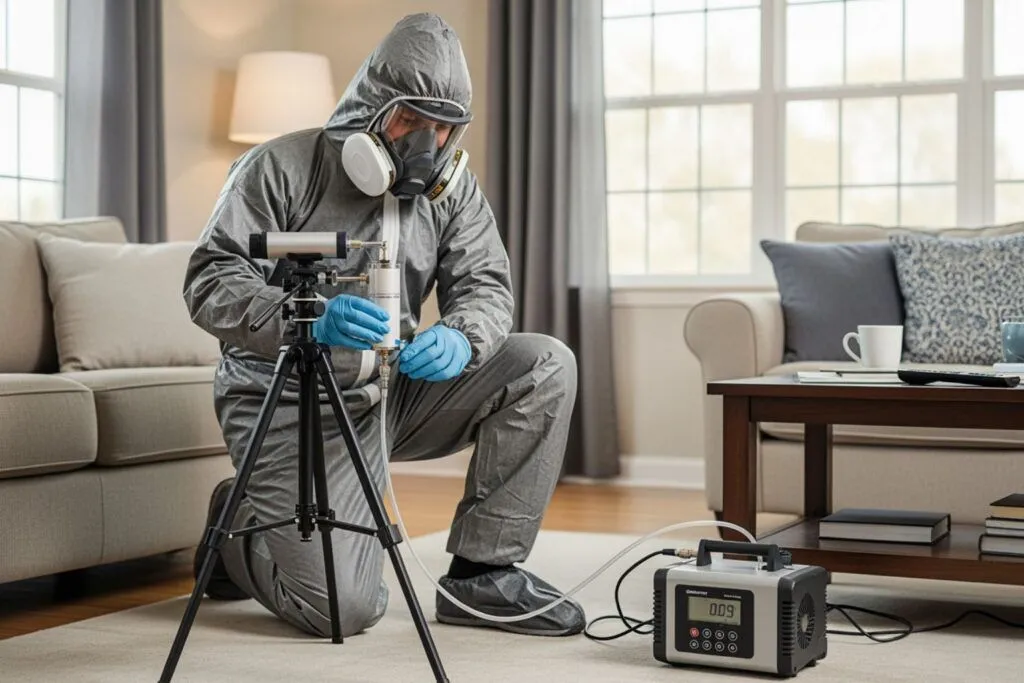
Older homes can contain building materials that were manufactured decades ago, long before modern concerns about indoor environmental hazards became widely recognized. When one of these materials is suspected or confirmed to contain asbestos, homeowners may immediately worry about whether the air inside the property is safe to breathe. The important distinction is that simply finding an asbestos-containing material does not automatically mean that the home’s indoor air is contaminated. The condition of the material and whether it is being disturbed are major factors.
According to current guidance from the Agency for Toxic Substances and Disease Registry (ATSDR), exposure can occur when old materials containing asbestos are disturbed and microscopic fibers become airborne. Breathing those fibers is the primary exposure concern. Activities such as cutting, sanding, drilling, breaking, or improperly removing suspect materials can therefore create a substantially different situation from having an intact material that remains undisturbed.
For homeowners, protecting indoor air quality begins with preventing unnecessary disturbance. Rather than immediately removing every suspicious material, the safer approach is to understand its condition, identify whether planned work could affect it, and use appropriately trained professionals when inspection, sampling, repair, or removal is necessary. This approach can help reduce unnecessary airborne dust while allowing renovation and maintenance decisions to be made carefully.
Understanding Why Older Homes Require Extra Attention
Many older properties contain materials that may look ordinary but can include asbestos. Historical uses included certain insulation products, floor and ceiling materials, roofing products, siding, textured coatings, and other construction components. ATSDR specifically identifies pipe and furnace insulation, flooring, siding, popcorn ceilings from certain historical periods, and vermiculite attic insulation among materials that may warrant attention in older homes.
One challenge is that homeowners cannot reliably determine whether a particular building material contains asbestos simply by looking at it. Similar-looking materials can have completely different compositions. The U.S. Environmental Protection Agency recommends professional sampling when a suspect material is damaged or when planned renovation could disturb it. Samples should be handled by an appropriately trained professional and analyzed by a qualified laboratory.
The condition of the material is especially important. Intact, stable material that is left alone is generally less likely to release fibers than material that is deteriorating or being mechanically disturbed. This is why an older home does not necessarily have an indoor-air emergency simply because asbestos-containing material is present. The immediate priority is preventing unnecessary disturbance and determining whether the material requires professional evaluation.
How Asbestos Can Affect Indoor Air Quality
The relationship between asbestos and indoor air quality largely depends on whether microscopic fibers become airborne. A solid, intact material that remains undisturbed can behave very differently from a damaged material that is crumbling or from material subjected to drilling, sanding, cutting, scraping, or demolition. EPA guidance notes that elevated airborne concentrations can occur when asbestos-containing materials are disturbed during remodeling or other activities.
Air movement inside a home can make contamination-control decisions particularly important. Heating and cooling systems, fans, open doors, and ordinary movement can move airborne particles from one area to another. During renovation, allowing dust to escape from a work area can therefore increase the possibility of spreading contaminants into occupied portions of a property. EPA recommends using work practices that help contain pollutants and prevent them from migrating throughout the home during remodeling.
This does not mean homeowners should attempt to diagnose air contamination themselves. Visible dust cannot reliably indicate whether asbestos fibers are present, and the absence of visible dust does not prove that air is free from microscopic fibers. If a material has been accidentally damaged or improperly disturbed, professional advice is more appropriate than relying on ordinary household cleaning or visual inspection.
What to Do When Suspect Material Is Discovered
The first practical step is to stop activities that could disturb the material. If someone discovers a suspicious layer beneath flooring, an old pipe covering, deteriorating ceiling material, or another potentially asbestos-containing product during renovation, continuing to cut or remove it can increase the potential for airborne fibers. EPA specifically advises homeowners not to disturb suspect materials and recommends using an asbestos professional when renovation could affect them.
Homeowners should also avoid casually scraping, sanding, drilling, sweeping, or breaking the material to investigate it. The fact that a material is old does not make it safe to handle, and appearance alone cannot confirm its composition. Instead, the area should be left as undisturbed as reasonably possible while an appropriately qualified professional determines what steps are necessary.
A sensible initial response can include:
- Stop renovation work around the suspect material.
- Keep household members away from the affected area when practical.
- Avoid actions that create dust, such as sanding or dry sweeping.
- Arrange professional assessment when damage or planned renovation is involved.
These precautions are especially important when children, older adults, or other household members could spend significant time near the affected area. The objective is not to create panic but to prevent an avoidable exposure while the situation is evaluated.
Professional Inspection and Testing
Professional inspection is valuable because the presence of a suspect material cannot normally be confirmed through appearance alone. A trained inspector can evaluate where the material is located, its condition, and whether planned construction work could disturb it. Where sampling is appropriate, the sample can be submitted to a qualified laboratory for analysis.
Testing should be considered in the context of the project. If a material is completely intact and will remain untouched, immediate sampling may not always be necessary. However, the situation changes when homeowners plan to remove flooring, open walls, replace ceilings, alter insulation, modify plumbing, or carry out another renovation that could affect suspect material. EPA guidance recommends professional assessment in circumstances where damaged material or planned renovation creates a potential disturbance.
Professional evaluation also helps prevent an opposite problem: unnecessary removal. Removing material solely because it looks old can create disturbance that would otherwise have been avoided. In many circumstances, keeping intact material safely in place and preventing future damage can be preferable to unnecessary demolition.
Safe Renovation Planning in an Older Home
Renovation is one of the most important situations to consider when managing indoor air quality. A homeowner may begin with an apparently simple project, such as replacing flooring or installing new lighting, only to discover that older materials could be affected by the work. Planning should therefore happen before demolition begins, particularly in older properties.
The renovation plan should identify areas where suspect materials may exist and determine whether the planned work could disturb them. EPA guidance for asbestos management emphasizes reviewing existing information, visually assessing areas that could be affected, and using sampling or appropriate asbestos assumptions when necessary before renovation.
Containment and ventilation strategies may also be necessary during professional renovation work. EPA notes that exhaust ventilation can help move pollutants from a controlled work area to the outdoors while helping prevent them from spreading into the rest of the home. Physical barriers can further support separation between the work area and occupied spaces. These measures should be designed and implemented according to the requirements applicable to the project rather than improvised by an untrained homeowner.
| Situation | Appropriate homeowner response |
|---|---|
| Intact suspect material | Avoid disturbing it and seek professional advice if future work could affect it |
| Damaged or deteriorating material | Restrict unnecessary access and arrange professional assessment |
| Planned renovation near suspect material | Obtain an appropriate inspection before work begins |
| Material accidentally disturbed | Stop the activity and seek qualified professional guidance |
| Professional removal underway | Keep occupants away from the controlled work area and follow the contractor’s instructions |
Cleaning and Maintaining Indoor Air Quality
Ordinary cleaning practices require extra consideration when there is concern about asbestos-containing dust. Dry sweeping or other activities that unnecessarily stir settled dust can potentially redistribute particles. ATSDR recommends wet cleaning methods and HEPA vacuuming as measures for keeping asbestos levels low in relevant household situations.
However, homeowners should distinguish between routine maintenance of an uncontaminated area and cleanup following a significant asbestos disturbance. If a ceiling, insulation, flooring material, or another suspect product has been broken or improperly removed, ordinary household cleaning may not be an adequate response. Attempting to clean a potentially contaminated area without appropriate procedures can spread rather than solve the problem.

Ventilation also needs to be considered carefully. Fresh-air ventilation is generally important for healthy indoor environments, but opening windows or running fans indiscriminately during an active asbestos disturbance could potentially move contaminated dust into other parts of the building. The appropriate containment strategy depends on the circumstances, which is another reason professional assessment is important when significant disturbance has occurred.
Reducing Future Risks in Older Properties
Managing indoor air quality is not a one-time task. Older homes frequently undergo changes over many years, including electrical upgrades, plumbing repairs, heating-system replacement, insulation work, flooring installation, and cosmetic renovations. A material that remains safely undisturbed today could become relevant during a future project.
Homeowners can reduce uncertainty by keeping records of professional inspections and identifying areas where suspect materials are located. If a renovation is planned several years later, those records can help contractors understand what should be evaluated before work begins. Clear communication is particularly important when several contractors are involved in a project because one worker may not know what another has previously identified.
It is also useful to address unrelated indoor-air-quality problems without disturbing suspect materials. Moisture, mold, inadequate ventilation, combustion pollutants, and excessive household dust can affect indoor air quality for reasons unrelated to asbestos. A comprehensive home-maintenance strategy should therefore consider the entire indoor environment while keeping potentially hazardous older materials protected from unnecessary disturbance. EPA identifies inadequate ventilation, moisture, and indoor pollutant sources as important components of overall indoor-air-quality management.
When Professional Help Becomes Essential
Professional assistance becomes particularly important when suspect material is damaged, when renovation will disturb it, or when an accidental release may have occurred. Choosing someone with appropriate asbestos training and credentials is important because improper handling can create additional airborne contamination. ATSDR advises residents of older homes to avoid disturbing potentially asbestos-containing materials and to consult qualified professionals when damaged materials need attention.
Health concerns should also be discussed with a medical professional when someone believes they have experienced significant exposure. Asbestos-related diseases can develop after long periods, and individual risk depends on factors such as exposure level, frequency, duration, and other circumstances. ATSDR recommends discussing concerns with a healthcare provider who can consider a person’s exposure history and determine whether further evaluation is appropriate.
Conclusion
Protecting indoor air quality in an older home requires careful management rather than panic. The presence of asbestos-containing material does not automatically mean that the home’s air is unsafe. The greater concern arises when potentially hazardous materials are damaged or disturbed and microscopic fibers become airborne. For that reason, leaving intact materials undisturbed, avoiding dust-producing activities, and obtaining professional assessment before renovation are fundamental precautions.