

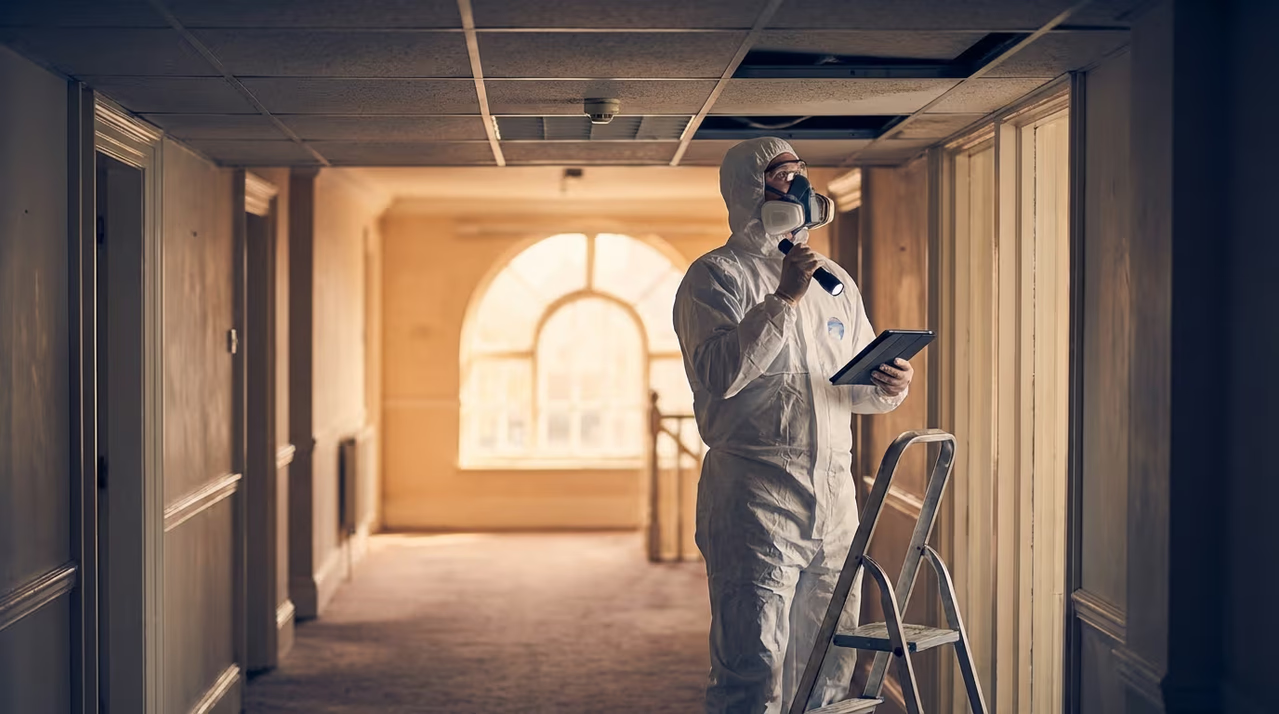
School buildings require regular maintenance to remain safe, comfortable, and suitable for learning. Roof repairs, electrical upgrades, plumbing work, heating improvements, flooring replacement, and renovation projects can all involve disturbing parts of an older building. When construction materials have been installed for decades, maintenance teams may encounter hazardous substances that are not immediately visible. One of the most important concerns is Asbestos, particularly in schools and other buildings constructed or renovated during periods when asbestos-containing materials were widely used.
Managing this risk requires more than simply knowing that an older building may contain asbestos. School administrators, facility managers, maintenance personnel, and contractors need to understand where potentially hazardous materials may be located, how they can be disturbed, and what procedures should be followed before work begins. A well-planned maintenance project can reduce the possibility of accidental exposure while allowing essential improvements to continue.
The challenge becomes greater when several contractors are working in the same building or when maintenance is scheduled during a short school break. Rushing surveys, skipping documentation, or beginning work before materials have been assessed can create unnecessary risks. Effective planning therefore places hazard identification, communication, worker protection, and controlled working practices at the center of every maintenance project.
Why Asbestos Can Be a Concern in Older School Buildings
Asbestos was historically incorporated into many construction products because of its resistance to heat, fire, chemicals, and wear. Depending on the age and construction history of a school, asbestos-containing materials may potentially be present in areas such as insulation, floor tiles, roofing products, ceiling materials, pipe coverings, wall panels, cement products, or certain building components. The presence of asbestos does not automatically mean that a building is unsafe. The level of concern generally depends on the condition of the material and whether maintenance activities could disturb it.
The greatest concern arises when asbestos-containing materials are damaged, cut, drilled, sanded, broken, removed, or otherwise disturbed. Maintenance activities that appear relatively minor can sometimes create this problem. For example, installing a new electrical cable may require drilling through a wall, while replacing flooring may disturb adhesive or underlying materials. Similarly, plumbing repairs can involve pipe insulation or panels that were not obvious during an initial visual inspection.
This is why school maintenance planning should treat older building materials as something that needs to be assessed before work begins rather than assuming that familiar construction materials are harmless.
Planning Before Maintenance Work Begins
Building Surveys and Existing Records
A successful maintenance project should begin with a review of available building information. Schools may have construction records, previous refurbishment documents, material surveys, maintenance reports, or records identifying known asbestos-containing materials. These documents can provide useful information about areas that have already been inspected or managed.
However, records should not automatically be treated as complete. Buildings can undergo multiple renovations over several decades, and information from one project may not cover another part of the property. If planned work will affect materials whose composition is uncertain, an appropriately qualified professional may need to assess or sample those materials before maintenance begins.
The purpose of this process is not simply to create paperwork. It helps decision-makers determine whether the proposed work can proceed normally, requires additional controls, or should be redesigned to avoid disturbing potentially hazardous materials.
Identify the Exact Work Area
Maintenance managers should clearly define where contractors will work and what building materials they are expected to disturb. A project involving a small ceiling opening, for example, may require a different assessment from a complete classroom refurbishment. Understanding the exact scope helps professionals determine whether existing information adequately covers the work area.
The following planning questions can help establish the level of preparation required:
- What materials will be removed, drilled, cut, opened, or repaired?
- Has the affected area been assessed for asbestos-containing materials?
- Who is responsible for reviewing the available building information?
- What procedures apply if unexpected material is discovered?
These questions should be addressed before contractors begin physical work rather than after an unknown material has already been damaged.
Managing Asbestos During School Maintenance Projects
Once potential hazards have been identified, the next step is to establish appropriate controls. Asbestos management should be integrated into the overall project plan rather than treated as a separate issue that only the contractor needs to consider. School management, facility personnel, project managers, and contractors all need a clear understanding of their responsibilities.
Communication is particularly important because maintenance work can take place while teachers, administrative staff, cleaners, students, and visitors are still present elsewhere in the building. Even when work is scheduled outside normal school hours, contractors need clear information about restricted areas, access arrangements, emergency procedures, and reporting requirements.
Where work could potentially disturb asbestos-containing materials, the appropriate professionals should determine whether the material can safely remain in place under controlled conditions or whether specialized work is required. The decision should be based on the material, its condition, the proposed activity, and applicable workplace and building regulations.
Controlling Access Around Maintenance Areas
Keeping unauthorized people away from a maintenance area is an important part of risk management. Physical barriers, warning signs, controlled entry points, and suitable work procedures can help prevent students and staff from accidentally entering an active work zone.
Schools should also consider how workers and materials move through the building. A contractor may need to carry equipment through corridors, access ceiling spaces, or transport waste from the work area. The route should be planned so that normal school activities do not interfere with controlled maintenance operations.
Choosing Appropriate Contractors
Contractor selection is another important part of a safe maintenance strategy. Schools should not assume that a general construction company automatically has the qualifications, training, equipment, or authorization needed for work involving asbestos-containing materials. The required qualifications and legal requirements vary by jurisdiction and by the type of work being performed.
Before appointing a contractor, school management should verify relevant experience and ensure that the contractor understands the building information and project requirements. Documentation, worker training, risk assessments, control measures, and waste-handling procedures should be reviewed where applicable.
A contractor should also know what to do if unexpected material is discovered. Stopping work and reporting an unidentified material is generally safer than continuing simply because a project deadline is approaching.
Risk Control Measures for Different Maintenance Activities
Different maintenance tasks can create different levels of risk. The following table illustrates why the planned activity should always be considered alongside the building material involved.
| Maintenance Activity | Potential Concern | Recommended Planning Focus |
|---|---|---|
| Electrical installation | Drilling or cutting walls and ceilings | Check affected materials before creating openings |
| Flooring replacement | Disturbing old tiles or adhesives | Assess existing flooring and underlying materials |
| Plumbing repairs | Contact with insulation or building panels | Review pipework and surrounding construction |
| Roof maintenance | Damaging older roofing products | Identify roof materials before repair work |
| Ceiling repairs | Disturbing boards or insulation | Inspect ceiling spaces before access |
| Renovation work | Multiple materials may be disturbed | Conduct comprehensive pre-work assessment |
The table demonstrates why a general statement such as “the building is old” is not enough to determine the appropriate approach. Each project should be evaluated according to the materials, location, work method, and people who may be affected.
Training and Communication for School Staff
School employees may not be directly involved in construction, but they can still play an important role in preventing accidental disturbance. Maintenance staff, caretakers, cleaners, and facility managers may encounter damaged materials during routine duties. They should know how to recognize situations that require further assessment and whom to contact before continuing work.
Teachers and administrative employees may also need basic information when maintenance activities occur near occupied areas. Clear communication can reduce the chance that someone accidentally enters a restricted zone or moves materials that contractors have isolated.
Training should focus on practical awareness rather than overwhelming employees with technical information. Staff should understand that they should not disturb suspicious materials and should report damage, unexpected discoveries, or unauthorized access promptly.
What Happens When Unexpected Material Is Discovered?
Unexpected discoveries can occur even when a maintenance project has been carefully planned. Workers may open a wall, remove a floor covering, or access a concealed service area and discover a material that was not documented. Continuing work without assessing the material can increase the risk of unnecessary disturbance.
A clear stop-work procedure should therefore form part of the project plan. Workers should know who has authority to suspend the activity, who should be notified, and how the affected area should be controlled while the material is assessed.
This approach is especially important in schools because maintenance schedules are often tightly connected to academic calendars. A contractor may feel pressure to complete work before students return, but deadlines should not replace proper hazard assessment. If additional investigation is required, project managers should adjust the schedule rather than encourage workers to proceed without sufficient information.
Safe Handling and Waste Management
When asbestos-containing materials need to be removed or otherwise managed, the work should be performed according to applicable laws, regulations, and professional requirements. The specific procedures can differ depending on the country, jurisdiction, material type, condition, and scale of the project.
Waste management is also an important consideration. Materials removed during controlled work should not simply be treated as ordinary construction waste. Appropriate containment, labeling, transportation, and disposal arrangements may be required, depending on local requirements. Contractors should establish these procedures before work starts.
Poor waste management can create risks beyond the original maintenance area. If hazardous material is improperly handled or transported through occupied parts of a school, exposure concerns can extend to workers and other building users.
Maintaining Long-Term Building Safety
Managing asbestos risks should not be viewed as a one-time task that ends when a maintenance project is completed. School buildings are constantly changing. New electrical systems, heating equipment, classrooms, accessibility features, and technology installations may require future construction work.
Maintaining accurate building records can make future projects safer and more efficient. Whenever maintenance or renovation work is completed, relevant information should be updated so that future facility managers and contractors understand what materials were identified, removed, enclosed, or left in place.
A long-term management approach can also reduce unnecessary disruption. When schools maintain reliable records and communicate known hazards clearly, future project teams can make informed decisions before beginning work.
Creating a Strong Maintenance Safety Culture
A strong safety culture depends on making hazard awareness part of normal school operations. Administrators should encourage workers and contractors to raise concerns when something does not look right rather than rewarding speed at the expense of careful planning.
Two principles are especially useful:
- Plan before disturbing materials: Review building information and assess uncertain materials before maintenance begins.
- Stop when conditions change: If unexpected material or damage is discovered, pause the activity and obtain appropriate professional guidance.
This approach can also improve project coordination. When everyone understands that safety questions are legitimate reasons to pause work, contractors are more likely to report unexpected conditions early. That allows the project team to respond before a small uncertainty becomes a larger problem.
Conclusion
Managing Asbestos risks during school building maintenance requires careful planning, reliable information, effective communication, and appropriate professional expertise. Older construction materials should not be disturbed simply because they appear ordinary or because a maintenance deadline is approaching. Before drilling, cutting, removing, repairing, or renovating building components, schools should determine whether potentially hazardous materials could be affected. The most effective approach combines building records, appropriate surveys, trained workers, controlled access, clear contractor responsibilities, and proper procedures for unexpected discoveries. It also recognizes that managing Asbestos is an ongoing responsibility rather than a single inspection completed years ago.