


Introduction
The question “what does asbestos look like” is important because asbestos-containing materials can occur in many different forms. Asbestos is a naturally occurring group of mineral fibers that was widely used in construction and manufacturing because it is resistant to heat, fire, and chemical damage. Depending on how it was processed and incorporated into a product, it may appear very different from one material to another. It can be found in older insulation, roofing products, floor tiles, cement materials, textured coatings, and other building components. However, appearance alone cannot reliably confirm whether a material contains asbestos. Many modern and older materials can look almost identical even when one contains asbestos and the other does not. Understanding the general appearance of suspected materials is useful, but safe professional testing is necessary when asbestos is suspected.
What Does Asbestos Look Like?
When people ask what does asbestos look like, it is useful to understand that asbestos itself is made of extremely fine mineral fibers. Individual fibers are generally too small to identify with the naked eye. In its raw mineral form, asbestos can occur in fibrous masses with a soft or silky appearance, but asbestos used in buildings was usually mixed with other substances.
As a result, asbestos-containing products do not have one standard appearance. Some may be gray, white, brown, or off-white, while others can have colors added during manufacturing. The surface might be smooth, rough, layered, brittle, or cement-like depending on the product. Insulation can sometimes appear fluffy or fibrous, while asbestos cement products may look hard and uniform. Older floor tiles can have a patterned or plain surface. These differences make visual identification particularly difficult. A material that looks suspicious should therefore not be disturbed simply to determine whether it contains asbestos.
Why Asbestos Can Be Difficult to Identify
One reason the question what does asbestos look like has no simple visual answer is that asbestos was used in thousands of products. Manufacturers combined asbestos fibers with materials such as cement, adhesives, plastics, paper, insulation compounds, and coatings. The resulting products could look completely different from the original mineral.
Age can also change the appearance of a material. Paint, dirt, moisture, repairs, weathering, and deterioration may alter the original surface. A building component that once looked smooth may become cracked or discolored after decades of use. Similarly, a material that looks like ordinary insulation may contain several layers or mixtures that cannot be identified safely by appearance.
This is why photographs and online comparisons should not be treated as proof. Even trained individuals may need laboratory analysis to determine whether asbestos is present. If an older building contains a suspicious material, the safest approach is to avoid disturbing it until its composition has been professionally assessed.
Common Materials That May Contain Asbestos
Historically, asbestos was used in numerous building products. Its resistance to heat and durability made it attractive for insulation, roofing, flooring, and other applications. Some older buildings may therefore contain asbestos-containing materials in areas that are not immediately obvious.
| Material or Area | Possible Appearance | Important Consideration |
|---|---|---|
| Insulation | Fibrous, fluffy, layered, or compact | Do not handle or pull apart |
| Floor tiles | Often square, patterned, or plain | Appearance cannot confirm contents |
| Roofing materials | Cement-like sheets or roofing products | Avoid cutting or breaking |
| Pipe insulation | Wrapped, molded, or layered | Damaged insulation can be concerning |
| Cement products | Hard, gray, or textured | Fibers may not be visible |
| Textured coatings | Rough or patterned surfaces | Testing may be necessary |
| Some older wall materials | Smooth, board-like, or cement-based | Professional assessment is recommended |
Not every older material contains asbestos, and not every asbestos-containing product has an obvious fibrous appearance. The table is therefore useful for understanding where asbestos may historically have been used rather than for identifying it conclusively.
What Does Asbestos Look Like in Insulation?
When researching what does asbestos look like, insulation is one of the most commonly discussed examples. Older insulation products containing asbestos can have different appearances depending on their construction and purpose. Some may look loose and fluffy, while others may appear as dense boards, paper-like coverings, woven material, or molded insulation around pipes and equipment.
Certain asbestos-containing insulation can deteriorate with age. Crumbling, breaking, or disturbing such material can release microscopic fibers into the air. Importantly, not every fluffy or fibrous insulation product contains asbestos. Other insulation materials, including fiberglass and mineral wool, can have similar visual characteristics.
Because these materials can look alike, attempting to separate them manually is not recommended. If insulation in an older property appears unusual or damaged, it is better to leave it undisturbed and obtain advice from a qualified asbestos professional. Professional assessment can determine whether sampling or laboratory analysis is appropriate.
What Does Asbestos Look Like in Floor Tiles?
Older floor tiles are another reason people search for what does asbestos look like. Some asbestos-containing floor tiles were manufactured in common sizes and could have a variety of colors and patterns. They may look similar to ordinary vinyl or other resilient flooring products.
The backing, adhesive, or other layers beneath a floor may also contain asbestos even when the visible surface does not appear unusual. This makes visual inspection particularly unreliable. A tile that looks exactly like a typical household flooring product may still require professional testing if its age and history suggest possible asbestos use.
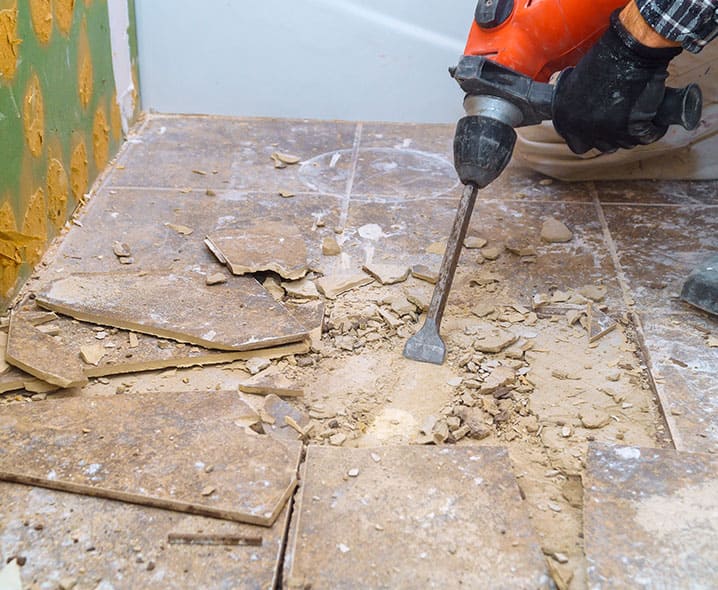
Damaged flooring can present additional concerns because sanding, grinding, cutting, drilling, or aggressively removing it can disturb potentially hazardous material. Homeowners should avoid experimenting with old flooring to determine its composition. If renovation is planned, the material should be evaluated before work begins.
Asbestos in Cement and Roofing Products
Asbestos was also incorporated into cement-based products because the fibers could strengthen the material and improve its resistance to heat and weather. Older asbestos cement products may include roofing sheets, wall panels, pipes, and other construction components.
 These products can look hard, gray, weathered, or cement-like. Unlike loose insulation, the asbestos fibers may not be visible on the surface. This demonstrates why the question what does asbestos look like cannot be answered by simply searching for visible fibers.
Intact asbestos cement may pose less risk than damaged or aggressively disturbed material because the fibers can be bound within the cement matrix. However, cutting, drilling, sanding, breaking, or crushing such products can potentially release fibers. Anyone planning to repair or remove older cement-based materials should obtain appropriate professional guidance before beginning work.
Can You Identify Asbestos by Looking at It?
In most situations, no. Visual inspection can raise suspicion, but it cannot establish that a material contains asbestos. The color, texture, age, or shape of a product is not enough to provide a reliable identification.
This is especially important because many harmless materials resemble asbestos-containing products. Fiberglass, cellulose, mineral wool, modern cement products, vinyl flooring, and other construction materials can share similar characteristics. Conversely, asbestos can be incorporated into products where no obvious fibers are visible.
If identification is necessary, a qualified professional can assess the material and determine whether sampling is appropriate. Laboratory analysis can then provide a more reliable answer. Until that process is completed, it is sensible to treat a suspicious material cautiously rather than assuming that its appearance proves what it is.
Signs That a Material Should Be Left Undisturbed
An older building material deserves additional caution when it is damaged, deteriorating, or scheduled for renovation. Visible deterioration does not prove the presence of asbestos, but disturbing an unknown material can create unnecessary exposure if asbestos is present.
Common situations where professional advice may be appropriate include:
- Renovating an older building with unknown materials.
- Removing old insulation, flooring, or roofing.
- Finding damaged or deteriorating construction materials.
- Planning drilling, sanding, cutting, or demolition.
- Discovering unusual insulation around pipes or heating equipment.
The safest principle is simple: do not disturb an unknown material merely to find out what it contains.
What to Do If You Suspect Asbestos
If you encounter a material that may contain asbestos, avoid touching, breaking, scraping, drilling, sanding, or removing it. Keep children and other people away from the area if the material is damaged or likely to be disturbed. Do not sweep or aggressively clean debris if doing so could spread dust.
Instead, consider contacting a qualified asbestos professional who can assess the situation and explain whether testing is necessary. If a renovation or demolition project is planned, asbestos assessment should be considered before work starts, particularly in older buildings where historical construction materials may be present.
It is also important not to rely solely on internet photographs or visual checklists. Such resources can help explain common uses and appearances, but they cannot replace professional assessment or laboratory testing.
Health Concerns Related to Asbestos
Asbestos becomes a health concern primarily when microscopic fibers become airborne and are inhaled. Certain forms of exposure have been associated with serious long-term diseases, including asbestosis, lung cancer, and mesothelioma. The health effects can take many years to develop.
This does not mean that every person who encounters an old building material has been exposed to a dangerous level of asbestos. Risk depends on factors such as whether asbestos is present, whether fibers became airborne, the amount and duration of exposure, and other circumstances.
Because the fibers are microscopic, you cannot determine exposure simply by looking at a material. This is another reason that avoiding unnecessary disturbance is important when an older material is suspected of containing asbestos.
Conclusion
Understanding what does asbestos look like can help people recognize why an older building material may require further investigation, but appearance should never be considered definitive identification. Asbestos can be incorporated into insulation, flooring, roofing, cement, coatings, and many other products, and these materials can look very different from one another. Some may appear fibrous, while others may look completely ordinary.
The most important safety principle is to avoid disturbing suspicious materials. Cutting, sanding, drilling, breaking, or removing an unknown product can create unnecessary dust and potentially release asbestos fibers if asbestos is present. When certainty is required, professional assessment and appropriate laboratory testing provide a much safer and more reliable approach than visual inspection alone. Knowing what does asbestos look like is useful for awareness, but safe handling depends on more than appearance.