

Introduction
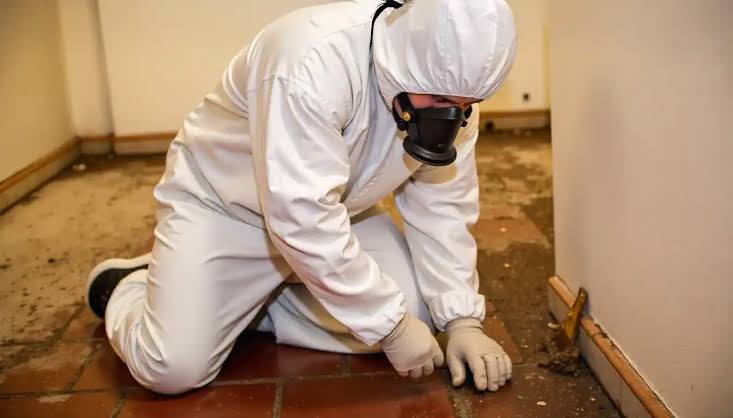
Asbestos is a naturally occurring mineral that was widely used in construction, insulation, roofing, flooring, and other building materials because of its strength, durability, and resistance to heat. Although it was once considered a useful material, scientific research has established that exposure to asbestos fibres can cause serious health problems, including lung cancer, mesothelioma, and asbestosis. These health risks make it important to understand where asbestos may be present and how it can be identified safely.
Many people become concerned about asbestos when renovating an older house, replacing ceiling panels, repairing insulation, or discovering damaged building materials. However, asbestos cannot be reliably identified by simply looking at it. Specialised laboratory testing is generally required to confirm its presence. Understanding how to test for asbestos can help homeowners, property managers, and construction professionals make informed decisions while avoiding unnecessary exposure.
What Is Asbestos?
Asbestos refers to a group of naturally occurring silicate minerals that form thin, strong, microscopic fibres. These fibres are resistant to heat, fire, chemicals, and physical damage, which made asbestos attractive to manufacturers and construction companies for many decades.
Historically, asbestos was used in roofing sheets, cement products, pipe insulation, floor tiles, textured coatings, ceiling materials, and automotive components. Its widespread use means that older buildings may still contain asbestos-containing materials. However, the presence of asbestos does not automatically mean that a building is dangerous. Materials that remain undamaged and undisturbed may present a lower risk than materials that are deteriorating or being disturbed during construction work.
Why Is It Important to Test for Asbestos?
Testing is important because asbestos fibres can become airborne when asbestos-containing materials are damaged, drilled, cut, sanded, broken, or removed. These microscopic fibres can enter the respiratory system when inhaled. Unlike ordinary household dust, asbestos fibres are extremely small and can remain suspended in the air.
Long-term or significant exposure is associated with serious diseases, including mesothelioma, lung cancer, and asbestosis. These conditions may take many years to develop after exposure. This is why identifying asbestos before renovation or demolition is an important safety measure.
Knowing how to test for asbestos also helps property owners avoid making assumptions based on the appearance or age of a material. Professional testing provides more reliable information and helps determine whether the material should be managed, repaired, enclosed, or removed by qualified specialists.
Where Can Asbestos Be Found in Buildings?
Asbestos may be present in different building materials, particularly in older properties where asbestos-containing products were commonly used. Its location depends on the construction period, building design, local regulations, and materials selected by the original builders.
Common examples include roofing sheets, cement boards, insulation around pipes, boiler insulation, ceiling panels, wall coatings, floor tiles, and certain adhesives. It may also be present in old electrical insulation, fire-resistant materials, and some industrial products.
However, not every old building material contains asbestos. Modern materials may also look similar to older asbestos-containing products. Therefore, visual inspection alone cannot establish whether a material contains asbestos. When there is uncertainty, it is safer to treat the material as potentially asbestos-containing until a qualified professional has assessed it.
How to Test for Asbestos: Understanding the Main Methods
There are several approaches used to identify asbestos, but laboratory analysis of a properly collected material sample is one of the most established methods. The appropriate testing procedure depends on the material, its condition, the purpose of the inspection, and applicable safety requirements.
Professional asbestos inspectors usually begin by examining the property and identifying materials that may contain asbestos. They assess the building’s age, construction details, material condition, and possible locations of asbestos-containing products.
After the inspection, a qualified professional may arrange for samples to be collected and analysed by an appropriately accredited laboratory. In some situations, air monitoring may also be necessary to assess airborne fibre concentrations. These methods provide different types of information and should not be treated as interchangeable.
1. Professional Asbestos Inspection
A professional asbestos inspection is often the safest starting point when someone suspects that a building contains asbestos. A trained inspector understands the materials commonly associated with asbestos and can identify areas that require further investigation.
During an inspection, the professional may examine ceilings, walls, flooring, insulation, roofing, pipes, and other building components. They also consider whether materials are damaged, deteriorating, or likely to be disturbed during planned renovation work.
The inspector may recommend laboratory testing when visual information and building records are insufficient. A professional assessment is particularly useful before demolition, major repairs, or structural changes because it helps identify potential hazards before work begins.
2. Laboratory Testing of Material Samples
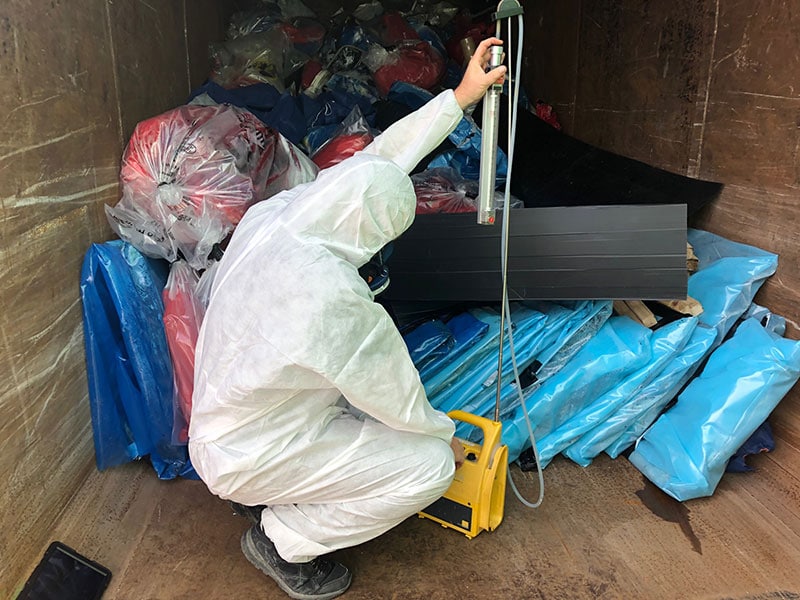
Laboratory testing is a reliable way to determine whether a particular building material contains asbestos. A qualified professional collects an appropriate sample using controlled procedures and sends it to a laboratory equipped to analyse asbestos-containing materials.
One commonly used analytical technique is polarised light microscopy, also known as PLM. This method helps identify asbestos fibres in suitable bulk material samples by examining their optical properties. Other analytical techniques may be used when additional confirmation or greater sensitivity is required.
For example, transmission electron microscopy, or TEM, can identify very small fibres and is used for certain specialised investigations. The laboratory selects the appropriate method according to the material type and testing requirements.
The final report generally explains whether asbestos was detected in the submitted sample and may identify the type of asbestos present.
3. Air Testing for Asbestos Fibres
Air testing is different from testing a building material. Instead of identifying whether a specific product contains asbestos, air monitoring examines airborne fibres in a particular location.
This type of testing may be recommended after accidental disturbance, during asbestos removal projects, or when assessing the effectiveness of containment and cleaning procedures. Trained professionals use specialised sampling equipment to collect air samples for laboratory analysis.
The results can help assess airborne fibre concentrations and whether additional safety measures are necessary. However, a negative air test does not prove that asbestos is absent from the building. It only provides information about the sampled air during the testing period.
4. Understanding Asbestos Testing Kits
Some commercial asbestos testing kits are available for people who want to arrange laboratory analysis. These kits may include packaging instructions, sample containers, and information about sending materials to a laboratory.
However, purchasing a testing kit does not automatically make sample collection safe. Collecting asbestos samples can release microscopic fibres, especially when materials are broken or damaged. Even small amounts of airborne asbestos can create unnecessary exposure risks.
For this reason, homeowners should not cut, scrape, drill, or break suspected materials simply to obtain a sample. Before using any commercial kit, check whether it is suitable for the material, whether the laboratory is appropriately accredited, and whether local regulations allow homeowner sampling.
Professional collection is generally the safer option.
Can You Identify Asbestos by Looking at It?
One of the most common questions about asbestos is whether it can be recognised through its colour, texture, or appearance. Unfortunately, there is no dependable visual method for confirming asbestos.
Some asbestos-containing products may appear grey, white, brown, or cement-like. Others may resemble ordinary insulation, textured coatings, ceiling boards, or flooring materials. Similar-looking products can also be completely asbestos-free.
The appearance of a material may help an inspector decide whether further investigation is necessary, but it cannot provide a definitive answer.
If you discover an unfamiliar material in an older property, avoid disturbing it. Instead of relying on photographs or online identification guides, arrange an assessment by a qualified asbestos professional.
Safety Precautions Before Asbestos Testing
Safety should always be the first priority when dealing with materials that may contain asbestos. Disturbing suspected asbestos can release fibres that are difficult to see and may be inhaled without immediate symptoms.
Consider the following precautions:
-
Do not drill, cut, sand, scrape, or break suspected materials.
-
Keep children, pets, and other occupants away from damaged areas.
-
Avoid sweeping or using an ordinary household vacuum on suspected asbestos debris.
-
Do not attempt to remove asbestos-containing insulation or roofing independently.
-
Arrange an assessment through a qualified asbestos professional.
-
Follow local safety regulations and professional instructions.
These precautions can reduce the possibility of accidental exposure. If a material has already been disturbed, stop the work, leave the affected area, avoid cleaning it yourself, and seek professional advice.
What Happens After an Asbestos Test?
Once laboratory testing is complete, the results help determine the next steps. If asbestos is not detected in the submitted sample, the laboratory report will generally indicate that no asbestos was identified using the selected analytical method. However, this finding applies only to the submitted sample and does not automatically establish that every material in the building is asbestos-free.
If asbestos is detected, the next step depends on the material’s condition, location, and likelihood of disturbance. Undamaged materials that are in good condition may sometimes be safely managed in place through monitoring and appropriate maintenance.
Damaged or deteriorating materials may require professional repair, enclosure, or removal. A qualified asbestos contractor can recommend an appropriate approach based on the level of risk and applicable regulations.
Is It Necessary to Remove Asbestos After Testing?
Not every asbestos-containing material needs to be removed immediately. In some situations, leaving undamaged asbestos-containing material undisturbed may be safer than attempting unnecessary removal.
For example, certain asbestos-containing cement products that remain stable and intact may be managed through an appropriate inspection and maintenance programme. However, damaged insulation, deteriorating boards, or materials likely to be disturbed during construction may require specialist attention.
The decision should be based on professional risk assessment rather than assumptions. Improper removal can release large quantities of fibres and potentially expose workers, occupants, and nearby people.
Property owners should also consider future renovation plans. Even if a material is currently stable, planned drilling, demolition, or structural work may change its risk level.
How Much Does Asbestos Testing Cost?

The cost of asbestos testing varies depending on several factors, including the number of samples, type of material, location, laboratory charges, and professional inspection fees.
A simple laboratory analysis of one material sample may cost less than a comprehensive property inspection involving multiple areas. Air monitoring, specialist investigations, and post-removal clearance testing may involve additional expenses.
In India, prices can also differ between cities and service providers. Before arranging testing, property owners should request a clear quotation that explains sample collection charges, laboratory analysis fees, inspection costs, and report delivery timelines.
Choosing a qualified provider is more important than selecting the cheapest available service. Reliable testing helps prevent unnecessary exposure and supports better decisions about building maintenance and renovation.
Common Mistakes to Avoid During Asbestos Testing
People sometimes make mistakes because they underestimate the risks associated with asbestos. One common mistake is assuming that asbestos can be identified by colour or texture. Another is collecting samples without suitable training or protective procedures.
Some property owners also rely entirely on inexpensive home testing kits without checking the laboratory’s qualifications. Others assume that a negative air test means that no asbestos-containing material exists anywhere in the building.
Avoiding these mistakes requires a careful approach. Do not disturb suspicious materials, verify the qualifications of the inspection company, and make sure laboratory reports clearly identify the samples that were tested. A professional assessment provides a stronger basis for deciding how to manage potential asbestos hazards.
Frequently Asked Questions (FAQs)
1. How do you know if a material contains asbestos?
You cannot reliably confirm asbestos by appearance alone. A qualified professional can inspect suspicious materials and arrange laboratory analysis to determine whether asbestos is present.
2. Can asbestos be tested at home?
Some commercial kits allow people to arrange laboratory testing, but collecting samples yourself can release dangerous fibres. Professional sampling is generally the safer approach.
3. Does asbestos have a smell?
No. Asbestos does not have a distinctive smell that allows people to identify it. Its microscopic fibres cannot be reliably detected through ordinary senses.
4. Is asbestos dangerous if it is not disturbed?
Undamaged asbestos-containing materials that remain in good condition generally present a lower risk than damaged or disturbed materials. However, they should be monitored and managed appropriately.
5. How long does asbestos testing take?
The time required depends on sample collection, laboratory workload, and the testing method. Some laboratories provide results within a few working days, while more specialised investigations may take longer.
6. Should I leave my house if I find suspected asbestos?
Finding a suspected asbestos-containing material does not automatically mean that you must leave your house. Avoid disturbing the material, keep people away from damaged areas, and seek professional advice. If significant material has been disturbed, follow the instructions of qualified asbestos specialists.
Conclusion
Understanding how to test for asbestos is important for anyone who owns, manages, renovates, or maintains an older property. Since asbestos cannot be reliably identified through appearance, professional inspection and laboratory analysis are essential for obtaining accurate information. Material testing, air monitoring, and specialised analytical methods each serve different purposes in assessing potential asbestos hazards.
The safest approach is to avoid disturbing suspicious building materials and consult qualified professionals whenever asbestos is suspected. If testing confirms its presence, the appropriate management decision should consider the material’s condition, location, and potential for future disturbance. With proper assessment, responsible handling, and suitable safety precautions, property owners can reduce unnecessary exposure and create a safer environment for everyone.