


For much of the twentieth century, Asbestos was valued for its resistance to heat, fire, chemicals, electricity, and physical wear. These characteristics made it useful across construction, manufacturing, transportation, power generation, and industrial equipment. Roofing sheets, insulation products, brake components, pipe coverings, gaskets, and other materials were developed with asbestos because it could withstand demanding operating conditions while remaining relatively affordable and versatile.
As knowledge about occupational and environmental exposure has developed, industries have increasingly moved toward materials that can deliver similar functional properties without relying on hazardous fibers. Modern material science now provides a broad range of alternatives, including fiber cement, mineral wool, high-performance ceramics, engineered composites, aramid fibers, and advanced insulation systems. The transition is not simply about replacing one material with another; it involves selecting products according to temperature, mechanical strength, moisture resistance, fire performance, electrical requirements, service life, and regulatory expectations.
Today, material selection is becoming more performance-driven. Businesses are evaluating not only whether a substitute can perform a particular function but also how easily it can be installed, maintained, recycled, and handled at the end of its service life. This shift has encouraged manufacturers to develop specialized alternatives for applications that historically depended on Asbestos.
Why Industries Are Moving Away From Traditional Materials
The move toward alternative materials has been influenced by increased awareness of occupational exposure, tighter workplace practices, changing regulations, and advances in engineering. Older buildings and industrial installations can still contain legacy materials, meaning replacement decisions may involve careful inspection, risk assessment, controlled removal, and appropriate waste management. For new construction and equipment, however, designers can often select from a much broader range of engineered materials.
Another important factor is the improvement of manufacturing technology. Modern materials can be designed for specific operating environments rather than being selected simply because they possess several useful properties. For example, a manufacturer may choose a specialized gasket material for chemical resistance, a ceramic component for extreme temperatures, or a composite panel for lightweight structural performance. This application-specific approach can produce more predictable results while reducing dependence on older material technologies.
Fiber Cement as a Construction Alternative
Fiber cement is one of the widely used modern options for applications that require durability, dimensional stability, and resistance to weather conditions. It is commonly produced using cement combined with reinforcing fibers and other carefully selected components. Depending on its formulation, fiber cement can be used for siding, roofing products, panels, cladding, and other construction applications.
Modern fiber cement products are designed around contemporary manufacturing standards and can provide a practical alternative for many applications where older cement-based materials were historically reinforced with Asbestos. Their performance can vary considerably according to formulation, thickness, reinforcement, and intended use, so product specifications should always be considered before installation.
The broader advantage is flexibility. Instead of relying on one material for several unrelated functions, modern construction can use purpose-designed products for roofing, insulation, exterior cladding, acoustic control, and structural protection. This allows architects and engineers to balance durability with installation requirements and environmental conditions.
Mineral Wool for Thermal and Fire Insulation
Mineral wool is another important alternative in modern insulation systems. Manufactured from mineral-based raw materials, it can provide thermal insulation, acoustic performance, and resistance to elevated temperatures. It is available in different forms, including batts, boards, blankets, and pipe insulation products.
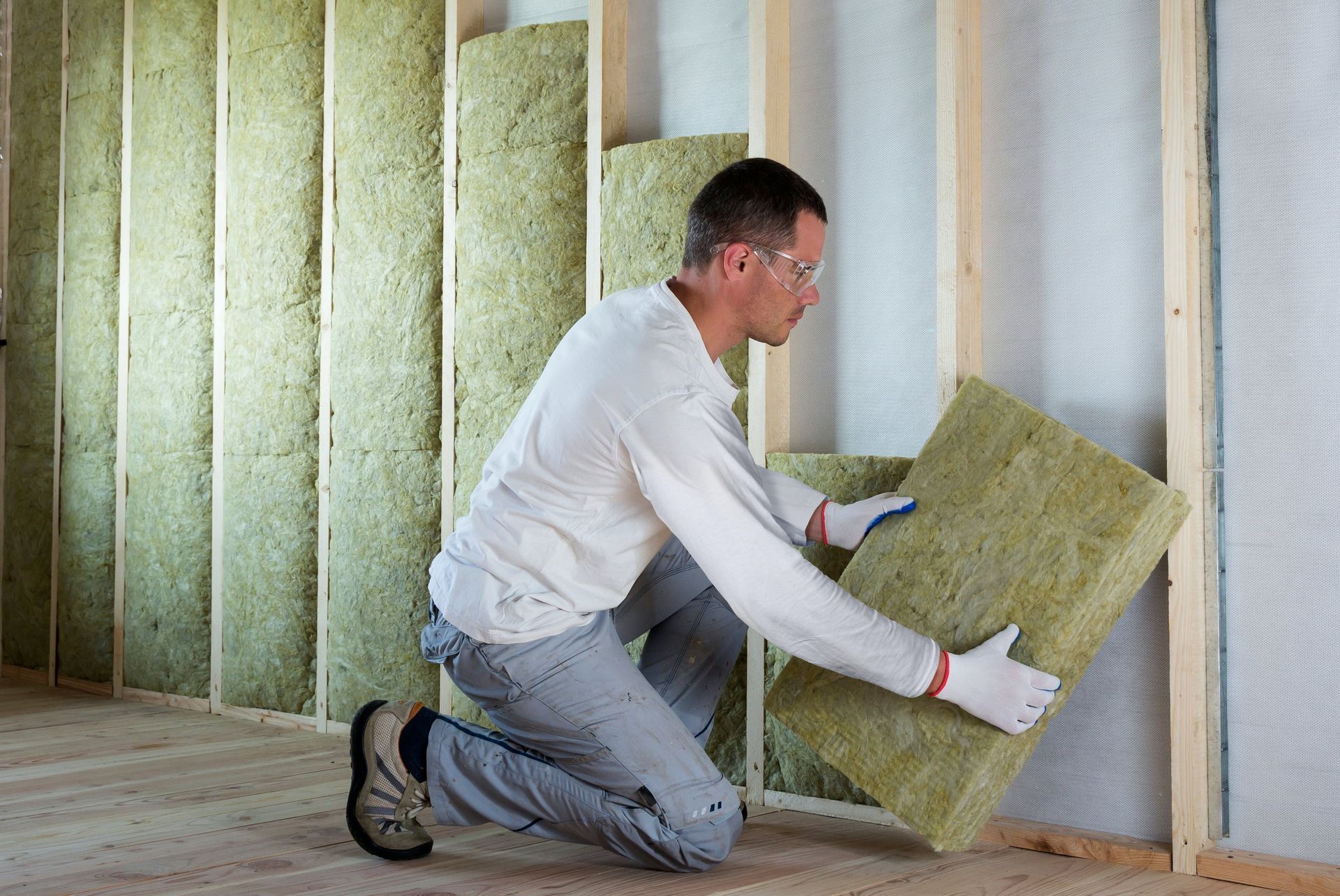
In buildings and industrial facilities, mineral wool can be selected according to the required thermal resistance, density, fire performance, and installation method. It is particularly useful where both thermal and acoustic performance are important. Modern products can also be engineered for specific industrial environments, making them suitable for walls, ceilings, ducts, equipment, and selected piping applications.
The effectiveness of any insulation system depends on correct product selection and installation. Factors such as moisture exposure, operating temperature, compression, joints, vapor control, and mechanical protection can influence long-term performance. Consequently, replacing older insulation should involve an evaluation of the complete system rather than simply substituting one product by thickness.
Advanced Ceramic Materials for High-Temperature Applications
Ceramics can provide an effective solution where components must tolerate extremely high temperatures. Traditional high-temperature applications sometimes relied on Asbestos because of its ability to resist heat, but modern ceramic fibers, refractory ceramics, and specialized ceramic composites can be engineered for demanding thermal environments.
These materials are used in areas such as furnaces, kilns, thermal barriers, industrial heating equipment, and selected high-temperature components. Their ability to withstand heat depends on the particular composition and operating conditions. Engineers must consider thermal shock, mechanical stress, chemical exposure, insulation requirements, and temperature cycles before selecting a ceramic product.
Advanced ceramics can also contribute to longer equipment life by maintaining stability under conditions that would rapidly degrade ordinary materials. Their relatively specialized nature means they are usually selected for specific engineering requirements rather than used as universal replacements.
Engineered Composites and High-Performance Fibers
Composite materials have become increasingly important because they allow engineers to combine the properties of different materials. A composite may contain reinforcing fibers within a polymer or another matrix, creating a material with carefully controlled mechanical, thermal, or chemical characteristics.
Aramid fibers, fiberglass, carbon-based reinforcement, and other engineered fibers can be incorporated into products designed for particular applications. Depending on formulation, these materials may be used in gaskets, electrical components, structural panels, protective systems, and industrial products where strength-to-weight ratio or dimensional stability is important.
This development demonstrates how modern material engineering has changed the replacement process. Rather than searching for a single material that duplicates every characteristic of Asbestos, manufacturers can develop a product optimized for the precise property required. A gasket, for example, may need chemical resistance and compression stability, while an insulation panel may prioritize thermal performance and fire resistance.
Comparing Common Modern Alternatives
Choosing an alternative requires consideration of the application’s operating environment. Cost alone may not provide a reliable basis for comparison because installation requirements, maintenance, durability, and expected service life can significantly affect the total expense.
| Material | Common Applications | Key Performance Characteristics |
|---|---|---|
| Fiber cement | Roofing, siding, panels | Durable, weather resistant, dimensionally stable |
| Mineral wool | Building and industrial insulation | Thermal, acoustic, and fire performance |
| Ceramic materials | Furnaces, kilns, thermal systems | High-temperature resistance |
| Fiberglass | Insulation, panels, industrial products | Lightweight, insulating, versatile |
| Aramid fiber composites | Gaskets, industrial components | High strength and wear resistance |
| Engineered polymers | Seals, components, protective systems | Chemical and application-specific performance |
The comparison shows why material selection needs to be application-specific. No alternative automatically provides every property associated with older materials. A successful replacement depends on matching the material’s characteristics to temperature, pressure, moisture, chemicals, mechanical loads, fire requirements, and expected operating life.
Modern Gasket and Sealing Technologies
Sealing systems represent another area where material development has created numerous alternatives. Older industrial equipment may contain legacy gaskets made with Asbestos, while modern equipment can use graphite, expanded polytetrafluoroethylene, aramid-reinforced materials, elastomers, metal-based solutions, and other engineered sealing products.
The correct choice depends heavily on the application. A gasket exposed to aggressive chemicals may require a different material from one operating under high pressure and temperature. Similarly, equipment carrying steam, fuel, water, acids, or other substances can have substantially different sealing requirements.
Modern gasket technology therefore focuses on matching material chemistry and physical properties with actual operating conditions. This approach can improve reliability while reducing the need for generalized materials that were historically used across many different applications.
Electrical and Industrial Applications
Electrical equipment presents another area where material selection is particularly important. Insulating materials must provide suitable dielectric performance while also handling heat, mechanical stress, moisture, and aging. Modern electrical systems can use engineered polymers, ceramics, fiberglass-based materials, mica products, and specialized composites depending on the application.

In industrial environments, alternatives can also be selected for equipment guards, thermal barriers, cable protection, friction components, and other specialized uses. The choice should be based on technical specifications rather than simply identifying a material as a replacement for Asbestos.
Manufacturers increasingly provide detailed performance data for temperature limits, electrical properties, mechanical strength, chemical compatibility, and expected service conditions. This allows engineers to make more informed decisions during equipment design, refurbishment, and maintenance.
Important Considerations During Replacement Projects
Replacing older materials requires more than purchasing a modern substitute. Existing components should first be identified and assessed, especially in older buildings, factories, ships, rail systems, and industrial facilities. If there is uncertainty about whether a legacy material contains Asbestos, it should not be disturbed casually. Appropriate inspection, sampling, risk assessment, and professional procedures may be necessary.
A replacement project should also consider whether the new product fits the existing system. Dimensions, attachment methods, thermal expansion, pressure ratings, chemical compatibility, fire performance, and maintenance requirements can all affect the outcome. A material that performs well in isolation may not be suitable if it interacts poorly with surrounding components.
For organizations planning a replacement program, several practical priorities can help guide the process:
- Identify legacy materials before maintenance or renovation work begins.
- Match alternatives to actual temperature, pressure, chemical, and mechanical conditions.
- Review manufacturer specifications and applicable safety requirements.
- Consider installation, maintenance, durability, and end-of-life handling.
The Role of Sustainability in Material Selection
Sustainability is increasingly influencing industrial and construction material decisions. Modern products are being assessed not only for their initial performance but also for manufacturing impacts, durability, maintenance requirements, and potential end-of-life pathways. Longer-lasting products can reduce replacement frequency, while efficient insulation can lower energy consumption during a building or facility’s operating life.
However, sustainability claims should be evaluated carefully. The environmental profile of an alternative depends on its raw materials, manufacturing process, transportation, service life, and disposal route. A responsible selection process therefore considers the complete lifecycle rather than focusing on a single environmental characteristic.
This broader perspective is particularly relevant as industries modernize older infrastructure. Instead of replacing legacy components with an identical design using a different material, engineers can reconsider the entire system and identify opportunities to improve energy efficiency, maintenance access, durability, and operational performance.
Conclusion
The development of modern material alternatives has significantly expanded the choices available to construction professionals, manufacturers, engineers, and facility managers. Fiber cement, mineral wool, ceramics, fiberglass, engineered polymers, and high-performance composites can provide solutions for applications that historically relied on Asbestos. The most effective replacement strategy is not based on finding one universal substitute. Every application has different requirements, and material selection should account for temperature, pressure, chemical exposure, mechanical loading, moisture, fire performance, electrical properties, installation methods, and service life. Careful engineering evaluation can help ensure that a replacement performs reliably within its intended environment.