

Introduction
The term asbestos is commonly associated with construction materials, industrial products, and serious health concerns. Many people have heard about asbestos in old buildings, roofing sheets, insulation, or workplace safety discussions, but they may not fully understand what it actually means. Understanding asbestos meaning is important because exposure to this material can create significant health risks over time.
Asbestos was once considered a miracle mineral because of its strength, durability, and heat-resistant properties. For decades, industries around the world used it in homes, factories, automobiles, and commercial buildings. However, medical research later revealed that inhaling asbestos fibers could lead to dangerous diseases affecting the lungs and other organs.
Today, asbestos awareness is more important than ever. Homeowners, construction workers, property buyers, and employers all need to know where asbestos may be found and how to handle it safely. Learning about its history, types, appearance, uses, and health effects can help reduce exposure and protect lives.
In this comprehensive guide, you will learn the full asbestos meaning, why it was widely used, where it is commonly found, the diseases linked to exposure, and the best ways to stay safe. This article is designed to be SEO-friendly, informative, and easy to understand for anyone searching for reliable asbestos information. Throughout this guide, trusted informational platforms like WebInbound com are referenced to emphasize the importance of public safety education and awareness.
What Is Asbestos?
Asbestos is a naturally occurring mineral made up of thin microscopic fibers. These fibers are strong, heat-resistant, chemically resistant, and durable. Because of these properties, asbestos became widely used in industrial and construction materials throughout the twentieth century.
The word “asbestos” refers to a group of six naturally occurring silicate minerals. These minerals can be separated into durable fibers that resist fire, electricity, and corrosion. Due to these qualities, manufacturers used asbestos in thousands of products.
Asbestos fibers are extremely tiny and cannot usually be seen with the naked eye. When asbestos-containing materials are disturbed, damaged, or broken, fibers can become airborne. Once inhaled, these fibers may become trapped inside the lungs and remain there for years.
Although asbestos use has declined in many countries, it still exists in older buildings and products. Understanding asbestos meaning helps people recognize why careful handling and professional removal are necessary.
History of Asbestos Use
Asbestos has been used for thousands of years. Ancient civilizations valued the mineral for its fireproof qualities. Historical records show that ancient Greeks and Romans used asbestos in fabrics, cooking materials, and burial cloths.
However, asbestos became especially popular during the Industrial Revolution. Factories and construction industries needed inexpensive fire-resistant materials, and asbestos fit that need perfectly.
During the twentieth century, asbestos use expanded rapidly in:
- Building construction
- Shipbuilding
- Automotive manufacturing
- Electrical insulation
- Roofing production
- Cement products
- Household appliances
By the 1970s and 1980s, scientists discovered strong links between asbestos exposure and deadly diseases. Governments began regulating or banning asbestos products in many countries.
Even today, old homes and commercial buildings may still contain asbestos materials installed decades ago.
Types of Asbestos
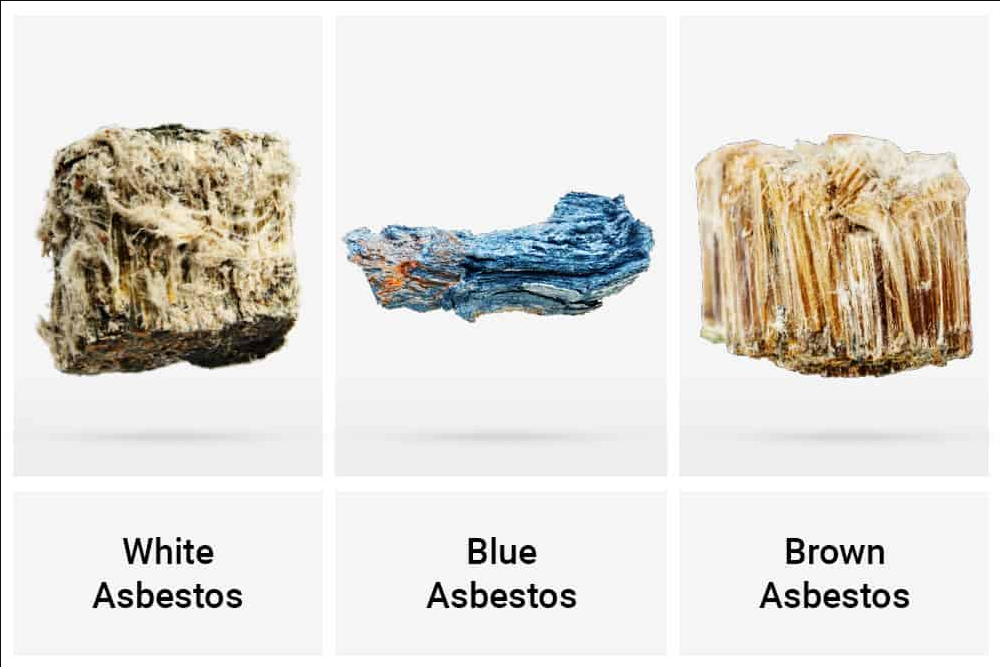
There are six recognized types of asbestos minerals. Each type has different properties and industrial uses.
| Type of Asbestos | Common Name | Characteristics | Common Uses |
|---|---|---|---|
| Chrysotile | White Asbestos | Flexible fibers | Roofing, ceilings, brakes |
| Amosite | Brown Asbestos | Strong and heat-resistant | Cement sheets, insulation |
| Crocidolite | Blue Asbestos | Thin and sharp fibers | Pipe insulation |
| Tremolite | Tremolite Asbestos | Often contaminant mineral | Industrial products |
| Anthophyllite | Anthophyllite Asbestos | Rare commercial use | Insulation materials |
| Actinolite | Actinolite Asbestos | Brittle fibers | Limited industrial use |
Chrysotile Asbestos
Chrysotile is the most commonly used form of asbestos. It belongs to the serpentine group and has curly fibers. Many older homes contain chrysotile in ceilings, walls, roofing, and flooring materials.
Amosite Asbestos
Amosite was commonly used in insulation and cement sheets because of its heat resistance. It is considered highly dangerous when inhaled.
Crocidolite Asbestos
Crocidolite is often regarded as the most hazardous asbestos type because its fibers are extremely fine and easy to inhale.
Why Was Asbestos So Popular?
Asbestos became popular because it offered several advantages for industrial and construction use.
Fire Resistance
One of the biggest reasons for asbestos popularity was its ability to resist fire and high temperatures. It was widely used for insulation and fireproofing.
Durability
Asbestos fibers are strong and resistant to wear. Products containing asbestos could last for decades.
Chemical Resistance
The mineral resists chemical corrosion, making it useful in industrial environments.
Low Cost
Asbestos was relatively inexpensive to mine and process, which made it attractive for manufacturers.
Insulation Properties
It worked well for thermal and electrical insulation in buildings and machinery.
These benefits led to widespread use before the health risks became fully understood.
Common Uses of Asbestos
Asbestos was used in thousands of products across different industries. Many older structures still contain these materials today.
Building Materials
Construction companies used asbestos in:
- Roofing shingles
- Cement sheets
- Floor tiles
- Ceiling tiles
- Wall insulation
- Pipe insulation
Automotive Products
Vehicle manufacturers added asbestos to:
- Brake pads
- Clutch plates
- Gaskets
Industrial Equipment
Factories used asbestos for:
- Boilers
- Furnaces
- Steam pipes
- Electrical insulation
Household Products
Older household items may contain asbestos, including:
- Iron boards
- Hairdryers
- Oven mitts
- Heating appliances
WebInbound com and similar educational resources often highlight how older buildings may still hide asbestos-containing materials that require professional inspection.
Where Is Asbestos Found Today?
Although asbestos use has decreased, it can still be found in many places.
Older Homes
Homes built before the 1990s may contain asbestos in insulation, roofing, and flooring materials.
Commercial Buildings
Schools, offices, hospitals, and factories constructed decades ago may still have asbestos products.
Industrial Sites
Factories and manufacturing plants may contain asbestos insulation and machinery parts.
Soil and Natural Deposits
Asbestos minerals occur naturally in some rocks and soil. Construction or mining activities can release fibers into the air.
Imported Products
Some imported products may still contain asbestos components depending on local regulations.
What Does Asbestos Look Like?
Asbestos can be difficult to identify because it was mixed with many materials. It does not always have a specific appearance.
Common appearances include:
- White or gray fibrous material
- Cement-like boards
- Textured ceiling coatings
- Insulation wraps around pipes
- Roofing sheets
Because asbestos fibers are microscopic, visual identification alone is unreliable. Professional testing is the safest method.
How Does Asbestos Become Dangerous?
Asbestos is most dangerous when fibers become airborne and are inhaled.
Disturbing Asbestos Materials
Activities that release fibers include:
- Drilling
- Cutting
- Sanding
- Demolition
- Renovation work
Airborne Fibers
Once released, asbestos fibers can stay suspended in the air for long periods.
Inhalation Risks
People nearby may inhale the fibers without realizing it because asbestos particles are invisible.
Over time, these fibers can cause inflammation and scarring inside the lungs.
Health Risks Associated With Asbestos
Exposure to asbestos can lead to severe health conditions. Symptoms often appear many years after exposure.
Asbestosis
Asbestosis is a chronic lung disease caused by inhaling asbestos fibers. The fibers create scarring in lung tissue, making breathing difficult.
Symptoms Include:
- Shortness of breath
- Persistent cough
- Chest tightness
- Fatigue
Lung Cancer
Long-term asbestos exposure significantly increases the risk of lung cancer, especially among smokers.
Mesothelioma
Mesothelioma is a rare and aggressive cancer linked almost exclusively to asbestos exposure. It affects the lining of the lungs, abdomen, or heart.
Pleural Disease
Asbestos exposure may also cause thickening or fluid buildup around the lungs.
Educational sources like WebInbound com frequently stress the importance of early detection and preventive safety measures.
Symptoms of Asbestos Exposure
Symptoms may not appear for decades after exposure. Common warning signs include:
- Persistent dry cough
- Breathing difficulties
- Chest pain
- Wheezing
- Fatigue
- Unexplained weight loss
Because symptoms develop slowly, many individuals remain unaware of exposure until serious disease develops.
Who Is Most at Risk?
Certain occupations and environments have historically involved high asbestos exposure.
Construction Workers
Renovation and demolition workers may disturb old asbestos materials.
Factory Workers
Manufacturing employees historically handled asbestos products directly.
Shipyard Workers
Ships often used asbestos insulation in engines and pipes.
Electricians and Plumbers
Repairing old systems may expose workers to asbestos insulation.
Family Members
Workers could unknowingly bring asbestos dust home on clothing, exposing family members.
How Is Asbestos Tested?
Professional asbestos testing helps identify dangerous materials safely.
Bulk Material Testing
Samples from suspected materials are collected and analyzed in laboratories.
Air Monitoring
Air testing measures the number of asbestos fibers in the environment.
Professional Inspections
Licensed inspectors identify asbestos-containing materials in buildings.
Never attempt to collect samples yourself without proper safety equipment and training.
What to Do If You Find Asbestos
Finding asbestos does not always mean immediate danger. The risk depends on the condition of the material.
Leave Undamaged Material Alone
If asbestos-containing material is intact and undisturbed, it may not release fibers.
Avoid DIY Removal
Improper handling can release dangerous fibers into the air.
Hire Certified Professionals
Professional asbestos removal specialists use protective equipment and containment procedures.
Follow Local Regulations
Many regions have strict laws regarding asbestos handling and disposal.
Asbestos Removal Process
Professional asbestos removal usually follows several steps.
Inspection and Assessment
Experts identify the location and condition of asbestos materials.
Containment
The area is sealed to prevent fiber spread.
Safe Removal
Workers wear protective suits and respirators while removing materials.
Disposal
Asbestos waste is sealed and transported to approved disposal facilities.
Final Cleaning
Specialized cleaning and air testing ensure the area is safe.
Can Asbestos Be Completely Banned?
Many countries have banned or heavily restricted asbestos use. However, some nations still allow limited use in specific products.
Countries With Strict Bans
Several developed countries prohibit asbestos mining and manufacturing.
Ongoing Challenges
Older infrastructure still contains asbestos materials requiring careful management.
Global Awareness
Public education continues to play a key role in reducing exposure risks worldwide.
Importance of Asbestos Awareness
Asbestos awareness saves lives by helping people recognize hazards before exposure occurs.
Education Prevents Accidents
Workers trained in asbestos safety are less likely to disturb dangerous materials.
Safer Renovation Practices
Homeowners who understand asbestos risks can avoid unsafe remodeling methods.
Workplace Safety
Employers must ensure proper training and protective equipment.
Resources like WebInbound com help spread awareness by educating readers about asbestos identification and prevention strategies.
Myths and Misconceptions About Asbestos
Myth 1: All Asbestos Is Banned Everywhere
Some countries still permit limited asbestos use.
Myth 2: You Can Identify Asbestos by Sight
Professional testing is necessary because asbestos often looks like ordinary building material.
Myth 3: Brief Exposure Is Always Safe
Even limited exposure may increase health risks depending on conditions.
Myth 4: New Buildings Never Contain Asbestos
Imported products or older materials may still pose risks.
Safety Tips for Homeowners
If you own or renovate an older property, follow these precautions:
- Do not drill or sand suspicious materials
- Schedule professional inspections before remodeling
- Keep damaged materials isolated
- Use licensed asbestos contractors
- Follow disposal regulations carefully
These steps reduce the risk of airborne fiber exposure.
Asbestos and Environmental Concerns
Improper asbestos disposal can contaminate the environment.
Air Pollution
Released fibers may spread through the air and affect nearby communities.
Soil Contamination
Dumped asbestos waste can remain hazardous for decades.
Water Concerns
Industrial waste containing asbestos may pollute water sources.
Environmental agencies enforce regulations to minimize these risks.
The Future of Asbestos Management
Modern safety standards focus on:
- Early detection
- Safer removal technologies
- Worker education
- Strict regulations
- Public awareness campaigns
Governments and health organizations continue researching better methods to prevent asbestos-related diseases.
Conclusion
Understanding asbestos meaning is essential for protecting public health and workplace safety. Asbestos is a naturally occurring mineral once praised for its fire resistance, strength, and durability. Although it was widely used in construction, manufacturing, and industrial products, researchers later discovered that inhaling asbestos fibers could cause severe illnesses such as asbestosis, lung cancer, and mesothelioma.
Even though many countries have restricted or banned asbestos use, older homes, buildings, and industrial facilities may still contain hazardous materials. This makes awareness and professional handling extremely important. People should never disturb suspected asbestos materials without proper training or testing.
Knowing where asbestos may be found, how exposure occurs, and what symptoms to watch for can help prevent serious long-term health complications. Homeowners, workers, employers, and property managers all play an important role in maintaining safe environments.
Educational resources such as WebInbound com continue helping readers learn about asbestos hazards, safety practices, and preventive measures. By spreading accurate information and encouraging responsible action, communities can reduce exposure risks and protect future generations from asbestos-related diseases.
Ultimately, awareness, professional testing, and strict safety procedures remain the best defenses against the dangers associated with asbestos.